A car head-up display can make essential driving information easier to see without requiring a glance down at the dashboard. The best affordable models project speed and related data onto the windshield or a small transparent screen.
This roundup focuses on 10 car head-up displays under $100, including GPS and OBD-compatible designs, adjustable brightness, dual-mode systems, and compact plug-and-play options. Consider compatibility, readability, and installation before choosing.
Best 10 Car Head Up Displays Under 100 Picks for 2026
Best GPS Pick

- USB-powered with no OBD port required
- GPS/BDS positioning with 10Hz refresh
- Large display with automatic brightness
Best For: Drivers wanting a simple GPS speed display
Best Data-Rich OBD Option
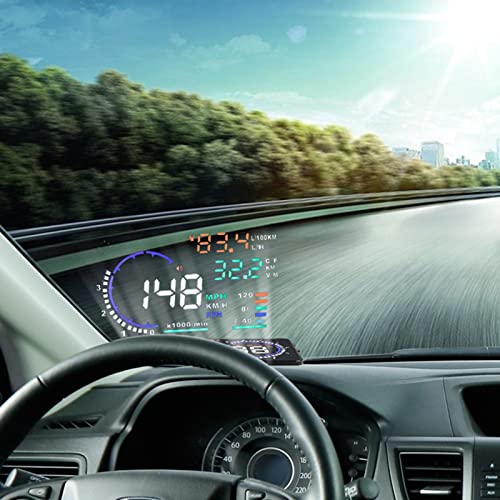
- Displays speed plus engine and vehicle data
- Includes multiple alarms and reminders
- Automatic power with vehicle startup
Best For: OBD-compatible cars needing more than speed
Best Large-Screen Choice
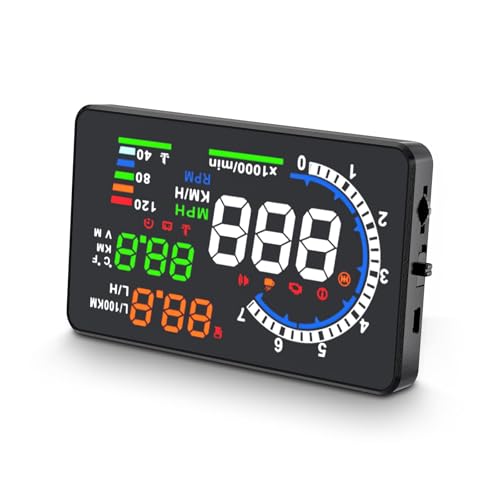
- 5.5-inch 800x480 display
- Shows speed, engine, temperature, and voltage data
- Includes fault and speeding alerts
Best For: OBDII/EOBD drivers wanting a large multifunction display
Best Compact OBD Display

- Compact 3-inch high-definition screen
- Displays speed and key vehicle readings
- Supports multiple alarms and unit switching
Best For: Compatible cars with limited dashboard space
Best Overall GPS Value

- Dual GPS and BeiDou positioning
- Large HD speed display
- Automatic brightness and power control
Best For: Simple, readable speed projection for daily driving
Best for Night Driving

- GPS and BDS speed tracking
- Automatic brightness sensor
- USB-powered with no OBD port required
Best For: Drivers needing comfortable visibility in changing light
Best for Vehicle Data
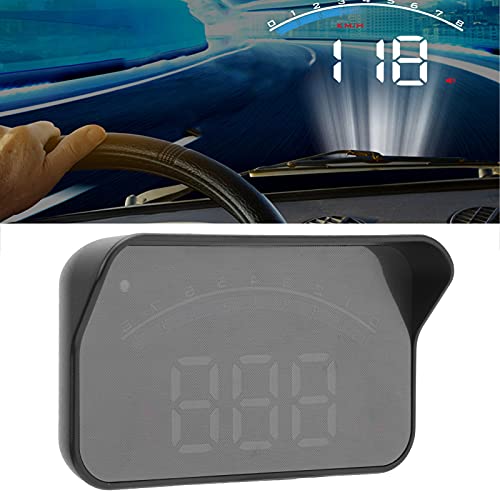
- Displays multiple vehicle metrics
- OBD plug-and-play connection
- Includes alarms and brightness controls
Best For: Compatible OBDII vehicles needing speed and engine data
Simple Speed Check

- GPS and BDS positioning
- Large white LED speed readout
- USB plug-and-play installation
Best For: Drivers seeking a basic speed-only HUD for multiple vehicle types
Feature-Rich Calibration Pick

- 10 Hz GPS+BDS positioning
- MPH/KM/H switching and calibration
- Brightness control and overspeed alert
Best For: Drivers wanting adjustable speed monitoring features
Best GPS Pick – USB Car HUD Speedometer
For drivers comparing car head up displays under 100, this USB-powered GPS model is a straightforward option when you want speed projected into your line of sight without using the vehicle’s OBD port. It uses GPS and BDS positioning, a 10Hz refresh rate, and automatic brightness adjustment.
Best For: Drivers who want a plug-and-play, GPS-based speed display for a car, truck, or motorcycle with a USB port.
Pros:
- USB 5V power works without an OBD connection.
- GPS and BDS positioning connect with up to 32 satellites.
- Large MPH display with automatic brightness adjustment.
- Compact 2.76-by-1.69-by-0.79-inch design.
Cons:
- GPS accuracy can vary by about 0.6–1.8 MPH.
- Signal may be affected in tunnels, garages, heavy rain, fog, or behind metallic windshield film.
- Speed is displayed in MPH by default.
This is the most flexible choice in the group for broad vehicle compatibility and simple installation. Its main limitation is that speed and performance depend on receiving a clear satellite signal.
Best Data-Rich OBD Option – 5.5-Inch Multi-Color HUD
Among car head up displays under 100, this 5.5-inch OBDII/EUOBD projector stands out for showing more than speed. It can display engine and vehicle information such as RPM, water temperature, battery voltage, fuel consumption, mileage, and fault codes, with adjustable brightness and overspeed alerts.
Best For: OBDII- or EUOBD-compatible vehicles whose drivers want speed, vehicle data, and warning reminders in one display.
Pros:
- Shows speed, RPM, water temperature, voltage, fuel-use data, mileage, and fault codes.
- 5.5-inch high-definition display with manual and automatic brightness adjustment.
- Overspeed, high-temperature, low-voltage, shift, and fatigue-driving reminders.
- Automatically powers on and off with the vehicle.
Cons:
- Requires an OBDII or EUOBD-compatible vehicle.
- It is not a universal USB-only installation.
- Data availability depends on the vehicle’s onboard diagnostic system.
This model is better suited to buyers who want diagnostic-style information rather than a basic speed projection. Confirm your vehicle’s OBD compatibility before choosing it.
Best Large-Screen Choice – A8 5.5-Inch Car HUD
This A8 is one of the more feature-heavy car head up displays under 100, using a 5.5-inch, 800×480 display to present speed, water temperature, voltage, distance, fuel consumption, and alerts. It also supports vehicle fault detection, fault alarms, and fault clearing on compatible vehicles.
Best For: Drivers with OBDII or EOBD vehicles who prefer a large screen and a broad set of vehicle readings.
Pros:
- Large 5.5-inch HD screen with 800×480 native resolution.
- Displays speed, RPM, water temperature, voltage, fuel consumption, and distance.
- Supports kilometer/mile switching and multiple alarm prompts.
- Offers fault detection, alarm, and clearing functions according to the supplied listing.
Cons:
- Only supports OBDII and EOBD; it does not support OBD I or JOBD.
- Vehicle compatibility varies by model and production year.
- Its larger screen may take more dashboard space than compact HUDs.
The A8 is a sensible pick when screen size and vehicle-data coverage matter most. Its OBD requirements make compatibility checking essential before purchase.
Best Compact OBD Display – Dual-Mode Car HUD
For shoppers seeking car head up displays under 100 with a compact footprint, this dual-mode model offers a 3-inch high-definition screen and plug-and-play OBDII/EUOBD connectivity. It displays speed, RPM, temperature, voltage, and several warning indicators while supporting both automatic and manual power control.
Best For: OBDII- or EUOBD-compatible car owners who want a smaller multifunction HUD with clear vehicle alerts.
Pros:
- Compact 3-inch display with high-definition presentation.
- Shows speed, engine RPM, water temperature, and battery voltage.
- Includes low-voltage, high-temperature, and speed alarms.
- Supports kilometer/mile and Celsius/Fahrenheit switching.
Cons:
- Requires an OBDII or EUOBD-compatible vehicle.
- The 3-inch screen is smaller than the 5.5-inch alternatives.
- The listing does not specify GPS-based operation.
This HUD offers a useful balance of compact size and vehicle-data features. Choose it when dashboard space is limited and your car has a compatible diagnostic port.
Best Overall GPS Value – Large-Font USB HUD
If you want car head up displays under 100 that prioritize simple setup and readable speed information, this USB-powered GPS model is a practical choice. Its large HD font, 10Hz refresh rate, and automatic brightness adjustment are designed for quick viewing without looking down.
Best For: Drivers seeking a straightforward windshield speed display with automatic operation.
Pros:
- Dual GPS and BeiDou positioning with a 10Hz refresh rate for responsive speed updates.
- Large, high-definition speed display with automatic brightness adjustment based on GPS time.
- USB plug-and-play setup with automatic startup and shutdown.
- ABS construction is designed to resist heat, impact, and wear.
Cons:
- Initialization and satellite positioning can take approximately 1–3 minutes.
- The display provides speed information rather than the broader vehicle data offered by some OBD-based HUDs.
This model stands out for drivers who want a low-fuss GPS HUD with clear numbers and minimal configuration. The included projection sticker and USB cable make it convenient for daily use.
Best for Night Driving – Auto-Brightness GPS HUD
Among car head up displays under 100, this GPS HUD is a good fit for drivers who want readable speed information across changing light conditions. It combines a large anti-reflective display with automatic brightness control and USB power, without requiring an OBD connection.
Best For: Drivers who want a simple USB HUD for cars, trucks, or motorcycles with automatic brightness adjustment.
Pros:
- Dual-mode GPS and BDS positioning supports fast, stable speed tracking.
- Automatic brightness adjustment is intended to improve daytime visibility and nighttime comfort.
- USB 5V plug-and-play design works with most vehicles equipped with a USB port.
- Large MPH display and anti-reflective metal shading improve legibility.
Cons:
- GPS speed may vary by approximately 0.6–1.8 MPH.
- Signal performance can be affected by tunnels, underground garages, severe weather, or metallic windshield film.
- It displays speed in MPH by default, with a listed maximum of 115 MPH.
Its automatic light sensor and broad USB compatibility make this a convenient option when you want speed projected in your sightline without vehicle-specific installation. GPS limitations are worth considering if you frequently drive underground or through tunnels.
Best for Vehicle Data – M6S OBD HUD
For shoppers comparing car head up displays under 100, the M6S is the more feature-focused option. Instead of relying only on GPS, it connects through an OBD interface to show vehicle information such as speed, engine RPM, water temperature, and voltage.
Best For: Drivers with a compatible OBDII vehicle who want more than a projected speed reading.
Pros:
- OBD plug-and-play connection automatically reads vehicle data when the engine starts.
- Can display speed, engine RPM, water temperature, voltage, and fault information.
- Includes speed, voltage, water temperature, fatigue-driving, and fault alarms.
- Offers automatic and manual brightness adjustment plus multiple interface modes.
Cons:
- Compatibility is limited to applicable OBDII vehicles; the notes identify models produced after 2008 as the target.
- Not compatible with certain hybrid, diesel, pickup, sedan, or computer-modified vehicles according to the supplied compatibility notes.
- Requires access to an OBD port and careful compatibility checking before purchase.
The M6S is appealing if you want a multifunction display tied to your vehicle’s onboard data. However, compatibility should be verified first, since its OBD-based design is less universally convenient than a USB GPS model.
Simple Speed Check – MPH Heads Up Display
If you want one of the more straightforward car head up displays under 100, this USB-powered GPS speedometer focuses on clear speed readings without complicated installation. Its large white LED numbers are designed for quick glances while driving.
Best For: Drivers who want a basic, plug-and-play speed display for cars, SUVs, trucks, motorcycles, or ATVs.
Pros:
- Uses GPS and BDS positioning for real-time speed data.
- Large, high-definition font is easy to recognize at a glance.
- USB plug-and-play setup avoids complicated wiring.
- ABS and LED construction is designed for heat and wear resistance.
Cons:
- The supplied details focus on speed display rather than additional alerts or vehicle data.
- It has a listed 0.2 warranty description, so warranty coverage should be confirmed before purchase.
This is a practical choice if simplicity matters most. It provides the core HUD function—an easy-to-read GPS speed reference—in a compact package with broad vehicle compatibility.
Feature-Rich Calibration Pick – K4 GPS Car HUD
Among car head up displays under 100, this K4 model stands out for adding useful controls around its GPS speed readout. It supports MPH or KM/H, brightness adjustment, manual calibration, and a customizable overspeed alert.
Best For: Drivers who want more display controls and speed-alert features without a complicated installation.
Pros:
- Dual GPS+BDS positioning refreshes at 10 Hz and can receive up to 32 satellite signals.
- Switches between MPH and KM/H and supports manual speed calibration.
- Offers adjustable brightness for daytime and nighttime viewing.
- Includes a customizable overspeed alert and large anti-reflective display.
Cons:
- GPS performance may be affected in tunnels, underground garages, heavy rain or fog, and vehicles with metallic windshield film.
- It requires a USB 5V power source rather than a fully wireless setup.
The K4 is a strong fit for buyers who want more than a simple speed number. Its calibration, unit switching, brightness controls, and overspeed warning make it the most feature-oriented option in this group.
Day-and-Night Projection Pick – 2026 GPS HUD
This 2026 model is a compelling option among car head up displays under 100 if you prefer a windshield projection rather than looking down at the dashboard. It combines dual-satellite positioning with automatic day-and-night brightness adjustment and a compact USB-powered design.
Best For: Drivers who prioritize windshield projection, automatic brightness changes, and a small dashboard footprint.
Pros:
- Projects speed onto the windshield using the included projection sticker.
- Dual GPS and BeiDou positioning provides real-time speed information.
- Automatically adjusts brightness for sunlight and nighttime viewing.
- Compact ABS unit includes a cable, sticker, scraper, adhesive, and manual.
Cons:
- The projection setup requires applying the included film or sticker to the windshield.
- The supplied warranty description states coverage within three months.
- The notes emphasize speed display and do not list features such as overspeed alerts or speed calibration.
Choose this model when a windshield-viewing experience is more important than a broad feature set. Its automatic dimming and included projection accessories make setup more complete, while the compact design helps preserve dashboard space.
How We Picked the Best Car Head Up Displays Under 100
We evaluated these displays based on the information they provide, installation method, vehicle compatibility, screen readability, and everyday convenience. GPS models are generally easier to move between vehicles because they do not depend on a specific diagnostic port. OBDII and EUOBD models can provide additional vehicle data, but compatibility may vary by car, model year, and engine system.
We also considered practical details such as adjustable brightness, day-and-night visibility, large numerals, selectable MPH or km/h readings, overspeed alerts, and whether the unit is genuinely plug and play. Because product specifications and included accessories can vary, confirm the listing details before ordering.
Quick Comparison
| Display type | Best for | What to check |
|---|---|---|
| GPS HUD | Simple installation and portability | GPS startup time, speed accuracy, and USB power |
| OBDII/EUOBD HUD | Vehicle data beyond speed | Port compatibility and supported functions |
| Reflective windshield display | Large, glanceable numbers | Screen placement, reflection quality, and brightness |
| Compact digital display | Minimal dashboard clutter | Font size, viewing angle, and controls |
Key Buying Factors for Car Head-Up Displays Under $100
Compatibility and Installation
Choose GPS if you want the least complicated setup or expect to use the display in more than one vehicle. OBD models usually connect directly to the car’s diagnostic socket, but they may not work with every vehicle. Check whether your car uses OBDII or EUOBD and whether the display supports your model year.
Readability and Brightness
A large, high-contrast font is more useful than a crowded screen. Adjustable brightness matters because a display that looks clear at night may be too dim in daylight or too bright after dark. A reflective screen or included projection film can improve visibility, but placement still affects glare.
Information and Units
At minimum, verify that the unit displays your preferred speed unit, such as MPH or km/h. Overspeed alarms can be helpful, while RPM, engine fault information, water temperature, or voltage readings are useful only when supported by the vehicle and relevant to your driving.
Power and Placement
Look for a secure mounting area that does not block the driver’s view. USB-powered models are convenient, but cable routing can affect appearance. Test the display while parked and adjust its angle, brightness, and reflection before driving.
Who Should Buy Which Car Head Up Displays Under 100?
Choose a GPS HUD if you want quick installation, straightforward speed readings, or a unit that can move between cars. Choose an OBD-compatible model if you want richer vehicle information and have confirmed port compatibility. Drivers who often travel at night should prioritize dimming controls and a non-distracting display, while daytime commuters may prefer large numerals and strong contrast. If you want the simplest affordable upgrade, select a compact plug-and-play model with clear MPH or km/h support and minimal setup.