Whether you need to maintain a boat battery at the dock or generate supplemental power while cruising, the right solar panel can reduce charging hassles and extend time away from shore power.
These 10 picks cover compact trickle chargers, flexible deck-friendly panels, and higher-output models for power stations, with options for different boat sizes and onboard energy demands.
Best 10 Portable Solar Panels for Boats Picks for 2026
Lightweight Flexible Pick

- 22–25% efficient Maxeon cells
- 4.4-pound, 30-degree-flexible design
- MC4 connectors and IP67 junction box
Best For: Portable 100W boat, RV, and camping installations
Battery Maintenance Kit

- MPPT controller with safety protections
- 360-degree adjustable mounting bracket
- Waterproof tempered glass and aluminum frame
Best For: Maintaining 12V boat batteries during storage
High-Output Marine Option

- 200W output with 22% efficiency
- Bends within 240 degrees for curved surfaces
- IP67 junction box and connectors
Best For: Higher-output installations on curved boat surfaces
Compact Trickle Charger
12W Waterproof Battery Maintainer

- 10.56-ounce portable design
- Includes clips, SAE cable, suction cup, and plug
- LED status lights and intelligent protection
Best For: Maintaining idle 12V boat batteries
Best Curved-Deck Value
Renogy 100W Ultra-Flexible Panel
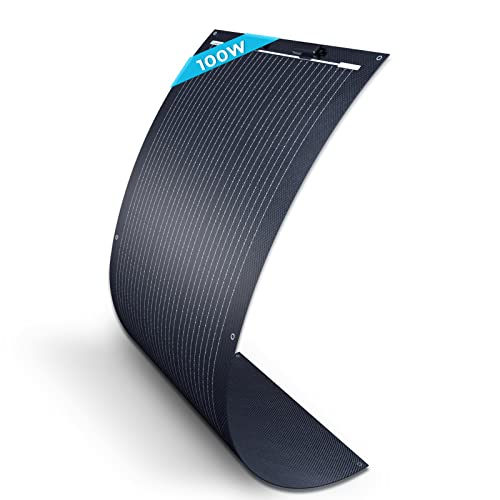
- Bends within 240 degrees for curved boat surfaces
- 22% efficient half-cut PERC cells
- Lightweight 5.3-pound design with IP67 connectors
Best For: Lightweight 100W charging on curved boat decks and cabins
Best for Everyday Use

- 200W output with up to 25% cell efficiency
- Bends up to 270 degrees for curved surfaces
- IP68 protection and shade-tolerant bypass diodes
Best For: Higher-output boat systems with verified voltage compatibility
Best Lightweight ETFE Panel
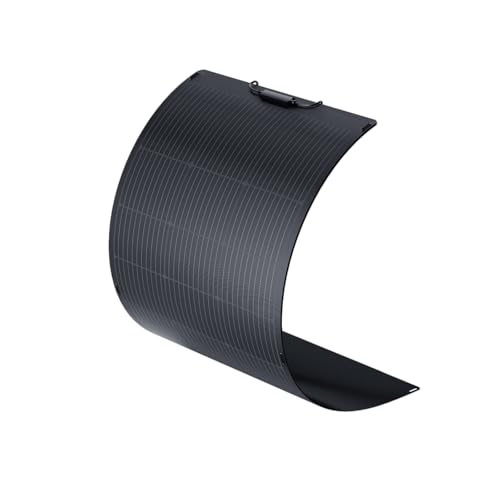
- 2.4kg, 3mm-thick flexible construction
- IP68 waterproof ETFE-coated surface
- Six mounting holes and partial-shade bypass diodes
Best For: Lightweight portable power-station charging on boat surfaces
High-Efficiency Pick
Renogy 100W N-Type Solar Panel

- 25% efficient N-Type 16BB cells
- IP67 weather-resistant construction
- 10-year materials and 25-year performance coverage
Best For: Semi-permanent marine installations needing durable, efficient 100W output
Portable Power Pick
GRECELL UB200 Folding Solar Panel

- 200W output with up to 23.5% efficiency
- Folds to a compact, 10.1-pound package
- Four connector types support many power stations
Best For: Portable power-station charging and flexible 12V boat setups
Battery Maintenance Pick
SUNER POWER 12W Marine Charger
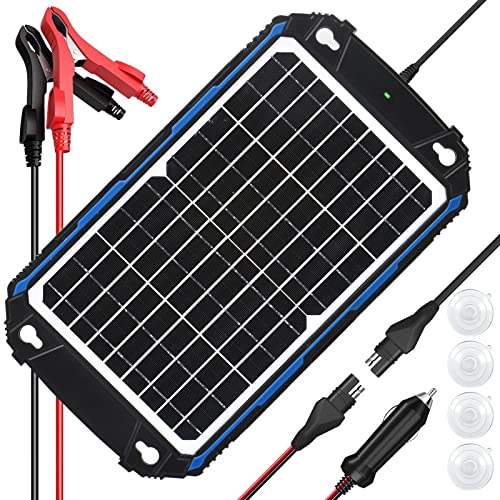
- Built-in MPPT and three-stage charging
- Eight safety protections for 12V batteries
- Compact 3.3-pound design with plug-and-play cables
Best For: Keeping compatible 12V boat batteries charged between trips
Lightweight Flexible Pick – 100W SunPower Flexible Panel
This 100W flexible panel is a practical choice for boat owners seeking portable solar panels for boats that are easy to carry and install. Its 4.4-pound construction, 30-degree flexibility, MC4 connectors, and pre-drilled mounting holes suit many boat, RV, and camping setups.
Best For: Weight-conscious boaters who need a flexible 100W panel for portable or semi-permanent installations.
Pros:
- High-efficiency Maxeon monocrystalline cells rated at 22–25% efficiency.
- Lightweight 4.4-pound design that flexes up to 30 degrees.
- IP67-protected junction box, MC4 connectors, and pre-drilled mounting holes.
Cons:
- At 100W, it provides less output than the 200W Renogy panel.
- Its listed maximum voltage is 12 volts, so system compatibility should be checked.
With its low weight and flexible polymer construction, this panel is especially convenient where deck or cabin space is limited. The included warranty is one year.
Battery Maintenance Kit – 30W 12V MPPT Solar Charger
This 30W kit is designed for maintaining 12V batteries rather than powering a large onboard electrical load. For buyers comparing portable solar panels for boats, its adjustable bracket, MPPT controller, LED indicators, and multiple safety protections make it a useful battery-charging setup.
Best For: Boat owners who want a weather-resistant 12V battery maintainer with adjustable positioning.
Pros:
- Built-in MPPT controller helps manage charging and reduce reverse-current drain.
- 360-degree adjustable bracket supports ground, wall, or roof installation.
- Waterproof, rustproof tempered-glass and aluminum-frame construction.
- LED indicators show solar connection, charging, and full-battery status.
Cons:
- 30W output is intended for maintenance and light charging, not high-demand systems.
- Its rigid glass construction is less flexible than portable polymer panels.
The combination of battery protections, adjustable mounting, and durable materials makes this a sensible choice for keeping a 12V boat battery in good condition during storage or light use.
High-Output Marine Option – Renogy 200W Flexible Panel
When you need more power from portable solar panels for boats, this 200W Renogy model offers a larger output in a bendable format. It can flex within 240 degrees, weighs 10.8 pounds, and includes pre-drilled holes and connector cables for installation on curved boat surfaces.
Best For: Boat owners needing higher output on curved surfaces such as cabins, decks, vans, or other off-grid installations.
Pros:
- 200W output can provide an average of 1,000Wh per day with five hours of sunlight.
- 240-degree bendability accommodates many curved surfaces.
- Half-cut PERC cells and 22% efficiency support electrical performance.
- IP67-rated junction box and connectors, with resistance to specified wind and snow loads.
Cons:
- At 10.8 pounds, it is heavier than the 100W flexible panel.
- Its 63.2-by-29.4-inch footprint requires substantial mounting space.
- The panel is listed with a 45°C upper temperature rating.
This is the strongest output choice in the group, especially when a boat has enough surface area for its larger dimensions and the installation benefits from substantial flexibility.
Compact Trickle Charger – 12W Waterproof Battery Maintainer
This compact 12W maintainer is aimed at preventing battery drain while a boat sits unused. Among portable solar panels for boats, it stands out for its 10.56-ounce weight, plug-and-play accessories, LED status lights, and protection against overcharging, reverse charging, and short circuits.
Best For: Boat owners who need a lightweight trickle charger for maintaining a 12V battery during weeks of inactivity.
Pros:
- Very light 10.56-ounce design is easy to position or store.
- Includes SAE cable, alligator clips, suction cup, carabiner, and cigarette-lighter connection.
- Microprocessor protection helps guard against overcharge, overvoltage, short circuit, and reverse charging.
- LEDs show standby, charging, and full-charge status.
Cons:
- 12W output is suited to trickle maintenance, not substantial battery recharging.
- The listed maximum voltage is 18 volts, so the connection setup should be verified.
For simple battery upkeep, this panel is easier to deploy than a larger charging system and includes a two-year manufacturer warranty. Its compact output makes it best for maintenance rather than onboard power generation.
Best Curved-Deck Value – Renogy 100W Ultra-Flexible Panel
If you need portable solar panels for boats that can follow a curved cabin roof or deck, the Renogy 100W Flexible Solar Panel is a lightweight option. Its 240-degree bendability, pre-drilled holes, and included connector cables make it practical for compact marine off-grid setups.
Best For: Boat owners needing a lightweight 100W panel for curved surfaces and 12V systems.
Pros:
- Flexible design suits curved surfaces and bends within 240 degrees.
- 22% efficiency with half-cut PERC cell technology.
- Lightweight 5.3-pound construction with a low-glare black appearance.
- IP67-rated junction box and connectors, plus pre-drilled mounting holes.
Cons:
- Its 100W output may be limited for larger onboard power demands.
- The listed 23.5V maximum voltage requires compatibility checks with your charge controller or power station.
Renogy is a well-rounded choice when easy handling and conformity to curved boat surfaces matter more than maximum wattage. It offers a straightforward 100W starting point for a marine charging system.
Best for Everyday Use – BougeRV Arch Pro 200W Panel
The BougeRV Arch Pro stands out among portable solar panels for boats when you want higher rated output in a flexible format. Its 200W capacity, 270-degree flexibility, shade-tolerant bypass diode technology, and ETFE surface are suited to demanding outdoor installations.
Best For: Boat owners who need a higher-output flexible panel and have verified system-voltage compatibility.
Pros:
- 200W rated output and N-type 16BB cells with up to 25% conversion efficiency.
- 270-degree flexibility accommodates more curved installation areas.
- ETFE coating is described as scratch-resistant, self-cleaning, and sand-resistant.
- IP68-rated weather-sealed construction and shade-tolerant bypass diodes.
Cons:
- The approximately 36V open-circuit voltage may not suit every power station.
- At 7.9 pounds, it is heavier than the supplied 100W alternatives.
- Adhesive tape for one installation method is sold separately.
This is the strongest choice of the three for maximizing panel output in limited space, provided your controller or power station supports its voltage. Check the electrical specifications carefully before installation.
Best Lightweight ETFE Panel – ALLPOWERS SF100 100W
For boaters prioritizing low weight and easy placement, the ALLPOWERS SF100 combines a 100W rating with a 3mm-thick flexible body. Its ETFE coating, IP68 waterproofing, mounting holes, and compatibility with portable power stations make it a convenient option for mobile marine charging.
Best For: Portable power-station users who want a very light 100W panel for curved or uneven boat surfaces.
Pros:
- Only 2.4kg and 3mm thick, with flexibility for curved surfaces.
- Monocrystalline cells provide stated conversion efficiency of 22%–25%.
- IP68 waterproofing and a stated operating range of -20°C to 85°C.
- Six pre-drilled mounting holes and bypass diodes help simplify installation and reduce partial-shading losses.
Cons:
- The 30.6V open-circuit voltage and 25.5V working voltage require equipment compatibility checks.
- It provides 100W rather than the higher output of the BougeRV panel.
- The supplied warranty is listed as three years.
The SF100 is appealing when portability and weather resistance are priorities. Its voltage specifications make it particularly important to confirm compatibility with your existing charge controller or power station before buying.
High-Efficiency Pick – Renogy 100W N-Type Solar Panel
For boat owners seeking portable solar panels for boats with dependable long-term output, the Renogy 100W N-Type panel emphasizes efficiency, heat performance, and weather resistance. Its rigid 34.1-by-22.8-inch format is better suited to a planned mounting location than frequent pack-and-carry use.
Best For: Boat owners who want a durable 100W panel for a fixed or semi-permanent marine installation.
Pros:
- 25% conversion efficiency with grade A+ N-Type 16BB cells.
- Low temperature coefficient helps reduce performance loss in hot conditions.
- IP67 protection, tempered glass, and corrosion-resistant aluminum framing.
- Includes a 10-year material and workmanship commitment plus a 25-year performance guarantee at 80% output.
Cons:
- At 13 pounds, it is less convenient to move than a folding portable panel.
- The 100W output may be limiting for larger power stations or higher-demand onboard equipment.
Choose this Renogy model when durability and efficient energy generation matter more than compact storage. Its robust construction and heat-focused design make it a practical option for exposed boat mounting.
Portable Power Pick – GRECELL UB200 Folding Solar Panel
The GRECELL UB200 is a strong choice among portable solar panels for boats when you need higher output without carrying a heavy rigid panel. It folds to 21.46 by 22.95 inches, weighs about 10.1 pounds, and offers multiple connector options for compatible power stations.
Best For: Boat owners who need a foldable 200W panel for charging portable power stations or compatible 12V batteries.
Pros:
- 200W monocrystalline panel with conversion efficiency up to 23.5%.
- More portable than many similarly rated panels, with four adjustable kickstands and reinforced mounting holes.
- ETFE surface is flexible, scratch-resistant, and weather-resistant.
- Includes XT60, Anderson, DC7909, and aviation connector options.
Cons:
- IP65 water resistance does not mean it should be left in rain or immersed.
- A charge controller is not included for direct 12V battery charging.
- The folded panel still takes up considerable storage space aboard smaller boats.
This panel makes the most sense for boaters who value packability and power-station compatibility. Be prepared to protect it from rain and add the appropriate controller when charging a 12V battery directly.
Battery Maintenance Pick – SUNER POWER 12W Marine Charger
For keeping a boat battery topped up between trips, the SUNER POWER 12W charger is a specialized alternative to larger portable solar panels for boats. Its built-in MPPT controller, automatic three-stage charging, and compact 3.3-pound design are focused on maintaining 12V batteries rather than powering large loads.
Best For: Maintaining compatible 12V marine, deep-cycle, AGM, gel, SLA, or LiFePO4 batteries during storage or light use.
Pros:
- Built-in MPPT technology provides up to 99% tracking efficiency and 98% peak conversion efficiency.
- Three-stage charging automatically manages bulk, absorption, and float phases.
- Eight safety protections include overcharge, short-circuit, reverse-polarity, and over-temperature protection.
- Includes plug-and-play cables, alligator clips, cigarette-lighter, and bare-wire connection options.
Cons:
- At 12W, it is intended for trickle charging and maintenance, not rapid battery replenishment.
- It is designed for 12V battery systems and is not a general-purpose power-station panel.
- Suction cups and mounting holes favor a convenient small-panel installation rather than high-output deck coverage.
This SUNER POWER model is a practical maintenance solution when the main goal is preserving battery charge between outings. Select a larger panel instead if you need meaningful energy for onboard appliances or fast recharging.
How We Picked the Best Portable Solar Panels for Boats
We focused on output, portability, weather resistance, installation flexibility, and charging compatibility. The selection includes 12V battery maintainers for low-demand applications, 100W panels for general battery support, and 200W models for larger power stations or higher daily energy use.
Marine environments are demanding, so waterproof construction, durable laminates, corrosion-resistant connectors, and flexible mounting options were important considerations. We also noted panels with built-in MPPT controllers, which can improve charging efficiency when sunlight conditions change.
Quick Comparison
| Best For | Recommended Output | Useful Features |
|---|---|---|
| Battery maintenance | 12W–30W | 12V compatibility, waterproofing, integrated controller |
| Routine supplemental charging | 100W | Flexible construction, MC4 connectors, efficient cells |
| Higher energy demand | 200W | Large surface area, power-station compatibility, shading performance |
Key Buying Factors for Portable Solar Panels for Boats
Power Output and Battery Size
Match panel wattage to the job. A 12W or 30W charger can help maintain a rarely used starter battery, but it will not quickly recharge a deeply discharged bank. A 100W panel is a practical middle ground for many small boats, while 200W is better suited to larger battery banks and portable power stations.
Waterproofing and Marine Durability
Look for sealed, weather-resistant construction and connectors designed for outdoor use. IP-rated protection is useful, but mounting and cable connections still need to prevent standing water intrusion. Flexible panels should be installed on a smooth, well-supported surface to avoid premature wear.
Installation and Available Space
Measure the mounting area before buying. Flexible panels can conform to curved cabin tops and decks, while rigid or framed designs may offer better ventilation and long-term durability. Confirm that cable length, MC4 connectors, and mounting hardware work with your boat’s layout.
Charge Controller Compatibility
Small battery maintainers with integrated controllers are convenient for direct 12V use. Higher-output panels may require a separate solar charge controller matched to your battery chemistry and bank voltage. Never connect an unregulated panel directly to a battery unless the manufacturer explicitly permits it.
Who Should Buy Which Portable Solar Panels for Boats?
- For dockside battery maintenance: Choose a waterproof 12W or 30W 12V maintainer with a built-in controller.
- For small boats and limited deck space: A lightweight 100W flexible panel offers a useful balance of output and easy installation.
- For curved mounting surfaces: Select a bendable flexible model, but verify its permitted bend radius and support requirements.
- For power stations and cabin electronics: Consider a 200W panel, provided the output and connectors match the power station’s solar input limits.
- For partially shaded installations: Prioritize efficient cell technology and shading-aware designs, then position the panel where sails, rails, and antennas create the least obstruction.
Before purchasing, confirm your battery voltage, controller requirements, available mounting area, and expected sunlight exposure. The best Portable Solar Panels for Boats are not always the highest-wattage models; they are the ones that safely match your charging goals and onboard conditions.