Reliable off-grid power can make camping more comfortable, whether you need to recharge phones and cameras or run a portable power station. The best portable solar panels for camping balance usable wattage, portability, weather resistance, and device compatibility.
This roundup compares 10 foldable and compact options across several output levels, helping you choose a panel that matches your trip length, equipment, and available sunlight.
Best 10 Portable Solar Panels for Camping Picks for 2026
High-Output Pick
Renogy 200W Portable Solar Panel

- 25% efficiency with 16BB N-Type cells
- USB-C and dual USB-A direct charging
- Four kickstands with multiple angle options
Best For: Campers and RV users needing 200W output plus direct device charging
Lightweight Weather-Ready Pick
FlexSolar 100W Foldable Charger

- Only 4.1 pounds with compact folded dimensions
- USB-C, USB-A, and 100W DC outputs
- IP67 waterproof and dustproof design
Best For: Hikers and campers prioritizing low weight and weather resistance
Maximum-Wattage Pick
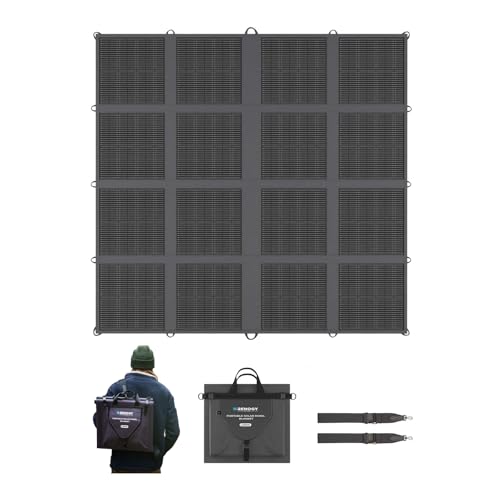
- 400W output with claimed 25% efficiency
- 16-fold design stores in a compact package
- Supports ground, windshield, hanging, and rack setups
Best For: RV and van setups with high-input-compatible power stations
Adapter-Included Value Pick

- Up to 23.5% conversion efficiency
- Includes MC4-to-4-in-1 charging cable
- Four kickstands and PET-laminated construction
Best For: Campers wanting a 200W panel with several included connector options
Best USB Charger

- Three USB ports for simultaneous charging
- Folds small and weighs 1.5 pounds
- Direct USB charging; no built-in battery
Best For: Small-device charging on sunny hikes and campsites
Best High-Output Panel
ZOUPW 480W Bifacial Solar Panel

- 480W design for large power stations
- Bifacial cells can use reflected sunlight
- IP68-rated with cables and ground stakes
Best For: RV, off-grid, and emergency power setups
Best Mid-Range Power Station Panel
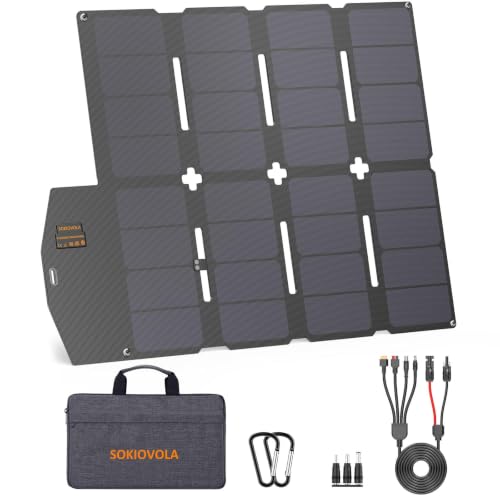
- 100W output for compatible power stations
- Includes a versatile 4-in-1 connector cable
- IP68-rated and folds for transport
Best For: Car camping and travel with portable power stations
High-Capacity Pick

- 400W maximum output and 23.4% efficiency
- MC4 connection for portable power stations
- IP65 ETFE construction with adjustable kickstands
Best For: High-capacity camping, RV, and emergency charging
Rugged Compatibility Pick

- Up to 25.5% conversion efficiency
- 5-in-1 cable for multiple power stations
- IP68 waterproof ETFE-coated construction
Best For: Car camping and RV power-station users
Device-Charging Pick

- 200W output with 24% efficiency
- 60W USB-C plus QC3.0 and USB ports
- 8-in-1 MC4 adapter setup
Best For: Campers charging devices and power stations together
High-Output Pick – Renogy 200W Portable Solar Panel
For campers who want substantial charging capacity without moving to a larger solar setup, this Renogy 200W panel is a strong portable solar panels for camping option. Its 25% efficiency, four kickstands, and built-in USB ports make it useful for charging devices directly or feeding a compatible power station.
Best For: Campers, RV travelers, and blackout-preparedness kits needing a 200W panel with direct USB charging.
Pros:
- 25% efficiency from 16BB N-Type cells.
- USB-C PD 45W and dual USB-A ports can charge up to three devices directly.
- Folds to 23.72 x 22.99 x 1.97 inches and weighs 13.9 pounds.
- Four kickstands offer 40°, 50°, and 60° positioning options.
Cons:
- MC4 output only; the 4-in-1 adapter is sold separately.
- At 13.9 pounds, it is less backpack-friendly than smaller panels.
This model balances useful output, portability, and device-charging convenience. Check your power station’s input requirements and plan for extra adapters if needed.
Lightweight Weather-Ready Pick – FlexSolar 100W Foldable Charger
If pack weight and weather resistance matter most, the FlexSolar 100W is an appealing portable solar panels for camping choice. It weighs 4.1 pounds, folds into a compact package, and combines USB-C, USB-A, and DC outputs for flexible campsite charging.
Best For: Hikers, campers, and road trippers who prioritize low weight, compact storage, and all-weather protection.
Pros:
- Weighs only 4.1 pounds and folds to 12.99 x 10.43 x 2.17 inches.
- Offers PD 3.0 45W USB-C, 18W USB-A, and 100W DC outputs.
- Includes a 4-in-1 cable for DC5521, DC7909, Anderson, and XT60 connections.
- IP67 waterproof and dustproof construction is suited to outdoor use.
Cons:
- Its 100W rating provides less charging capacity than the 200W and 400W options here.
- The unfolded panel measures 45.47 x 26.18 inches, so it still needs setup space.
The FlexSolar stands out for portability and connector flexibility. Its lower power rating makes it better for lightweight gear and smaller power stations than high-demand setups.
Maximum-Wattage Pick – Renogy 400W Solar Blanket
For campsites, vans, and RVs that can use more solar input, the Renogy 400W blanket delivers the highest rated output in this roundup. Its 16-fold design stores compactly, while multiple installation methods make it easier to position around vehicles, trees, racks, or sunny ground.
Best For: RV owners, van travelers, and campers with compatible high-input power stations.
Pros:
- 400W maximum power with claimed 25% efficiency.
- Folds to 16.54 x 15.83 x 4.13 inches and weighs 16.1 pounds.
- Can be placed on a windshield, ground, or suspended between trees or racks.
- Includes two shoulder straps for carrying.
Cons:
- MC4 output only; the 4-in-1 adapter is sold separately.
- Its 16.1-pound weight and blanket-style setup may be excessive for short hikes.
- Actual output varies with shade, sun angle, temperature, cable length, and power-station limits.
This is the capacity-focused choice among these portable solar panels for camping. Before buying, verify that your power station can accept the panel’s voltage, amperage, and 400W-rated input.
Adapter-Included Value Pick – EBL 200W Foldable Solar Panel
The EBL 200W panel is a practical portable solar panels for camping option for shoppers who want broad power-station compatibility in the box. It combines monocrystalline cells, four kickstands, and an included MC4-to-4-in-1 cable for connecting with several common outdoor generator inputs.
Best For: Campers and emergency-preparedness users who need a 200W panel with multiple included connector options.
Pros:
- 200W output with conversion efficiency rated up to 23.5%.
- Includes an MC4-to-4-in-1 cable with XT60, Anderson, DC7909, and aviation connectors.
- 840D Oxford cloth and PET lamination provide a durable, water-resistant construction.
- Four kickstands support campsite positioning.
Cons:
- Weighs about 18 pounds, making it the heaviest 200W option here.
- Its unfolded length is over 94 inches, requiring considerable setup space.
- The listed warranty is one year.
EBL’s strongest advantage is the included adapter cable, which can simplify connection to compatible generators. Its large unfolded footprint and higher weight are worth considering for compact campsites.
Best USB Charger – BigBlue 28W Solar Panel
For campers who want to keep phones, GPS units, headlamps, or power banks topped up, the BigBlue 28W is a compact choice among portable solar panels for camping. Its folding design, multiple USB ports, and direct-device charging setup make it convenient for sunny outdoor trips.
Best For: Campers and hikers charging several small USB devices directly in strong sunlight.
Pros:
- Three ports—two USB-C and one USB-A—support simultaneous device charging.
- Folds to approximately 11 x 6 x 1.4 inches and weighs 1.5 pounds.
- Uses N-type cells and claims up to 25.4% sunlight conversion efficiency.
- IP44-rated panel surface resists rain, fog, and wear.
Cons:
- It cannot store electricity and must remain connected to devices in direct sunlight.
- Output can fluctuate with clouds, angle, temperature, and device requirements.
- It is not intended to charge laptops or large power stations.
The BigBlue is best viewed as a lightweight USB charging panel rather than a battery or power-station charger. Keep connected devices shaded, and expect charging interruptions when sunlight is weak.
Best High-Output Panel – ZOUPW 480W Bifacial Solar Panel
The ZOUPW 480W is a large-format option for campers using a compatible power station or RV setup. As portable solar panels for camping go, it prioritizes high output, bifacial collection, and rugged weather resistance over minimal pack size.
Best For: RV travelers, off-grid campers, and emergency-backup users with large compatible power stations.
Pros:
- 480W output and 42.5V architecture suit large power stations and professional solar setups.
- Bifacial construction can capture reflected light and provide up to 30% extra gain on suitable surfaces.
- At 22.5 pounds, it is lighter than comparable traditional glass-panel setups according to the supplied notes.
- IP68 protection, a scratch-resistant coating, cables, ground stakes, and a 36-month warranty are included.
Cons:
- Its 22.5-pound weight is considerably less convenient for backpacking than small folding USB panels.
- Bifacial gains depend on reflective ground conditions such as snow or sand.
- The manufacturer does not recommend long-term fixed, series, or parallel connections.
This panel makes the most sense when high wattage matters more than ultralight portability. Confirm your power station’s voltage and input compatibility before taking advantage of its rated output.
Best Mid-Range Power Station Panel – SOKIOVOLA 100W Foldable Panel
The SOKIOVOLA 100W offers a practical middle ground for campers who need more power than a USB charger but still want a foldable panel. Its MC4-based cable system works with many portable power stations, making it a versatile choice among portable solar panels for camping.
Best For: Campers and travelers charging compatible small-to-mid-size power stations, especially those needing multiple connector options.
Pros:
- 100W output and 18V rating provide more capacity for power-station charging than small USB panels.
- Included 4-in-1 cable supports XT60, DC5521, DC7909/8mm, and Anderson connections.
- Folds to 14.69 x 8.67 x 1.78 inches and weighs 4.6 pounds.
- ETFE construction, integrated lamination, and IP68 dust and water protection support outdoor use.
Cons:
- Actual charging may be limited by the connected power station’s maximum solar-input rating.
- At 4.6 pounds, it is less suitable for extended backpacking than lighter USB panels.
- Compatibility should be checked carefully despite the broad connector selection.
For many campsite power stations, this is a balanced option: more capable than a phone-charging panel without the bulk of a 480W unit. Verify the power station’s input limit and connector requirements before purchase.
High-Capacity Pick – 400W Foldable Solar Charger
For campers who need substantial charging capacity, this 400W foldable unit is a powerful option among portable solar panels for camping. Its monocrystalline cells, adjustable kickstands, and MC4 connectivity make it suited to larger portable power stations, RV use, and emergency backup.
Best For: Campers and RV users charging high-capacity power stations in sunny outdoor settings.
Pros:
- 400W maximum output with 23.4% conversion efficiency.
- MC4 connector system is designed to work with most portable power stations.
- Foldable design, adjustable kickstands, and rugged ETFE lamination support outdoor use.
- IP65 waterproof construction and resistance to dust and high temperatures.
Cons:
- The larger 400W format may be less convenient for compact campsites or backpacking.
- Power-station input limits may prevent some devices from accepting the panel’s full output.
This is the strongest choice here for maximizing charging potential, provided your power station supports its 400W, 40V input and you have enough space to deploy it.
Rugged Compatibility Pick – N-Type 16BB 200W Panel
This 200W foldable panel is a practical choice among portable solar panels for camping when broad power-station compatibility matters. It includes a 5-in-1 connector cable, a compact folded size, and an IP68-rated ETFE-coated surface for trips where weather resistance is a priority.
Best For: Car campers and RV travelers using Jackery, EcoFlow, Bluetti, Anker, or similar power stations.
Pros:
- Up to 25.5% conversion efficiency from A+ monocrystalline cells.
- 5-in-1 cable supports several common portable power-station connections.
- IP68 waterproof and dustproof construction with durable ETFE coating.
- Magnetic handle, foldable format, carry bag, and RV attachment holes aid transport and setup.
Cons:
- Its listed weight of 16.3 pounds may be cumbersome for long hikes or backpacking.
- Actual charging can be limited by the connected power station’s maximum solar-input rating.
Choose this model if connector flexibility and weather protection outweigh the need for a particularly lightweight panel. Confirm your power station’s input limits before buying.
Device-Charging Pick – 200W Panel with USB-C
If you want to charge both a power station and smaller electronics, this 200W model stands out among portable solar panels for camping. Along with MC4 output and multiple adapters, it has a 60W USB-C port, QC3.0 port, and standard USB port for direct device charging.
Best For: Campers who want direct phone, tablet, camera, and power-bank charging alongside power-station charging.
Pros:
- 200W maximum output with 24% conversion efficiency.
- Includes an 8-in-1 connection setup for broad power-station compatibility.
- 60W USB-C, 18W QC3.0, and standard USB outputs support direct device charging.
- Four adjustable kickstands, magnetic handle, and 15.7-pound weight simplify setup and carrying.
Cons:
- At 15.7 pounds, it is better suited to car camping than extended backpacking.
- IP65 protection is weather resistant but not as highly rated as the IP68 option in this roundup.
This is the most versatile pick for mixed charging needs, especially when keeping phones and other USB devices powered without routing everything through a portable power station.
How We Picked the Best Portable Solar Panels for Camping
We compared these panels by rated output, portability, efficiency claims, connector options, weather protection, and compatibility with common power stations. We also considered the practical differences between compact USB chargers and larger foldable panels designed to replenish battery generators.
Output ratings are laboratory or manufacturer maximums. Real-world charging depends on sunlight angle, shade, temperature, cable losses, and the input limits of your power station. A panel with a higher rating is not automatically the best choice if it is too heavy or oversized for your campsite.
Quick Comparison
| Best For | Recommended Output | What to Look For |
|---|---|---|
| Phones and small electronics | 20–30W | USB-A and USB-C outputs, compact design |
| Weekend camping | 100–200W | Foldable construction, MC4 or compatible power-station cable |
| Extended off-grid use | 200–400W | Higher efficiency, stable stands, manageable packed size |
| Large power stations | 400W or more | Input-voltage compatibility and adequate storage space |
Key Buying Factors for Portable Solar Panels for Camping
Power Output and Daily Energy
Choose wattage according to what you need to recharge. A small USB panel can maintain phones and cameras, while a 100W to 200W model is more versatile for a power station. Higher-output panels are better for larger batteries, but they usually add weight and setup area.
Compatibility and Connections
Check your power station’s solar input voltage, maximum wattage, and connector type before buying. MC4-equipped panels are flexible, but you may need an adapter. USB outputs are useful for direct charging, although they do not replace a properly matched power-station connection.
Portability and Setup
Foldable panels are easier to transport and store. Consider packed dimensions, handle design, panel weight, and whether integrated legs or a kickstand make it easy to aim the panel at the sun. A slightly lower-output panel may be more useful if one person can set it up quickly.
Weather Resistance and Durability
Water-resistant ratings such as IP65, IP67, or IP68 can help protect against rain and splashes, but they do not mean every connector or power station can be left exposed indefinitely. Use the panel according to its instructions and keep connections elevated from standing water.
Efficiency and Sun Conditions
Higher-efficiency cells can produce more power in a smaller footprint, but advertised efficiency does not eliminate the need for direct sunlight. Reposition the panel during the day, avoid partial shade, and keep the surface clean.
Who Should Buy Which Portable Solar Panels for Camping?
- Minimalist campers: Choose a compact 28W-class USB charger for phones, GPS units, and small accessories.
- Most weekend campers: A 100W or 200W foldable panel offers a useful balance of charging speed, portability, and compatibility.
- RV travelers and base campers: Consider a 200W to 400W model when you have room to transport and position larger panels.
- Power-station owners with high daily demand: Look at 400W-class or bifacial panels, but verify the station’s solar input ceiling before purchasing.
For the best result, match the panel to your battery’s input specifications rather than choosing solely by the largest wattage number. That approach helps prevent wasted capacity, unnecessary bulk, and incompatible connections.