Car diagnostic scanners can save time, reduce guesswork, and help you decide whether a warning light is a simple fix or a bigger repair.
From basic code readers to advanced tools with reset services, this guide helps you compare the right features before you buy.
Best 10 Car Diagnostic Scanners Picks for 2026
Compact Check-Engine Basics

- Reads and clears emission-related codes
- Powered directly from the vehicle, no charger needed
- Compact and easy to carry
Best For: Drivers who want a simple plug-in scanner for basic check-engine light diagnosis
App-Connected Diagnostics
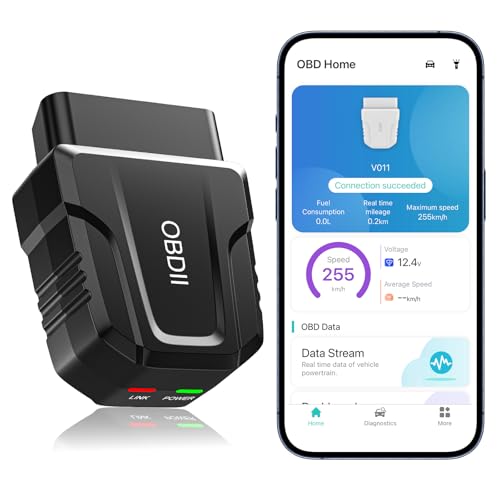
- Wireless Bluetooth 5.4 connection
- Live data, freeze frame, VIN, and reports
- Charts help make readings easier to understand
Best For: Smartphone users who want wireless diagnostics and guided app-based insights
Reliable Everyday Diagnostic Tool

- Built-in code lookup database with clear definitions
- No app or extra power source required
- Includes live data and readiness checks
Best For: Beginners and DIY drivers who want a straightforward, no-app engine code reader
Multi-Use Repair Helper

- Adds battery testing to OBD2 diagnostics
- Includes oil reset and live data features
- Free app provides verified fixes and guidance
Best For: DIY owners who want a scanner with maintenance tools and repair guidance
Budget OBD2 Reader
MOTOPOWER MP69033 Basic Code Reader

- Reads and clears engine fault codes
- Includes live data and freeze frame
- Powered by vehicle; no charging needed
Best For: Simple check-engine diagnostics on a budget
DIY Mechanic Pick
FOXWELL NT301 Live Data Scanner

- Reads and clears engine codes fast
- Live data graphing for sensor monitoring
- I/M readiness help for smog checks
Best For: DIY drivers who want live data and emissions prep
Advanced Diagnostic Tool
BLCKTEC 460T Multi-System Scanner

- Reads engine, ABS, SRS, and transmission codes
- 12+ reset services including oil and TPMS
- AutoVIN and live data for faster diagnosis
Best For: Users who need multi-system scans and service resets
Quick DIY Code Reader
VD10 OBD2 Scanner for Engine Faults
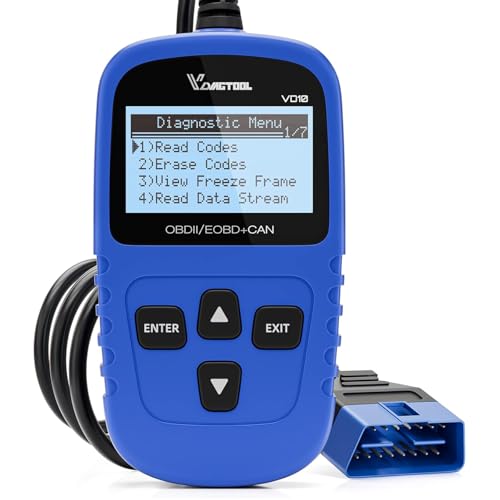
- Reads and clears OBDII trouble codes
- Shows live data, freeze frame, and I/M readiness
- Plug-and-play with built-in code definitions
Best For: DIY drivers who want basic, easy engine diagnostics
Phone-Based Smart Scanner

- Bluetooth scanner with iPhone/Android app
- Explains issues in simple language
- Tracks scans, reminders, and multiple vehicles
Best For: Drivers who want wireless, app-guided diagnostics
Full-System Diagnostic Pick
XTOOL D6S Scanner with 30 Resets

- OE full-system diagnostics across major modules
- 30 maintenance reset and relearn functions
- Touchscreen, AutoVIN, and live-data graphing
Best For: Users who want deeper diagnostics and maintenance resets
Compact Check-Engine Basics – ANCEL AD310 OBD2 Code Reader
If you want straightforward car diagnostic scanners for check-engine troubleshooting, the ANCEL AD310 keeps things simple. It reads and clears emission-related codes, shows live data and freeze frame information, and pulls vehicle info without needing a phone app or extra power source.
Best For: Drivers who want a compact, plug-in code reader for basic check-engine light diagnosis.
Pros:
- Reads and clears emission-related trouble codes quickly
- No battery or charger needed; powered by the OBDII port
- Compact, lightweight design with a clearly labeled screen and buttons
- Supports major OBDII protocols and broad 1996+ vehicle coverage
Cons:
- Only supports emission-related diagnosis, not broader systems
- Not for OBDI vehicles, even with an adapter
- May not fit users who want app-based graphs or advanced features
This is a practical pick for home garages and travel kits when you mainly need fast answers on a check engine light. It is best viewed as a reliable basic scanner rather than a full-system diagnostic tool.
App-Connected Diagnostics – V011 Bluetooth OBD2 Scanner
Among car diagnostic scanners, the V011 stands out for app-based convenience and broader live-data viewing. It connects through Bluetooth 5.4 to iOS or Android and supports reading and clearing DTCs, live data streaming, freeze frame, VIN retrieval, and diagnostic reports.
Best For: Smartphone users who want wireless diagnostics with charts, live data, and guided app help.
Pros:
- Bluetooth 5.4 wireless connection for iOS and Android
- Supports live data, freeze frame, VIN, sensor data, and reports
- Uses charts and visual data to make readings easier to understand
- Works with a wide range of 1996+ vehicles and multiple languages
Cons:
- Requires a phone app and Bluetooth setup
- Car must be on and the connection steps followed carefully
- Code clearing depends on the vehicle being repaired first, per the product notes
This is a good fit if you want a modern scanner that leans on your phone for easier interpretation. It is especially appealing for DIY users who prefer wireless access and more detailed data display.
Reliable Everyday Diagnostic Tool – ANCEL AD410 Scanner
If you want practical car diagnostic scanners for everyday use, the ANCEL AD410 is built around check-engine basics with a little more depth. It reads and clears engine-related codes, shows live data, supports freeze frame and I/M readiness, and includes a built-in database of 42,000+ DTC lookups.
Best For: Beginners and DIY drivers who want a simple, no-app scanner with helpful code definitions.
Pros:
- Reads, clears, and explains engine-related fault codes
- Includes live data, freeze frame, O2 test, EVAP test, and I/M readiness
- No app, Bluetooth, battery, or charger required
- 2.4-inch color display with multilingual support
Cons:
- Only reads engine and emission-related codes
- Does not support ABS, SRS, transmission, bidirectional control, or service reset
- Compatibility should still be checked before buying
The AD410 is a strong middle-ground option if you want more guidance than a basic code reader, but not the complexity of app-based tools. It is a sensible choice for routine troubleshooting and smog-check prep.
Multi-Use Repair Helper – INNOVA 5210 Scanner
For buyers comparing car diagnostic scanners, the INNOVA 5210 offers more than basic code reading. It combines engine and some ABS code coverage with a battery tester, live data, oil reset, and smog-check readiness features, plus app support for verified fixes and repair guidance.
Best For: DIY owners who want a scanner with battery testing, maintenance reset, and app-backed repair guidance.
Pros:
- Combines OBD2 code reading with a battery tester
- Includes live data, oil reset, and drive-cycle readiness features
- Free RepairSolutions2 app offers verified fixes and repair guidance
- Works with most 1996+ US, Asian, and European vehicles, with coverage checking recommended
Cons:
- ABS coverage may vary by vehicle
- Features can differ across makes, models, and years
- Requires app use for the full repair guidance experience
This model is a good fit if you want one tool to handle more than a quick check-engine scan. Its mix of maintenance features and app support makes it especially useful for hands-on car owners.
Budget OBD2 Reader – MOTOPOWER MP69033 Basic Code Reader
If you want a straightforward car diagnostic scanner for check engine light issues, the MOTOPOWER MP69033 covers the essentials without extra complexity. It reads and clears engine codes, shows live data, and includes a built-in DTC lookup to help you understand what the fault means.
Best For: Drivers who want a simple plug-in scanner for basic engine diagnostics and emissions checks.
Pros:
- Reads and clears check engine codes with DTC lookup support.
- Shows live data, freeze frame, I/M readiness, and vehicle info.
- Supports 9 protocols and works with many 1996+ OBD II/CAN vehicles.
- No battery or charger needed; powered directly from the vehicle.
Cons:
- Does not support ABS, airbag, or oil service light functions.
- 2.8-inch screen is compact compared with higher-end scanners.
For basic engine-light troubleshooting, this is a practical entry-level option that keeps the workflow simple. It is a strong fit if you mainly need code reading, code clearing, and live engine data in a compact tool.
DIY Mechanic Pick – FOXWELL NT301 Live Data Scanner
The FOXWELL NT301 is a solid car diagnostic scanner for drivers who want more than a basic code reader. It reads and clears engine faults quickly, adds live data graphing, and includes helpful inspection-ready features like I/M readiness and clear pass/fail indicators.
Best For: DIY owners who want a dependable check-engine scanner with live data and emissions-test prep tools.
Pros:
- Reads and clears DTCs quickly with plug-and-play operation.
- Includes live data graphing for monitoring sensors and engine behavior.
- Built-in I/M readiness hotkeys and LED indicator help with smog checks.
- Supports advanced OBDII modes like O2 sensor and EVAP testing.
Cons:
- Focused on OBDII engine diagnostics rather than full-system scans.
- Compatibility still depends on vehicle year, make, and model.
If you want a practical scanner for diagnosing check engine lights and checking whether a repair really worked, the NT301 is a strong middle-ground choice. It adds useful diagnostic depth without moving into full professional scan-tool territory.
Advanced Diagnostic Tool – BLCKTEC 460T Multi-System Scanner
For buyers comparing car diagnostic scanners with broader coverage, the BLCKTEC 460T stands out with all-system diagnostics and a long list of reset services. It goes beyond basic engine codes to read and clear Engine, Transmission, ABS, and SRS faults, while also offering live data and service resets for maintenance tasks.
Best For: Home mechanics and pros who want multi-system diagnostics plus dealer-style reset functions.
Pros:
- Reads and clears Engine, Transmission, ABS, and SRS codes.
- Offers 12+ reset services, including oil, EPB, BMS, SAS, DPF, and TPMS.
- AutoVIN, AutoScan, and AutoReLink make diagnosis faster and easier.
- Includes real-time live data, freeze frame, and RepairSolutions2 access.
Cons:
- Feature availability depends on the specific vehicle.
- Best to verify compatibility before buying to ensure needed functions are supported.
This is the most capable option in the group if you want broader diagnostic coverage and service-reset support. It makes sense for users who plan to do more than clear a check engine light and want a tool that can handle deeper maintenance workflows.
Quick DIY Code Reader – VD10 OBD2 Scanner for Engine Faults
If you want car diagnostic scanners that keep things simple, the VDIAGTOOL VD10 is a straightforward plug-and-play code reader for everyday check-engine troubleshooting. It reads and clears codes, shows live data and freeze frame info, and includes I/M readiness so you can check whether the vehicle may pass an emissions inspection.
Best For: DIY drivers who want a simple, budget-friendly scanner for basic engine diagnostics and smog-readiness checks.
Pros:
- Reads and clears DTCs, including generic, manufacturer-specific, pending, and stored codes.
- Built-in database with 3,000+ code definitions shown on the screen.
- Live data and freeze frame help with quicker troubleshooting.
- Plug-and-play design with no battery or charger required.
Cons:
- Focused on OBDII engine-level functions rather than full-system diagnostics.
- Small two-line LCD is functional but basic.
- Compatibility is limited to OBDII-compliant 12V vehicles.
The VD10 is a practical pick if you mainly need a reliable way to identify check-engine problems and confirm readiness monitor status without extra setup. It’s best suited to owners who value simplicity over advanced diagnostic depth.
Phone-Based Smart Scanner – FIXD Bluetooth OBD2 Scanner
Among car diagnostic scanners, FIXD stands out for turning your phone into the main display. The Bluetooth sensor pairs with iPhone or Android and uses the app to explain issues in simple language, scan 39,000+ problems, and store results for multiple vehicles.
Best For: Drivers who want a wireless scanner with app-based explanations and easy scan tracking across more than one vehicle.
Pros:
- Bluetooth connection works with iPhone and Android.
- App gives plain-English explanations instead of raw trouble codes.
- Unlimited scans with reminders and scan history for multiple cars.
- Supports 1996+ gas and hybrid vehicles, plus 2006+ diesel vehicles.
Cons:
- Features can vary by vehicle make and model.
- Requires a phone and app for full use.
- Advanced insights depend on the optional premium trial upgrade.
FIXD is a strong fit if you want a modern, low-friction scanner that makes diagnostics easier to understand and manage. It’s especially useful for households that maintain several vehicles and prefer app-based convenience.
Full-System Diagnostic Pick – XTOOL D6S Scanner with 30 Resets
If you need car diagnostic scanners that go far beyond basic code reading, the XTOOL D6S is built for deeper repair work. It offers OE full-system scanning, 30 maintenance reset services, live data graphing, and support for newer features like CAN FD and FCA AutoAuth on compatible vehicles.
Best For: DIYers, enthusiasts, and mechanics who want full-system diagnostics plus a wide range of maintenance resets.
Pros:
- OE-level full-system scan covers engine, ABS, SRS, transmission, and more.
- 30 maintenance functions, including oil reset, BMS, TPMS, EPB bleed, and injector coding.
- AutoVIN, touchscreen control, and up to 4 live-data graphs improve usability.
- Supports 10,000+ models and 90+ brands with multilingual support.
Cons:
- Some functions vary by vehicle and may require VIN compatibility checks.
- FCA AutoAuth support requires a personal account and active subscription.
- More advanced than a basic code reader, so it may be more than casual users need.
The D6S is the most capable option here for shoppers who want a scanner that can help with both diagnosis and maintenance tasks. It’s a strong value if you want dealership-style breadth without moving into professional shop pricing.
How We Picked the Best Car Diagnostic Scanners
We focused on the features that matter most to real buyers: OBD2 compatibility, ease of use, code-reading speed, live data support, and the level of diagnostic depth. We also considered whether a tool is best for simple check-engine-light reads, app-based scanning, or more advanced service functions.
Because not every driver needs a professional-grade tool, we favored a mix of entry-level and advanced options so different budgets and skill levels are covered.
Quick Comparison
Basic readers are best for reading and clearing engine codes, checking readiness monitors, and viewing freeze-frame data. Bluetooth app scanners are more flexible if you want phone-based diagnostics and easier reporting. Mid-range handheld models often add live data and light service functions, while advanced scanners may cover multiple systems and offer reset services for more serious DIY work.
Key Buying Factors for Car Diagnostic Scanners
Vehicle Compatibility
Most Car Diagnostic Scanners support standard OBD2 vehicles, but it is still smart to confirm model-year coverage, especially if you drive a diesel, hybrid, or older import.
Diagnostic Depth
If you only want to identify check-engine codes, a basic scanner is enough. If you want ABS, SRS, transmission, or service reset coverage, look for a more advanced unit.
Live Data and Freeze Frame
Live data helps you spot sensor behavior in real time, while freeze-frame data shows what was happening when the fault was triggered. Both are valuable for better troubleshooting.
Reset Functions
Oil reset, EPB, TPMS, BMS, and SAS functions are useful if you handle routine maintenance yourself. Just make sure the scanner supports the exact services your vehicle needs.
App Vs. Handheld Design
Phone-based scanners are convenient and often easier to update, but handheld tools can be simpler for quick roadside checks and do not depend as heavily on a mobile connection.
Who Should Buy Which Car Diagnostic Scanners?
If you want the simplest option, choose a basic code reader for fast engine-light checks. If you prefer more detail and portable convenience, a handheld live-data scanner is a strong middle ground. If you maintain your own vehicle or work on multiple systems, advanced Car Diagnostic Scanners with reset services and broader module coverage make more sense.
For most buyers, the best choice is the scanner that matches how often you diagnose problems and how deep you want to go beyond reading codes.