Cold floors and drafty doors can make a garage difficult to use, but the right heater can turn it into a more comfortable workshop, storage area, or project space.
We’ve rounded up 10 natural gas garage heaters across forced-air, radiant, vented, and vent-free designs so you can compare heating output, installation needs, and operating priorities before buying.
Best 10 Natural Gas Garage Heaters Picks for 2026
Best Overall Forced-Air Pick
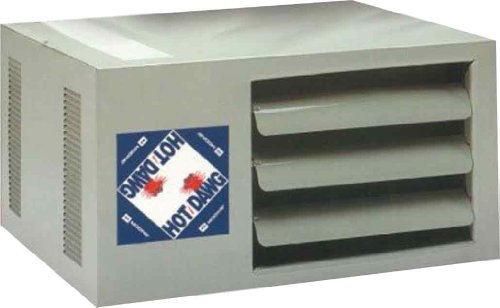
- 45,000 BTU forced-air heating
- Quiet, low-profile cabinet
- For garages up to 700 sq. ft.
Best For: Permanent ceiling-mounted garage heating
Best Radiant Option
HeatStar 25,000 BTU Natural Gas Heater

- Direct radiant heat
- No electricity required
- Covers about 500–600 sq. ft.
Best For: Low-profile garages and outage-prone workspaces
Best for Large Garages
Mr. Heater 80,000 BTU Unit Heater
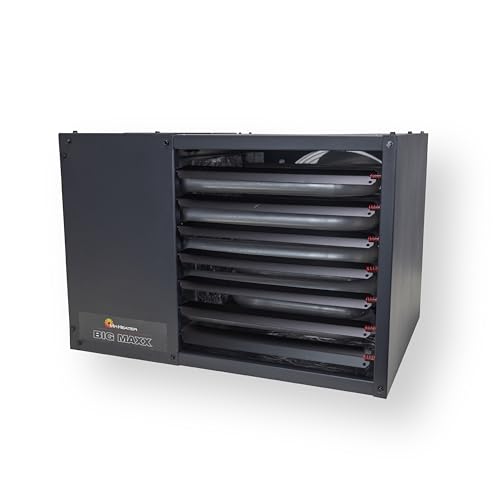
- 80,000 BTU forced-air output
- Covers up to 2,667 sq. ft.
- Includes ceiling-mount brackets
Best For: Large garages, barns, and workshops
Best Vent-Free Convenience
Mr. Heater 30,000 BTU Blue Flame

- 30,000 BTU convection heat
- No outdoor venting required
- Built-in thermostat and battery ignition
Best For: Indoor spaces needing simple wall-mounted heating
Best Commercial-Grade Pick

- 60,000 BTU output and 83% thermal efficiency
- Ceiling- or wall-mount installation options
- Durable heat exchanger and service-focused controls
Best For: Large garages, workshops, and commercial indoor spaces
Best No-Electricity Option
ProCom 30K BTU Ventless Infrared Heater

- 30,000 BTU heating for up to 1,400 square feet
- Operates without electricity
- Includes wall hardware and base feet
Best For: Smaller indoor areas and backup heating during outages
Best Three-Car Garage Pick
Mr. Heater 50K BTU Unit Heater

- 50,000 BTU coverage up to 1,667 square feet
- Low-profile ceiling-mounted design
- Works with 24-volt and Wi-Fi thermostats
Best For: Large garages and workshops with 10-foot ceilings
Best Direct-Vent Pick
Comfort Glow 17,000 BTU Wall Heater

- Heats up to about 500 sq. ft.
- Direct vent and no electricity required
- Includes professional vent kit and safety controls
Best For: Smaller garages needing compact, vented heat
Best High-Output Pick
Mr. Heater 125,000 BTU Unit Heater
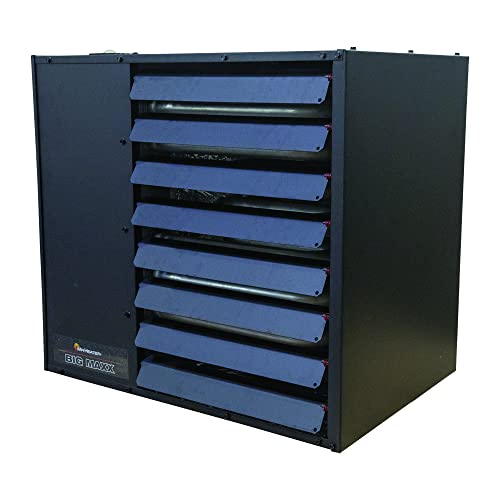
- 125,000 BTU output for up to 2,000 sq. ft.
- Forced-air design for garage heating
- Ceiling-mount brackets and LP conversion kit included
Best For: Large garages requiring powerful overhead heat
Best Flexible Installation Pick
ProCom 30,000 BTU Blue Flame Heater

- Heats up to about 1,400 sq. ft.
- Works without electricity on natural gas
- Includes feet and wall-mount bracket
Best For: Medium spaces needing flexible placement and simple controls
Best Overall Forced-Air Pick – Modine Hot Dawg 45,000 BTU
Modine HD45AS0111Natural Gas Hot Dawg Garage Heater 45,000 BTU with 80-Percent Efficiency Grey
Check Price On AmazonFor shoppers comparing natural gas garage heaters, the Modine Hot Dawg offers 45,000 BTU of forced-air heat for spaces up to 700 square feet. Its low-profile gray cabinet, quiet operation, and standard power exhaust make it a practical ceiling-mounted option for garages, shops, and other indoor work areas.
Best For: Homeowners and shop owners who want a quiet, compact forced-air heater for a garage up to 700 square feet.
Pros:
- 45,000 BTU output with listed coverage up to 700 square feet
- Quiet operation and low-profile design
- Standard power exhaust supports side-wall or roof venting with small-diameter pipe
- Certified for residential, commercial, and industrial use
Cons:
- Requires ceiling-bracket mounting and gas installation
- Needs venting and a 115-volt electrical connection
- At 60 pounds, installation may require extra help
The Hot Dawg is a well-rounded choice when you want efficient, permanent garage heating without a bulky floor unit. Confirm that the 700-square-foot coverage and required venting setup match your space before buying.
Best Radiant Option – HeatStar 25,000 BTU Natural Gas Heater
The HeatStar MH25NG takes a different approach to natural gas garage heaters by using radiant heat to warm people and objects directly. With 25,000 BTU output, no electricity requirement, and listed coverage of 500 to 600 square feet, it suits low-profile garages and workshops where quiet, dependable operation matters.
Best For: Smaller garages, workshops, and utility spaces that need quiet radiant heat and continued operation during power outages.
Pros:
- Radiant heat directly warms people and surrounding objects
- No electricity is required for operation
- Quiet, clean, odor-free operation with no moving parts to service
- Designed for low-profile buildings with 7- to 8-foot ceilings
Cons:
- Lower 25,000 BTU output than the larger forced-air models
- Coverage is limited to approximately 500 to 600 square feet
- Thermostat wiring is not included, and installation requires a gas connection
This heater is especially appealing for a modest garage or workspace where you want targeted warmth without a blower or electrical dependency. Check local requirements and the stated elevation guidance before installation.
Best for Large Garages – Mr. Heater 80,000 BTU Unit Heater
Among natural gas garage heaters, this Mr. Heater unit stands out for its 80,000 BTU forced-air output and listed coverage up to 2,667 square feet. It is designed for ceiling mounting in garages, barns, and workshops, with thermostat compatibility and safety shutoffs for permanent indoor installation.
Best For: Large garages, barns, and workshops that need high-output forced-air heating across a broad area.
Pros:
- 80,000 BTU output for spaces up to 2,667 square feet
- Compatible with standard 24-volt and Wi-Fi-enabled thermostats
- Includes ceiling-mount angle brackets
- Features high-temperature and gas safety shutoffs
Cons:
- Requires a minimum 10-foot ceiling and 8 feet of clearance from heater base to floor
- Thermostat is sold separately
- Ceiling installation and gas conversion or hookup require careful planning
Choose this model when smaller heaters cannot reasonably cover the space. Its substantial output is better suited to larger, taller buildings than compact residential garages, so verify clearance and mounting requirements first.
Best Vent-Free Convenience – Mr. Heater 30,000 BTU Blue Flame
This Mr. Heater blue flame model offers 30,000 BTU of convection heat for areas up to 1,000 square feet. As a vent-free natural gas heater, it does not require outdoor venting or electricity, while its battery-powered ignition and built-in adjustable thermostat add everyday convenience.
Best For: Indoor spaces needing a wall-mounted natural gas heater without outdoor venting or a dedicated electrical connection.
Pros:
- 30,000 BTU output with listed coverage up to 1,000 square feet
- No electricity or outdoor venting required
- Built-in adjustable thermostat and battery-operated ignition
- Includes wall-mounting hardware and low-oxygen safety shutoff
Cons:
- Blower fan kit is sold separately
- Wall mounting is required
- Its listed room applications focus on home and office spaces rather than specifically garages
This model is a convenient choice when simple installation and vent-free operation are priorities. Because it is intended for indoor use, confirm that local codes and the manufacturer’s requirements allow it in your garage before installation.
Best Commercial-Grade Pick – Reznor UDXC-60 60K BTU Heater
For larger garages, workshops, and commercial spaces, the Reznor UDXC-60 is one of the more substantial natural gas garage heaters in this roundup. Its 60,000 BTU forced-air design, 83% thermal efficiency, and ceiling- or wall-mount flexibility suit permanent indoor installations.
Best For: Large garages, workshops, warehouses, and other indoor spaces needing a permanently mounted gas heater.
Pros:
- 60,000 BTU output with an 83% thermal efficiency rating
- Supports ceiling or wall mounting with the appropriate bracket
- TCORE2 heat exchanger, integrated circuit board, built-in disconnect, and status LED
- Includes a long heat-exchanger and component warranty
Cons:
- Mounting hardware is sold separately
- Venting components are not included
- The 71-pound unit may require careful installation planning
The UDXC-60 is a strong choice when you want high output and durable construction for a dedicated heating installation. Confirm clearance, mounting, and the required B-vent or sidewall venting arrangement before purchase.
Best No-Electricity Option – ProCom 30K BTU Ventless Infrared Heater
The ProCom MN300TPA-B offers a compact alternative among natural gas garage heaters, using radiant infrared heat instead of a forced-air fan. It produces up to 30,000 BTU, includes thermostat control, and can operate without electricity, making it useful during outages or where simple installation is preferred.
Best For: Smaller indoor areas, supplemental heat, and situations where electricity may be unavailable.
Pros:
- 30,000 BTU output rated for spaces up to 1,400 square feet
- No electricity is required for operation
- Includes wall-mount hardware and floor base feet
- Built-in oxygen depletion sensor and push-button ignition
Cons:
- Radiant heating may not distribute warmth like a forced-air unit
- It is intended for indoor residential-style spaces rather than large commercial areas
- Ventless operation may not suit every installation or local requirement
This ProCom heater is practical when portability, simple controls, and outage readiness matter more than whole-garage air circulation. Its included base feet and wall hardware provide useful placement flexibility.
Best Three-Car Garage Pick – Mr. Heater 50K BTU Unit Heater
The Mr. Heater F260550 is a ceiling-mounted forced-air unit designed for garages, barns, and workshops. With 50,000 BTU of output and listed coverage of up to 1,667 square feet, it offers a practical fit for a large residential garage while supporting standard 24-volt or Wi-Fi-enabled thermostats.
Best For: Three-car garages and workshops with adequate ceiling height for overhead installation.
Pros:
- 50,000 BTU output for spaces up to 1,667 square feet
- Low-profile ceiling-mounted design
- Compatible with standard 24-volt and Wi-Fi-enabled thermostats
- Includes ceiling-mount angle brackets and an NG-to-LP conversion kit
Cons:
- Requires a minimum 10-foot ceiling and 8 feet of clearance below the heater
- Thermostat is sold separately
- Color may vary between gray and tan
This Mr. Heater model balances strong output with thermostat compatibility, making it a sensible choice for a properly sized garage. Check the required ceiling height and clearances before committing to the installation.
Best Direct-Vent Pick – Comfort Glow 17,000 BTU Wall Heater
For buyers comparing natural gas garage heaters, the Comfort Glow offers compact, wall-mounted heating for spaces up to about 500 square feet. Its direct-vent design, included vent kit, thermostat, and no-electricity operation make it a practical option where reliable, contained heat is important.
Best For: Smaller garages and other indoor spaces needing quiet, wall-mounted natural gas heat.
Pros:
- 17,000 BTU output with thermostatic heat control for areas up to about 500 square feet.
- Direct-vent design requires no chimney and can operate without electricity.
- Includes a professional vent kit, electronic ignition, safety pilot, and built-in pressure regulator.
- Compact 6.5-inch-deep wall-mount cabinet with a quiet stainless steel burner.
Cons:
- Its heating capacity is better suited to smaller spaces than large garages.
- Installation requires venting through a wall and compatibility with 4.5- to 10-inch-thick walls.
The Comfort Glow is a strong choice when you want vented natural gas heat without relying on household electricity. Confirm the room size and installation requirements before choosing it for a garage.
Best High-Output Pick – Mr. Heater 125,000 BTU Unit Heater
Among natural gas garage heaters, the Mr. Heater MHU125 stands out for large-space heating. Its 125,000 BTU forced-air output is rated for up to 2,000 square feet, while the ceiling-mount format helps keep the floor clear in a working garage.
Best For: Large garages that need powerful forced-air heating and ceiling installation.
Pros:
- 125,000 BTU output with listed coverage of up to 2,000 square feet.
- Forced-air heating is designed specifically for garage use.
- Electronic ignition and powered exhaust support convenient operation.
- Includes ceiling-mount angle brackets and a liquid propane conversion kit.
Cons:
- At about 109 pounds, it is substantially heavier and more involved to install than wall-mounted models.
- The large cabinet measures roughly 29.45 by 31.85 by 29.75 inches and requires suitable ceiling space.
- Its listed electrical specification is 61 amps, so installation planning should account for the product requirements.
This model is the most suitable option here for heating a sizable garage, especially when high output and overhead mounting matter more than compactness. Verify mounting, ventilation, fuel, and electrical requirements before installation.
Best Flexible Installation Pick – ProCom 30,000 BTU Blue Flame Heater
The ProCom is a ventless natural gas heater with a 30,000 BTU maximum output and a listed coverage area of up to 1,400 square feet. It includes base feet and a wall-mount bracket, giving buyers flexibility when selecting a setup for an indoor garage or workspace.
Best For: Medium-size indoor spaces where simple manual controls and flexible placement are priorities.
Pros:
- 30,000 BTU maximum output with listed coverage of up to 1,400 square feet.
- Operates on natural gas without electricity.
- Includes base feet and a wall-mount bracket for two installation approaches.
- Offers three manual heat settings and an oxygen-depletion safety shutoff.
Cons:
- It is a ventless model, unlike a direct-vent heater, so installation suitability should be checked carefully.
- Manual push-button ignition and controls provide less automation than thermostatic models.
- The optional blower is sold separately.
The ProCom provides a straightforward, electricity-free heating option with useful mounting flexibility. Its ventless design and manual operation make it especially important to confirm that the intended garage location is appropriate before purchase.
How We Picked These Natural Gas Garage Heaters
We selected models across several common heating styles and output ranges, from compact 17,000-BTU wall heaters to high-capacity 125,000-BTU forced-air units. The lineup includes overhead garage heaters, radiant and infrared options, direct-vent models, and vent-free heaters. We focused on practical differences that matter in a garage or workshop: heat distribution, fuel flexibility, controls, installation requirements, and suitability for enclosed spaces.
Because gas appliances require careful installation, local code compliance and professional review should take priority over any product ranking. Confirm that the unit is approved for your intended location and fuel type before purchase.
Quick Comparison
| Heater type | Best suited for | Main advantage | Important consideration |
|---|---|---|---|
| Forced-air | Large garages and workshops | Fast, broad heat distribution | Fan noise and venting requirements |
| Radiant or infrared | Spot heating and occupied work areas | Direct, comfortable heat | Less uniform whole-room heating |
| Direct vent | Finished or enclosed rooms | Combustion gases are vented outdoors | Requires suitable vent installation |
| Vent-free | Approved spaces needing simpler installation | No external flue required | Needs adequate ventilation and code approval |
Key Buying Factors for Natural Gas Garage Heaters
BTU Output and Garage Size
Choose capacity based on square footage, ceiling height, insulation, climate, door openings, and desired temperature rise. Oversizing can cause short cycling, while an undersized heater may run constantly without keeping the space comfortable. A heating professional can calculate the load more accurately than a simple square-foot estimate.
Venting and Combustion Air
Direct-vent and vented units send combustion gases outside, while vent-free models release heat and combustion byproducts into the room. Check local rules, ceiling height, ventilation requirements, and manufacturer clearances. Never install a gas heater in a location that does not meet its listed use conditions.
Heat Distribution and Controls
Forced-air heaters warm larger areas quickly, but their fans may be noticeable. Radiant units are useful when you want heat directed toward people or workstations. Thermostats, adjustable output, and automatic safety shutoffs can make daily operation more convenient.
Fuel Flexibility and Installation
Some forced-air models support either natural gas or propane, but they may require a conversion kit or specific setup. Verify gas pressure, electrical requirements, mounting hardware, clearances, and whether professional installation is required.
Who Should Buy Which Natural Gas Garage Heaters?
- For a large, frequently used workshop: Consider a higher-BTU forced-air unit for faster whole-space heating.
- For a smaller garage or enclosed utility area: A lower-output wall heater may provide adequate comfort with a smaller footprint.
- For a workstation or spot-heating priority: Radiant or infrared heat can warm occupants directly without heating every corner equally.
- For improved combustion separation: A direct-vent model is worth considering when outdoor venting can be installed properly.
- For simpler installation requirements: A vent-free heater may fit approved applications, but ventilation, carbon-monoxide protection, and local regulations are essential.
Whichever model you choose, install carbon-monoxide detectors, maintain required clearances, and have gas connections and venting inspected by a qualified professional.