Choosing the right trail radio can make group travel easier, safer, and far less stressful. The best GMRS radio for overlanding balances range, ease of use, and a setup that fits your vehicle or handheld needs.
In this roundup, we focused on practical options for convoy communication, repeaters, weather alerts, and off-road durability so you can pick a radio that works when the road gets rough.
Best 10 GMRS Radio for Overlanding Picks for 2026
Best for Tight Dashboards
Midland MXT275 Jeep Branded MicroMobile GMRS Radio

- Compact integrated mic keeps the main unit hidden
- 15W GMRS power with 8 repeater channels
- NOAA weather scan and alert for trip safety
Best For: Overlanders and Jeep owners who want a space-saving hardwired GMRS setup.
Best for Channel-Rich GPS Teams

- 1,000 channels across 10 zones for organized group comms
- Built-in GPS helps with location sharing and distance checks
- Includes two radios, USB-C charging, and 2500mAh batteries
Best For: Overlanding crews and trail groups that want feature-packed handheld GMRS radios with GPS.
Best High-Power Pick
Midland MXT500 50W GMRS Mobile Radio

- 50W output for stronger range potential
- IP67 waterproof and trail-ready
- Repeater-capable with magnetic-mount antenna
Best For: Overlanders and off-road drivers who want a powerful GMRS mobile radio with easy setup.
Best for Features
BAOFENG GM-15 Pro GMRS Radio 2-Pack
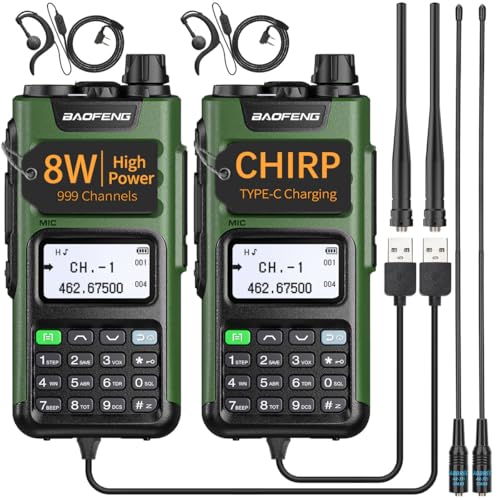
- 250 channels with repeater capability
- NOAA weather alerts and emergency tools
- USB-C charging with included 2-pack value
Best For: Overlanders who want an affordable, feature-packed handheld set with repeater support.
Best for Easy Mobile Install
Radioddity DB20-G 20W GMRS Mobile Radio

- 20W mobile output with GMRS repeater access
- Easy one-hand microphone controls and display sync
- Includes bracket, mic holder, programming cable, and car charger
Best For: Overlanders who want a simple, install-ready mobile GMRS radio for truck or 4x4 use.
Best for Easy Install
Retevis RA86 GMRS Mobile Radio

- CHIRP-compatible for easier setup
- Magnetic antenna and cigarette lighter plug
- Dual speakers and NOAA weather alerts
Best For: Overlanders who want a quick-install GMRS mobile radio with clear audio and weather monitoring.
Best for High-Power Range
Radioddity DB40-G 40W GMRS Mobile Radio

- 40W mobile GMRS radio for stronger trail and road comms
- 169 customizable channels with repeater support
- Dual watch, dual display, and VOX for easier driving use
Best For: Overlanders and off-road drivers who want a powerful mounted GMRS radio with repeater capability.
Best for Long-Range Base Camp Comms
GMRS Mobile Radio, 25W Repeater Capable

- 25W mobile GMRS with repeater support
- Dual PTT, VOX, and large display
- NOAA weather alerts for trip safety
Best For: Overlanders who want a mounted GMRS setup with stronger range potential and weather alerts.
Best for Tight Dashboards – Midland MXT275 Jeep Branded MicroMobile GMRS Radio
If you want a practical GMRS radio for overlanding, the Midland MXT275 is built around a compact control microphone that keeps the main unit tucked away. It delivers 15 watts on GMRS channels, supports repeater access, and adds NOAA weather alerts for trail and travel use.
Best For: Overlanders, Jeep owners, and off-road drivers who want a hardwired GMRS setup with a clean dash layout.
Pros:
- Integrated control mic saves space and simplifies installation
- 15W output with 8 repeater channels for stronger trail communication
- NOAA weather scan and alert add useful safety coverage
- Works with Midland FRS/GMRS radios for easy group coordination
Cons:
- Not water resistant, so it needs a protected mounting spot
- Requires FCC GMRS licensing for legal operation
- External antenna setup takes more install effort than handhelds
For buyers prioritizing a neat install and reliable trail comms, this is a strong GMRS radio for overlanding. It is especially appealing if you want more range than a handheld without giving up dashboard space.
Best for Channel-Rich GPS Teams – Radioddity GM-30 Plus 2-Pack
If you want a GMRS radio for overlanding that gives you lots of room to grow, the Radioddity GM-30 Plus stands out for its 1,000-channel capacity, GPS tracking, and dual-pack value. It’s built for groups that need flexible programming, reliable short-to-mid-range comms, and extra receiving coverage for scouting or trip support.
Best For: Overlanding crews, trail leaders, and road-trip groups that want feature-heavy handhelds with GPS and lots of programmable channels.
Pros:
- 1,000 total channels with 10 zones make it easy to organize multiple vehicles or teams.
- GPS position and distance readouts add useful coordination for trail travel and safety.
- Includes a 2500mAh battery, USB-C charging, and a 2-pack setup for immediate group use.
- Chirp compatibility and frequency copy simplify programming across both radios.
Cons:
- Feature-rich menus may be more complex than a basic GMRS handheld.
- Range claims depend heavily on terrain and antenna placement.
- Extra scanning bands are useful, but not necessary if you only need simple GMRS use.
The GM-30 Plus is a strong pick if your GMRS radio for overlanding needs are centered on coordination, flexibility, and GPS-aware team communication rather than just simple push-to-talk basics.
Best High-Power Pick – Midland MXT500 50W GMRS Mobile Radio
If you want a GMRS radio for overlanding that prioritizes power, range, and simple mobile installation, the Midland MXT500 is a strong option. Its 50-watt output, repeater support, waterproof IP67 build, and included magnetic-mount antenna make it a practical fit for trail rigs, ranch trucks, and remote travel where dependable comms matter.
Best For: Overlanders and off-road drivers who want a powerful GMRS mobile radio with easy setup and long-range potential.
Pros:
- 50-watt output helps improve range in open terrain and weak-signal areas
- Repeater-capable with 99 channels and 142 privacy codes for flexible communication
- IP67 waterproof rating and compact design suit rugged vehicle use
- Includes magnetic-mount antenna for a more convenient install
Cons:
- Internal speaker quality may be average without an external speaker
- Higher price than entry-level GMRS radios
The MXT500 stands out as a serious mobile option for anyone shopping for a GMRS radio for overlanding, especially if you need strong transmit power and repeater access rather than just basic convoy comms. It is a better fit for users who want a durable, feature-rich setup than for buyers looking for the cheapest possible radio.
Best for Features – BAOFENG GM-15 Pro GMRS Radio 2-Pack
If you want a feature-rich GMRS radio for overlanding without spending a lot, the BAOFENG GM-15 Pro 2-pack gives you plenty of flexibility. It includes 250 memory channels, NOAA weather reception, repeater capability, USB-C charging, and handy extras like an SOS alarm and flashlight for trail use.
Best For: Overlanders who want an affordable 2-pack with repeater support, weather alerts, and easy charging options.
Pros:
- 250 channels with GMRS repeater support for more flexible communication
- NOAA weather channels plus emergency alarm and flashlight
- USB-C charging makes it easy to top up in a vehicle or from a power bank
- Pre-programmed channels and keypad programming simplify setup
Cons:
- Not water resistant, so it needs more care in rough weather
- Range is highly dependent on terrain and obstructions
- Feature set may be more than casual users actually need
As a GMRS radio for overlanding, this BAOFENG stands out for packing in a lot of practical tools at a low entry price. It is a strong pick if you want repeater access, weather monitoring, and simple day-to-day usability in a compact handheld.
Best for Easy Mobile Install – Radioddity DB20-G 20W GMRS Mobile Radio
If you want a practical GMRS radio for overlanding that installs cleanly in a truck or 4×4, the Radioddity DB20-G is a strong fit. It combines a 20W mobile form factor with a driver-friendly microphone, display sync, and access to GMRS repeaters for better trail communication.
Best For: Overlanders and off-road drivers who want a straightforward mobile GMRS setup with good range and easy one-hand control.
Pros:
- 20W mobile output with GMRS repeater support for better trail range
- Display sync and all-in-one mic controls make it easier to use while driving
- Includes the mounting hardware, programming cable, and 12V car charger
- Works with GMRS handhelds and scans UHF/VHF/NOAA bands
Cons:
- Wired mobile install is less convenient than a handheld-only radio
- IP44 water resistance is fine for cabin use, but not full weatherproofing
For buyers comparing a GMRS radio for overlanding, the DB20-G stands out for its simple install, solid feature set, and trail-friendly usability rather than flashy extras. It is a smart middle-ground choice if you want dependable mobile communication without spending up for a more advanced unit.
Best for Mobile Base Power – BTECH GMRS-50PRO 50W GMRS Base Station
If you want a GMRS radio for overlanding that can double as both a vehicle rig and a base station, the BTECH GMRS-50PRO stands out for its true 50-watt output, connected mic controls, and rugged IP54 build. It’s designed for licensed GMRS users who want quick access to channels, weather alerts, GPS tools, and app-based programming without spending extra time in menus.
Best For: Overlanders who want a high-power, weather-resistant GMRS radio with mobile-friendly controls and flexible programming for trips, convoys, and emergency setups.
Pros:
- True 50W GMRS power for strong vehicle and base-station use
- Bluetooth app programming plus CSV import/export for easy fleet or group setup
- GPS, NOAA alerts, and Bluetooth HFP support for modern travel coordination
- IP54-rated rugged housing with mounting hardware included
Cons:
- Requires a GMRS license for full legal use
- Not submersible, so it’s weather-resistant rather than fully waterproof
- Best suited to 13.8V vehicle or fixed-power installations
For buyers comparing a GMRS radio for overlanding, this model is especially compelling if you want one radio that can live in the vehicle, support convoy communication, and still serve as a capable home or trail base station. The feature set is broad, but it’s the combination of power, GPS, and easy programming that makes it practical for real-world travel.
Best for Easy Install – Retevis RA86 GMRS Mobile Radio
If you want a GMRS radio for overlanding that installs quickly and adds real-road practicality, the Retevis RA86 is built around that idea. The magnetic antenna, cigarette lighter plug, and fully integrated mic make it simple to set up in a Jeep, truck, or RV without taking over your dashboard.
Best For: Overlanders who want a compact, easy-to-install GMRS mobile radio with CHIRP support, weather alerts, and clear audio in noisy vehicles.
Pros:
- CHIRP-compatible for easier programming and customization
- Magnetic-mount antenna and 12V plug simplify installation
- Dual speakers help cut through engine and trail noise
- NOAA alerts and weather scanning add useful trip safety
Cons:
- Magnetic antenna setup may not match the range of a hard-mounted system
- Not water resistant, so it needs a protected mounting spot
The RA86 is a strong fit if you need a practical GMRS radio for overlanding rather than a complicated build. It favors quick setup, flexible placement, and dependable roadside communication, which makes it especially appealing for weekend rigs and multi-vehicle trips.
Best Easy-Install Mobile GMRS – Radioddity DB25-G Mobile Radio
If you want a GMRS radio for overlanding that installs quickly and does more than basic push-to-talk, the Radioddity DB25-G is a practical mobile option. It runs from a vehicle cigarette plug, supports GMRS repeaters, and adds UHF/VHF scanning so you can monitor more channels while on the trail.
Best For: Drivers who want a compact, plug-in GMRS setup for overlanding, camping, and off-road convoy communication without hardwiring.
Pros:
- Easy plug-in power makes install fast and flexible for vehicles
- GMRS repeater capable with 199 channels and quad watch standby
- Includes UHF/VHF scanning receiver for added monitoring range
- Up to 25W output with selectable power levels for trail use
Cons:
- Not as simple as a handheld for quick grab-and-go use
- Full performance depends on proper antenna and vehicle placement
- Programming extra channels can take some setup time
Overall, the DB25-G is a strong GMRS radio for overlanding if you want a compact mobile unit with repeater access, scanning, and an easy power setup. It is especially appealing for travelers who need a flexible radio that can grow with their convoy communications.
Best for High-Power Range – Radioddity DB40-G 40W GMRS Mobile Radio
If you want a GMRS radio for overlanding that prioritizes range and flexibility, the Radioddity DB40-G is built for vehicle installs and long-distance trail comms. Its 40W output, repeater support, and dual-watch display make it a strong fit for off-road convoys, remote travel, and mixed terrain where reliable contact matters.
Best For: Overlanders, off-road drivers, and road-trippers who want a powerful mobile GMRS setup with repeater support.
Pros:
- Up to 40W output for stronger long-range GMRS performance
- 169 customizable channels with GMRS repeater support and UHF RX
- Dual watch and dual display help monitor two channels at once
- Mic controls and VOX reduce distractions while driving
Cons:
- Requires a vehicle-style installation, so it is not a grab-and-go handheld
- Performance depends heavily on antenna quality and mounting
- Advanced channel setup may take some learning for first-time users
For buyers comparing a GMRS radio for overlanding, the DB40-G stands out for its high power and repeater flexibility rather than portability. It is a practical choice if you want a mounted radio that can keep up on long trail days, highway caravans, and remote campsite communication.
Best for Long-Range Base Camp Comms – GMRS Mobile Radio, 25W Repeater Capable
If you want a GMRS radio for overlanding that feels more like a compact base station than a basic handheld, this 25W mobile unit is built for the job. It adds repeat-capable GMRS support, NOAA weather alerts, VOX hands-free use, and a large display, making it a practical pick for vehicle-based trips and trail communications.
Best For: Overlanders who want a vehicle-mounted GMRS setup with stronger range potential, weather alerts, and dual PTT convenience.
Pros:
- 25W output and repeater capability for more capable trail and convoy communication
- Dual PTT, VOX, and a large screen make in-vehicle use easier and safer
- NOAA weather alerts add useful emergency awareness on remote routes
- Compact mobile design fits well in trucks, rigs, and base-camp setups
Cons:
- Not water resistant, so it needs a protected mounting location
- Range will still depend heavily on antenna quality and terrain
- Requires programming for the best channel setup
This is a strong GMRS radio for overlanding if you prioritize a mounted setup with more features than a simple handheld. It’s best suited to drivers who want clearer long-distance comms, weather awareness, and flexible PTT controls on the road.
How We Picked the Best GMRS Radio for Overlanding
We looked for models that suit real overland use: dependable transmit power, repeater support, clear controls, useful emergency features, and installation options that work in trucks, Jeeps, side-by-sides, and base-camp setups. We also favored radios with strong value, easy programming, and features that matter on the trail rather than marketing extras.
Quick Comparison
Mobile radios are usually the best choice for a dedicated rig because they offer better power, cleaner audio, and more stable operation. Handhelds are more flexible for spotters, outside-the-vehicle use, and mixed travel groups. If you need broader coverage or plan to camp in one place, higher-wattage mobile or base-station-style units are worth a closer look.
Key Buying Factors for GMRS Radio for Overlanding
Power and Range
Higher wattage can help, but real-world range depends just as much on antenna quality, mounting position, terrain, and line of sight. A 15W radio with a good antenna can outperform a poorly installed higher-power unit.
Repeater Capability
If you travel in remote areas, repeater-capable radios are a major advantage. They can extend communication beyond direct line-of-sight when a local repeater is available.
Install Style
Choose handhelds for portability and quick setup, or mobile radios for better trail performance in a permanent vehicle installation. Check whether the kit includes a mic, power lead, mounting hardware, and a convenient display layout.
Weather and Emergency Features
NOAA weather reception, scan functions, and emergency channels are especially useful on long trips. These features can help you stay informed when conditions change fast.
Programming and Ease of Use
Many GMRS radios for overlanding are easier to live with when they support simple channel naming, good displays, and straightforward programming. If you like customization, look for CHIRP compatibility or flexible channel management.
Who Should Buy Which GMRS Radio for Overlanding?
Choose a handheld GMRS radio if you want portability, trail spotting, or a backup option for camp. Pick a mid-power mobile radio if you want an easy, affordable in-vehicle solution for weekend overlanding. Go with a 40W to 50W model if you run long convoys, cross varied terrain, or want the strongest setup for remote travel. Base-station-style radios are best for camp hubs, garages, and fixed locations where mobility matters less than convenience and features.
If you are building your first trail communication setup, start with the radio form factor that matches how you actually travel, then pair it with a quality antenna and proper installation. That combination matters more than specs alone.