A damp garage can lead to musty odors, surface rust, peeling finishes, and damage to cardboard, tools, vehicles, and stored belongings. The right dehumidifier helps maintain a more stable environment without requiring constant emptying.
These 10 garage dehumidifiers cover compact spaces, large garages, basement-style areas, and demanding moisture conditions. Compare capacity, drainage, coverage, efficiency, and controls to find the best fit for your space.
Best 10 Garage Dehumidifiers Picks for 2026
Best Overall
Gasbye DryPrime 115-Pint Garage Dehumidifier
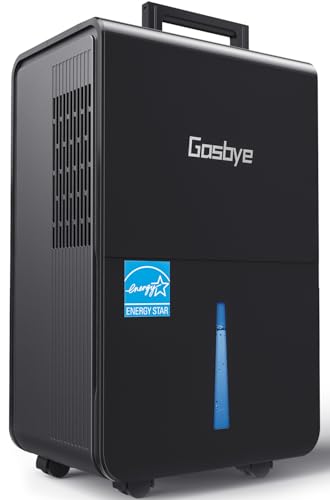
- Up to 115 pints/day under peak conditions
- Three drainage options, including hose connections
- ENERGY STAR 2026 and about 45dB operation
Best For: Large garages needing high-capacity, flexible moisture control
Best Quiet Option
Manastin 81-Pint Large-Area Dehumidifier
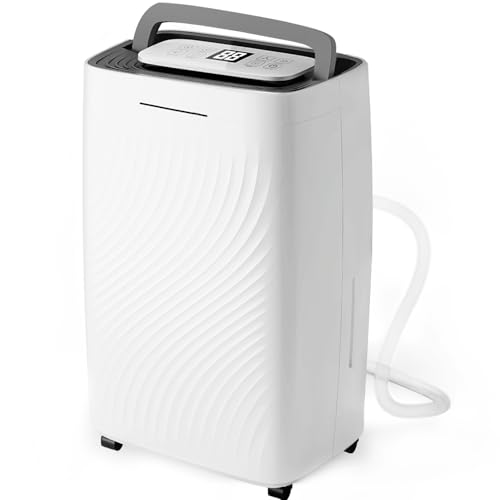
- Designed for areas up to 5,500 square feet
- Auto-defrost operation down to 41°F
- 40dB sleep mode and rolling portability
Best For: Large, cool garages where quiet operation is important
Best Efficiency Pick
AEOCKY RHEA-002 6000-Sq.-Ft. Dehumidifier

- ENERGY STAR Most Efficient 2024 certified
- Rated up to 105 pints/day in peak conditions
- Designed for spaces up to 6,000 square feet
Best For: Large garages where efficiency and capacity are top priorities
Best for Smaller Garages
VEAGASO 34-Pint Compact Dehumidifier

- Designed for spaces up to 2,500 square feet
- Three modes and continuous-drain capability
- 40dB-or-less low-speed operation with casters
Best For: Smaller garages needing portable, easy-to-use moisture control
Best for Easy Setup
AEOCKY 80-Pint Garage Dehumidifier

- Up to 5,500 sq. ft. coverage
- ENERGY STAR Most Efficient 2025
- Smart humidity and low-temperature controls
Best For: Large, heavily damp garages
Best Compact Control
GoGuess 21-Pint Garage Dehumidifier

- Covers up to 1,600 sq. ft.
- Three modes, including quiet Sleep
- Tank or continuous drainage options
Best For: Smaller garages and multipurpose areas
Best High-Capacity Pick

- Covers up to 5,500 sq. ft.
- Offers 30%–80% RH control
- Includes hose, casters, and washable filter
Best For: Large garages and basements needing flexible, high-capacity moisture control
Best Balanced Option
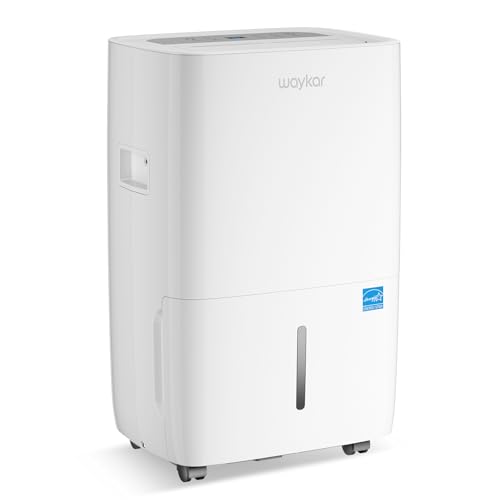
- Covers up to 5,000 sq. ft.
- Uses 90° auto-swing airflow
- Includes tank and continuous-drain hose
Best For: Large garages and basements needing quiet, flexible operation
Best Quiet Garage Pick
4,500-Sq.-Ft. Energy Star Dehumidifier

- Operates at a stated 40 dB
- Offers a 90° adjustable air outlet
- Includes hose drainage and 1.72-gallon tank
Best For: Garages near living areas where quiet, targeted drying is important
Best Overall – Gasbye DryPrime 115-Pint Garage Dehumidifier
For large garages and other demanding spaces, the Gasbye DryPrime is a high-capacity option among garage dehumidifiers. It offers multiple drainage methods, automatic humidity control, and a compressor rated for relatively quiet operation.
Best For: Large garages, basements, and spaces where continuous drainage and high moisture-removal capacity matter.
Pros:
- Rated to remove up to 115 pints per day under peak test conditions, with lower stated capacities at cooler or less humid conditions.
- Supports a 1.7-gallon tank, included 5-foot hose, or a standard 3/4-inch garden hose connection.
- ENERGY STAR 2026 certified, with automatic restart after a power outage and adjustable humidity control.
- Operates at approximately 45dB and includes a washable filter.
Cons:
- Its 43-pound, 11-by-15-by-24-inch build may be bulky for smaller garages.
- The highest 115-pint rating applies to 86°F and 80% relative humidity conditions; performance varies with conditions.
The DryPrime is a strong fit when your garage has persistent moisture and a nearby drain. Its substantial construction and flexible drainage are useful, but measure your available floor space before buying.
Best Quiet Option – Manastin 81-Pint Large-Area Dehumidifier
The Manastin combines broad stated coverage with a compact footprint, making it a practical choice for garage dehumidifiers when you want strong moisture removal without an industrial-size unit. Its auto-defrost system and continuous-drain hose support use in cooler, damp areas.
Best For: Large garages and basements where quiet operation, portability, and low-temperature reliability are priorities.
Pros:
- Designed for spaces up to 5,500 square feet and rated for up to 80 pints per day under peak conditions.
- Automatic defrost supports operation in spaces as cool as 41°F.
- Includes a 1.6-gallon tank, 78-inch drain hose, auto shutoff, child lock, and overheat protection.
- Sleep mode is rated at 40dB, and four swivel wheels make it easier to move.
Cons:
- The 80-pint rating is based on peak summer conditions, while the listed damp-basement figure is 50 pints per day.
- Continuous drainage requires suitable placement for the included hose.
This model is appealing for garages that are chilly in winter or connected to other large areas. Its quiet mode and wheels add convenience, though buyers should compare actual garage conditions with the stated capacity ratings.
Best Efficiency Pick – AEOCKY RHEA-002 6000-Sq.-Ft. Dehumidifier
The AEOCKY RHEA-002 stands out among garage dehumidifiers for its ENERGY STAR Most Efficient 2024 designation and high-capacity compressor design. It is aimed at large spaces where energy use and sustained moisture removal are central buying considerations.
Best For: Large garages and commercial-style spaces where verified high efficiency and strong dehumidifying performance are especially important.
Pros:
- Designed for spaces up to 6,000 square feet and rated at 105 pints per day in very humid summer conditions.
- Lists 83 pints per day under warm, damp basement conditions.
- ENERGY STAR Most Efficient 2024 certification targets top-tier efficiency among qualifying models.
- Uses a high-efficiency rotor compressor, pure copper piping, and smart humidity detection with power-off memory.
Cons:
- The supplied notes do not specify tank capacity, drainage options, noise level, or physical dimensions.
- The stated maximum performance depends on particularly warm and humid test conditions.
For a large garage that runs frequently, the AEOCKY’s efficiency credentials and stated capacity make it worth considering. However, confirm installation details such as drainage, clearance, and noise before purchase because those specifications are not provided here.
Best for Smaller Garages – VEAGASO 34-Pint Compact Dehumidifier
The VEAGASO is a more compact choice among garage dehumidifiers, with a 2,500-square-foot coverage rating, rolling casters, and a slim 10-by-12.5-by-19-inch profile. Its continuous-drain mode is useful for garages with a nearby floor drain or sink.
Best For: Smaller garages, utility areas, and homeowners who want portable controls with relatively quiet low-speed operation.
Pros:
- Offers DEHU, DRY, and CONT modes for routine humidity control, clothes drying, or nonstop operation.
- Includes a drain hose for continuous drainage or a removable 0.53-gallon tank with automatic shutoff.
- LED touchscreen, humidity display, timer, and power-failure memory simplify daily use.
- Low-speed operation is rated at 40dB or less, with casters and a recessed handle for portability.
Cons:
- Its 34-pint capacity is lower than the larger-area models in this roundup.
- The small 0.53-gallon tank may require frequent emptying when continuous drainage is unavailable.
- The listed 2,500-square-foot coverage may not suit very large or severely damp garages.
This VEAGASO model makes sense when footprint, portability, and simple controls matter more than maximum extraction. Use the included hose when possible to avoid repeatedly emptying the relatively small tank.
Best for Easy Setup – AEOCKY 80-Pint Garage Dehumidifier
For large, persistently damp garages, the AEOCKY is a high-capacity option among garage dehumidifiers. Its listed performance reaches up to 80 pints per day in very hot, humid conditions, while ENERGY STAR Most Efficient 2025 certification emphasizes efficient operation.
Best For: Large garages and other expansive spaces that need powerful, continuous moisture control and low-temperature capability.
Pros:
- Designed for spaces up to 5,500 square feet.
- High stated extraction capacity of up to 80 pints per day under specified conditions.
- ENERGY STAR Most Efficient 2025 certification and compressor-based operation.
- Smart humidity control, power-off memory, and low-temperature defrost features.
Cons:
- Its large capacity and advanced features may be more than a small garage requires.
- Actual moisture removal varies with temperature and relative humidity.
The AEOCKY stands out when garage size, extreme humidity, and operating efficiency are priorities. It is a strong fit for demanding environments, though buyers should match its substantial capacity to their space and drainage setup.
Best Compact Control – GoGuess 21-Pint Garage Dehumidifier
The GoGuess offers a compact approach to garage moisture control, with a stated 1,600-square-foot coverage area and up to 21 pints of daily extraction. Its automatic humidity regulation, quiet operation, and continuous-drain option make it practical for garages used as storage, work areas, or laundry spaces.
Best For: Smaller garages and multipurpose spaces where quiet operation, adjustable humidity, and flexible drainage are important.
Pros:
- Rated for spaces up to 1,600 square feet and extracts up to 21 pints per day under specified conditions.
- DEHU, TURBO, and SLEEP modes support different moisture-control needs.
- Automatic humidity regulation, auto-defrost, overload protection, and child lock.
- Includes a 2.3-liter tank and continuous drainage with the included hose.
Cons:
- The 21-pint capacity is less suited to very large or severely damp garages.
- The tank may require regular emptying when continuous drainage is not used.
With a compact footprint, 40 dB stated operating noise, and straightforward controls, the GoGuess is a balanced choice for moderate garage humidity. Use the drain hose for longer unattended operation.
Best Mid-Size Option – Waykar 34-Pint Garage Dehumidifier
The Waykar is a versatile choice for garage dehumidification, combining 34-pint daily capacity with coverage up to 2,000 square feet. Its adjustable humidity range, directional airflow, and dual-drainage design suit garages that need steady moisture removal without stepping up to a larger whole-space unit.
Best For: Medium-size garages, basements, and commercial areas that need dependable capacity with adjustable airflow and drainage.
Pros:
- Removes up to 34 pints per day and is designed for spaces up to 2,000 square feet.
- 30%–80% humidity settings allow flexible moisture control.
- Manual 90-degree airflow adjustment helps direct dry air where needed.
- ENERGY STAR certified, with auto-defrost, overload protection, timer, and continuous drainage.
Cons:
- Uses two fan speeds rather than the three modes offered by some competing units.
- The 2.5-liter tank may need frequent emptying during humid conditions unless the hose is connected.
The Waykar occupies a useful middle ground for garage dehumidifiers: more capacity than compact models, while retaining practical controls and drainage flexibility. Its 90-degree airflow adjustment is particularly useful when dampness is concentrated in one part of the garage.
Best High-Capacity Pick – KNKA 80-Pint Dehumidifier
For large garages and other expansive spaces, this garage dehumidifier combines broad coverage with a high stated extraction rate. Its adjustable modes, continuous-drain option, and mobile design make it practical for ongoing moisture control.
Best For: Large garages, basements, and homeowners who want flexible humidity settings.
Pros:
- Rated for spaces up to 5,500 square feet and up to 80 pints per day under stated test conditions.
- Offers AUTO, DRY, and SETTING modes with humidity targets from 30% to 80% RH.
- Includes a 1.45-gallon tank, drain hose, casters, washable filter, child lock, and 12-hour timer.
Cons:
- The optional 2.64-gallon external tank is sold separately.
- The listed 220-volt specification may not suit every garage electrical setup.
- Humidity readings are taken at the air inlet and may differ from a separate hygrometer.
The KNKA is a strong choice when coverage and control matter most. Its tank is relatively modest for the stated capacity, so continuous drainage is likely more convenient for unattended garage use.
Best Balanced Option – Waykar 80-Pint Dehumidifier
This Waykar garage dehumidifier balances large-area coverage with convenient airflow and drainage features. It is designed for spaces up to 5,000 square feet and supports both tank emptying and continuous gravity drainage.
Best For: Large garages, basements, RVs, and users who want quiet operation with flexible drainage.
Pros:
- Removes up to 80 pints per day under the stated 95°F, 90% RH test condition.
- 90-degree auto-swing airflow helps distribute dry air across the room.
- Provides 30%–80% humidity control, auto defrost, overload protection, a 4.3-liter tank, and an included drain hose.
Cons:
- The included drain hose is only 3.3 feet long, which may limit placement.
- The 1.14-gallon tank may require frequent emptying during very humid operation.
- Its stated maximum coverage is slightly less than the KNKA model’s rating.
The Waykar is a well-rounded pick for garages where even airflow and simple drainage are priorities. The included hose is useful out of the box, while the low-noise design makes it more suitable for adjoining living areas.
Best Quiet Garage Pick – 4,500-Sq.-Ft. Energy Star Dehumidifier
If noise is a concern, this garage dehumidifier emphasizes quiet operation alongside broad coverage. Its adjustable air outlet, continuous-drain option, and mobility features make it suited to garages, basements, gyms, and laundry areas.
Best For: Garages near living spaces and users who prioritize quiet, directed drying.
Pros:
- Rated for up to 4,500 square feet with a stated 45–80-pint dehumidification range.
- 40 dB operation, sleep mode, and a 90-degree adjustable outlet support quieter, targeted use.
- Includes Energy Star certification, auto defrost, overload protection, a 1.72-gallon tank, hose drainage, wheels, and a washable filter.
Cons:
- Its maximum coverage rating is lower than the other two listed models.
- The stated capacity is presented as a 45–80-pint range rather than one fixed extraction figure.
- Continuous drainage requires suitable placement near an outlet or drain.
This model stands out for garages where sound levels matter, especially when the space connects to a home. The adjustable outlet is also useful for directing dry air toward corners, laundry, or other localized damp spots.
How We Picked These Garage Dehumidifiers
We focused on models that suit common garage conditions, including seasonal humidity, poor ventilation, concrete floors, and large open layouts. The selection considers stated coverage, moisture-removal capacity, Energy Star claims, continuous-drain capability, included drain hoses, portability, and control features. Because real-world performance varies with temperature, humidity, insulation, and air circulation, treat advertised square-foot coverage as a comparison point rather than a guarantee.
We also included several capacity levels, from smaller compressor units for enclosed garages to high-output models designed for very large or persistently damp spaces. A correctly sized unit generally performs more efficiently than a small machine that must run continuously.
Quick Comparison
| Garage Situation | Typical Capacity to Consider | Useful Features |
|---|---|---|
| Small, enclosed garage | 20–35 pints per day | Compact size, washable filter, auto shutoff |
| Average two-car garage | 35–50 pints per day | Drain hose, humidistat, wheels, timer |
| Large or very damp garage | 50–80+ pints per day | Continuous drainage, pump option, low-temperature operation |
| Severe moisture or commercial-style space | 80–115 pints per day | High airflow, durable construction, efficient controls |
Key Buying Factors for Garage Dehumidifiers
Capacity and Coverage
Choose capacity based on both floor area and moisture load. A poorly insulated garage, one with water intrusion, or one used for wet vehicles may need more capacity than its square footage suggests. If the space is especially damp, stepping up to a larger unit can shorten run times and improve recovery after doors open.
Drainage and Maintenance
A drain hose is one of the most useful garage features. It lets condensate flow to a floor drain or suitable outlet instead of requiring frequent bucket emptying. Confirm that the hose connection, gravity-drain setup, and outlet location work with your garage. Clean the filter regularly and keep the air intake and exhaust unobstructed.
Temperature, Efficiency, and Controls
Garages can be cooler than living spaces, and some compressor dehumidifiers lose effectiveness at low temperatures or may require automatic defrosting. Look for low-temperature operating information when winter use matters. Energy Star certification, adjustable humidity settings, auto restart, and an accurate humidistat can reduce unnecessary operation. A practical target is often about 45% to 55% relative humidity, depending on the space and stored items.
Who Should Buy Which Garage Dehumidifiers?
For Small or Moderately Damp Garages
Choose a 21- to 36-pint model when the garage is enclosed, reasonably insulated, and not experiencing major water problems. These units are usually easier to move and can be more economical for occasional moisture control.
For Typical Two-Car Garages
A 34- to 50-pint dehumidifier with a drain hose is a balanced choice for everyday humidity, wet cars, and seasonal dampness. Prioritize portability and a built-in humidistat if you will adjust settings throughout the year.
For Large, Damp, or Poorly Ventilated Spaces
High-capacity 80- to 115-pint models make more sense for expansive garages, workshops, or spaces with persistent humidity. Pair one with continuous drainage whenever possible, and address leaks, condensation, and inadequate ventilation rather than relying on the dehumidifier alone.