In 2025, car engine diagnostic tools have become essential for both DIY enthusiasts and professionals alike. With advanced features and user-friendly designs, these tools make it easier than ever to troubleshoot issues like check engine lights. You’ll find that selecting the right tool can greatly impact your maintenance routine. What are the top options available this year, and how do they stack up against each other? Let’s explore the best choices on the market.
ANCEL AD310 OBD II Scanner Car Engine Fault Code Reader
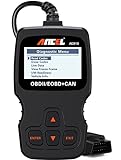
The ANCEL AD310 OBD II Scanner is the ideal choice for DIY car enthusiasts and casual drivers alike who want a reliable tool for diagnosing engine issues. This best-selling scanner reads and clears diagnostic trouble codes from 1996 and newer vehicles, pinpointing the cause of that pesky check engine light. Its sturdy design, compact size, and user-friendly interface make it easy to transport and operate. With no batteries required, it powers directly from your car’s OBDII connector. While it focuses on emission-related codes, it’s compatible with various protocols, ensuring you can troubleshoot efficiently and effectively.
Best For: DIY car enthusiasts and casual drivers looking for a reliable tool to diagnose engine issues in 1996 and newer vehicles.
Pros:
- Sturdy design with a compact size for easy transport and storage.
- User-friendly interface that requires no prior car knowledge.
- Powers directly from the vehicle’s OBDII connector, eliminating the need for batteries.
Cons:
- Limited to diagnosing emission-related codes only.
- Cannot read engine fault codes unrelated to emissions.
- Not compatible with OBDI vehicles, even with an adapter.
BlueDriver Bluetooth Pro OBDII Scan Tool for iPhone & Android
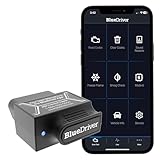
If you’re a car owner looking for an efficient way to diagnose engine problems without breaking the bank, the BlueDriver Bluetooth Pro OBDII Scan Tool is an excellent choice. It connects wirelessly to your iPhone or Android device, letting you read and clear trouble codes easily. This tool covers over 7,000 issues, including check engine lights, ABS, and airbag diagnostics. Plus, you’ll receive unlimited repair reports with potential fixes. With no subscription fees and a user-friendly app, you’ll enjoy seamless access to repair videos and 24/7 professional support, making car maintenance straightforward and hassle-free.
Best For: Car owners who want an affordable and efficient way to diagnose vehicle issues without needing to visit a mechanic.
Pros:
- User-friendly app for both iOS and Android devices, making it accessible for all users.
- Unlimited repair reports provided, including potential causes and solutions for various vehicle issues.
- 24/7 professional support available, ensuring assistance is always at hand when needed.
Cons:
- Limited to gas-powered vehicles made in 1996 or newer, excluding older models and diesel vehicles.
- Connectivity relies on Bluetooth, which may not work well in some older vehicles with compatibility issues.
- Some users may find the repair video database insufficient for complex repairs or specific vehicle models.
FOXWELL NT301 OBD2 Scanner for Check Engine Light

For those needing a reliable and user-friendly diagnostic tool, the FOXWELL NT301 OBD2 Scanner stands out as an excellent choice for checking engine lights. This compact scanner reads DTCs, accesses emissions readiness status, and turns off check engine lights after repairs. Its live data graphing helps you monitor vehicle sensor trends effectively. Designed for compatibility with most OBD2 vehicles, it features easy-to-use hotkeys and a clear color screen. Plus, you’ll appreciate the free lifetime updates and solid customer support. Just remember, it won’t read codes for ABS or other special functions, so check your needs beforehand.
Best For: Individuals and mechanics seeking a straightforward, reliable tool for diagnosing check engine lights in OBD2 vehicles.
Pros:
- Easy to use with read/erase and I/M readiness hotkeys for quick diagnostics.
- Compact design allows for portability and convenience in home and autoshop settings.
- Offers free lifetime updates and dedicated customer support for ongoing assistance.
Cons:
- Does not support reading codes related to ABS, SRS, TPMS, or other special functions.
- Requires verification of vehicle compatibility prior to purchase to ensure effectiveness.
- Operates without a built-in battery, relying solely on the vehicle’s OBD2 port for power.
Innova 5210 OBD2 Scanner & Engine Code Reader

Looking for a reliable diagnostic tool that combines versatility and user-friendliness? The Innova 5210 OBD2 Scanner & Engine Code Reader is designed for you. It not only reads and clears check engine and ABS codes but also provides live data like RPM and engine temperature. You’ll appreciate its built-in oil light reset feature, perfect for post-oil change maintenance. Plus, it supports most vehicles from 1996 and newer. With the RepairSolutions2 app, you get step-by-step guidance and verified fixes from ASE-certified mechanics. Trusted by millions, it’s a solid choice for anyone serious about car diagnostics.
Best For: Car enthusiasts and DIY mechanics looking for a reliable and user-friendly diagnostic tool to troubleshoot vehicle issues.
Pros:
- Offers a wide range of diagnostic functions, including reading and clearing check engine and ABS codes.
- Provides live data for key engine parameters, aiding in accurate diagnostics.
- No subscriptions required, with access to the RepairSolutions2 app for additional support and guidance.
Cons:
- Some features may vary depending on the make, model, and year of the vehicle.
- Not all vehicle brands are fully supported; compatibility must be verified.
- May require an initial learning curve for users unfamiliar with OBD2 diagnostic tools.
MOTOPOWER MP69033 Car OBD2 Scanner Code Reader

The MOTOPOWER MP69033 Car OBD2 Scanner Code Reader stands out as an excellent choice for DIY car enthusiasts and everyday drivers alike, thanks to its user-friendly design and robust functionality. Compatible with all OBD II protocol cars since 1996, this compact scanner features a 2.8-inch LCD display with adjustable backlighting. You can easily read and erase codes, view freeze frame data, and check I/M readiness. It supports multiple languages and connects directly to your vehicle, eliminating battery hassles. However, keep in mind it doesn’t cover ABS or airbag codes, so consider that before purchasing.
Best For: DIY car enthusiasts and everyday drivers looking for a compact and user-friendly OBD2 scanner.
Pros:
- Built-in OBD2 DTC lookup library for easy code interpretation.
- Supports multiple languages and compatible with a wide range of vehicles.
- Directly powered by the vehicle, eliminating the need for batteries.
Cons:
- Does not support ABS, airbag, or oil service light codes.
- Limited to reading and clearing check engine information only.
- May require customer support for connection issues.
ANCEL AD410 Enhanced OBD2 Scanner for All OBDII Cars
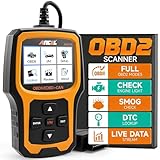
Engine diagnostics can be a challenging task, but the ANCEL AD410 Enhanced OBD2 Scanner simplifies the process for both beginners and seasoned mechanics. Compatible with all OBDII cars, it reads and clears emissions-related fault codes quickly, helping you address issues efficiently. With a 2.4 TFT display, the user-friendly interface makes navigation a breeze. You’ll appreciate the 42,000 built-in DTC lookups for easy fault identification and advanced diagnostics like O2 sensor testing. Plus, it’s powered directly from your vehicle’s OBDII port—no batteries needed. With multilingual support, it’s perfect for users worldwide.
Best For: The ANCEL AD410 Enhanced OBD2 Scanner is best for DIY car enthusiasts, mechanics, and anyone needing quick and reliable vehicle diagnostics without complex setups.
Pros:
- Easy to use with a user-friendly interface and 2.4 TFT display for clear readings.
- Supports a wide range of OBDII vehicles and offers over 42,000 built-in DTC lookups for effective fault identification.
- No batteries required as it powers directly from the vehicle’s OBDII port, making it convenient for on-the-go diagnostics.
Cons:
- Limited to engine diagnostics; does not support ABS, SRS, or transmission systems.
- Fault codes can only be cleared after resolving the underlying issues, which may be inconvenient for some users.
- USB cable is solely for updates and not needed during vehicle connection, which may lead to confusion for first-time users.
Innova 5610 OBD2 Bidirectional Scan Tool

For anyone seeking a reliable and efficient solution for vehicle diagnostics, the Innova 5610 OBD2 Bidirectional Scan Tool stands out with its advanced features like Enhanced Data Stream and bidirectional controls. This tool provides essential diagnostics, helping you pinpoint issues quickly. It supports OBD2 and OEM live data, making it perfect for both novices and pros. You can test components like fuel pumps and retract electronic parking brakes effortlessly. With multi-language support and a user-friendly interface, it’s compatible with most vehicles from 1996 to 2023. Plus, you’ll enjoy free updates and dedicated American support for peace of mind.
Best For: The Innova 5610 OBD2 Bidirectional Scan Tool is best for both novice and experienced mechanics looking for a comprehensive vehicle diagnostic solution.
Pros:
- Enhanced Data Stream allows access to live data from advanced systems like ABS and SRS, facilitating precise diagnostics.
- Bidirectional controls enable users to perform tests on components, such as fuel pumps, enhancing troubleshooting capabilities.
- Multi-language support and a user-friendly interface make it accessible for a wide range of users and compatible with most vehicles from 1996 to 2023.
Cons:
- Compatibility may vary across different vehicle makes and models, requiring users to verify support beforehand.
- Some advanced features may be more suited to professional mechanics than casual users.
- Limited American support hours could be inconvenient for users needing immediate assistance outside of those times.
FOXWELL NT604 Elite OBD2 Scanner
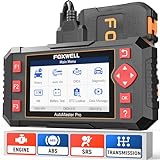
Designed with car owners in mind, the FOXWELL NT604 Elite OBD2 Scanner stands out as an essential tool for anyone looking to diagnose issues in their vehicle’s ABS, SRS, engine, and transmission systems. This 5-in-1 scanner offers OBDII, ABS, SRS, and transmission diagnostics, plus a check engine code reader. You’ll appreciate the live data streaming and built-in DTC library for effective troubleshooting. With AUTOVIN for quick vehicle identification and compatibility across 60+ car makes, it’s user-friendly. Plus, it comes with a solid protective case and lifetime updates, ensuring it remains a reliable companion for your car maintenance needs.
Best For: Car owners seeking a reliable diagnostic tool for identifying issues in their vehicle’s ABS, SRS, engine, and transmission systems.
Pros:
- User-friendly with AUTOVIN for quick vehicle identification and compatibility with over 60 car makes.
- Offers live data streaming and a built-in DTC library for effective troubleshooting.
- Comes with a protective case and includes lifetime software updates at no extra cost.
Cons:
- Does not support maintenance functions like oil reset or ABS bleeding.
- Cannot clear airbag crash/collision data even after airbag replacement.
- Compatibility varies by vehicle make, model, and year, requiring verification before purchase.
ANCEL AD410 PRO OBD2 Scanner and Battery Tester

The ANCEL AD410 PRO OBD2 Scanner and Battery Tester stands out as an important tool for DIY mechanics and car enthusiasts looking to streamline their vehicle diagnostics. This 2-in-1 device offers thorough engine diagnostics and battery testing, supporting various battery types and 12V lead-acid systems. With 10 advanced diagnostic modes, it quickly reads and clears engine codes, monitors live data, and conducts vital tests. You’ll appreciate its user-friendly, plug-and-play design, allowing you to diagnose issues in just 30 seconds. Compatible with 99% of global vehicles, it’s a reliable choice for ensuring your car’s readiness and safety.
Best For: DIY mechanics and car enthusiasts looking for an efficient and comprehensive vehicle diagnostic tool.
Pros:
- Combines OBD2 scanning and battery testing in one device, saving space and cost.
- Supports a wide range of vehicles, including American, European, and Asian models.
- User-friendly design with a quick plug-and-play operation and a clear 2.4-inch HD display.
Cons:
- Limited to engine and emission-related diagnostics, excluding non-emission systems like ABS and SRS.
- Not compatible with electric vehicles (EVs), limiting its use for some modern cars.
- May require compatibility verification for certain vehicle models before purchase.
TOPDON AD500 OBD2 Scanner Diagnostic Tool

If you’re a DIY car enthusiast looking for a reliable diagnostic tool, the TOPDON AD500 OBD2 Scanner is an excellent choice. This scanner goes beyond basic OBD2 functions, offering 4-system diagnostics for engine, transmission, ABS, and SRS. You’ll appreciate its 6 maintenance services, including oil reset and throttle adaptation, which help restore vehicle components. The user-friendly 5-inch touchscreen displays real-time data in charts, making problem detection easier. Plus, with compatibility across 67+ car brands and the Smart AutoVIN feature, you’ll enjoy accurate diagnostics tailored to your vehicle. It’s a solid investment for any car lover.
Best For: DIY car enthusiasts seeking a reliable and comprehensive diagnostic tool for vehicle maintenance and troubleshooting.
Pros:
- Comprehensive Diagnostics: Offers 4-system diagnostics (engine, transmission, ABS, SRS) and 6 maintenance services for thorough vehicle analysis.
- User-Friendly Interface: Features a 5-inch touchscreen that visualizes real-time data in charts, making it easy to identify problems.
- Wide Compatibility: Supports over 67 car brands and 10,000+ models, ensuring it can be used on a variety of vehicles.
Cons:
- Limited Advanced Features: While it covers essential diagnostics, it may lack some advanced features found in higher-end scanners.
- Battery Life: The battery capacity of 3350mAh may require frequent charging during extended use.
- Learning Curve: Some users may find the range of functions overwhelming if they are new to OBD2 diagnostics.
Factors to Consider When Choosing a Car Engine Diagnostic Tool
When choosing a car engine diagnostic tool, you need to evaluate several key factors. Think about compatibility with your vehicle models, the diagnostic capabilities, and how user-friendly the interface is. Don’t forget to check the connectivity options and the support services available for updates.
Compatibility With Vehicle Models
Choosing the right car engine diagnostic tool hinges on its compatibility with your vehicle model. First, verify the tool supports your vehicle’s OBDII protocol, as different vehicles use various protocols like KWP2000, J1850 VPW, ISO9141, J1850 PWM, and CAN. Next, check that the scanner is compatible with your vehicle’s make, model, and year; most tools work with vehicles from 1996 onward, while some may cover older models. Some scanners are designed for specific brands or vehicle types, so make certain it fits yours, whether gas, diesel, or hybrid. Finally, review the manufacturer’s compatibility list to confirm it can diagnose essential systems such as the engine, transmission, ABS, and SRS.
Diagnostic Capabilities and Functions
Understanding the diagnostic capabilities and functions of a car engine diagnostic tool is key to making an informed choice. Look for tools that can read and clear a wide range of trouble codes, including those related to the engine, ABS, and SRS. Advanced features like live data streaming let you monitor real-time sensor data, helping you identify issues while driving. Make certain the tool supports multiple OBDII protocols for broader compatibility with different makes and models. Enhanced features, such as readiness checks for emissions tests and freeze frame data, aid in historical analysis. Additionally, consider tools with special reset functions, like oil resets, to provide extra maintenance support beyond just reading error codes.
User-Friendly Interface Design
A user-friendly interface is essential for anyone looking to effectively diagnose car issues. You’ll want intuitive navigation with clearly labeled buttons and easy-to-understand menus, especially if you’re not a car expert. A large, high-resolution display enhances readability, helping you view diagnostic data without misinterpretation. Look for real-time data visualization, like graphing live data, so you can quickly spot trends and anomalies in vehicle performance. Multilingual support is another great feature, as it guarantees language barriers won’t hinder your experience. Finally, consider tools that include tutorials or step-by-step guidance within the interface; this can boost your confidence and effectiveness as you tackle vehicle diagnostics.
Connectivity Options and Features
Connectivity options play an essential role when you’re selecting a car engine diagnostic tool. You can choose between wired connections through OBD-II ports or wireless connections via Bluetooth, which enhances your user experience. Many scanners offer real-time data monitoring, allowing you to view live data streams while driving or during tests. Some advanced tools even feature app integration, giving you access to extensive databases for repair information and technical support right from your mobile device. Wireless scanners increase portability and ease of use, perfect for on-the-go diagnostics. Additionally, certain tools come with built-in DTC lookup libraries, enabling you to quickly reference trouble codes and their meanings directly on the device. Choose wisely to optimize your diagnostic experience!
Support and Update Services
When choosing a car engine diagnostic tool, consider the support and update services that come with it, as these can greatly impact your experience. Look for tools that offer free lifetime updates to guarantee compatibility with new vehicle models and access to the latest diagnostic features. It’s also wise to select scanners that provide 24/7 professional support through phone or in-app chat for quick troubleshooting. Verify if the tool requires subscription fees for updates or features, as some might not. Additionally, tools backed by a large user community often provide timely assistance and updates. Finally, check if the manufacturer offers a warranty or satisfaction guarantee, giving you peace of mind about reliability and longevity.