If you drive an older vehicle, a good scanner can save time, money, and a lot of frustration. The right tool helps you read codes, confirm emissions status, and decide whether a repair is urgent or just maintenance.
We focused on easy-to-use options that work well for older cars, from simple code readers to more capable diagnostic tools.
Best 10 Car Diagnostic Scanners for Older Cars Picks for 2026
Budget-Friendly Basic OBD2 Reader

- Reads and clears engine codes
- Supports 9 OBD2 protocols
- Shows live data and freeze frame
Best For: Older 1996-and-newer cars when you want a simple code reader
Ford OBD1 Specialist
INNOVA 3145 Ford Digital Code Reader
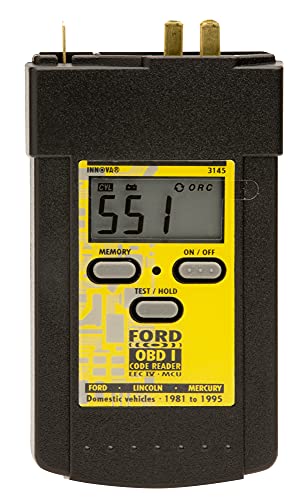
- Reads numeric codes on Ford OBD1 systems
- Works on many 1982-1995 Ford-family vehicles
- Stores codes in memory when unplugged
Best For: Older Ford, Lincoln, and Mercury vehicles with OBD1 systems
Compact All-Purpose OBD2 Reader

- Reads and clears OBD2 engine codes
- Supports all major OBDII protocols
- Compact design with live data and freeze frame
Best For: Older OBD2 cars and simple check-engine troubleshooting
Feature-Rich Budget Scanner
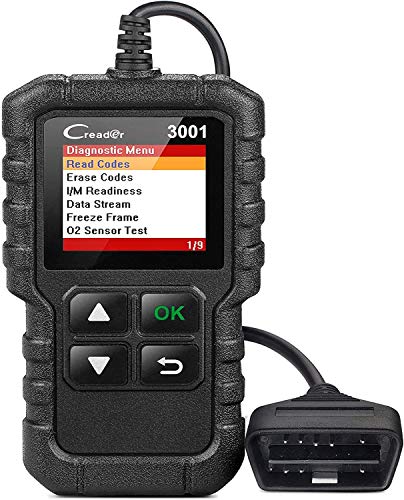
- Reads and clears engine fault codes
- Adds O2 sensor, Mode 6, and Mode 8 tests
- Checks I/M readiness and live data
Best For: DIY owners who want extra functions on older OBD2 cars
LAUNCH X431 Choice
LAUNCH CR529 OBD2 Scanner for 1996+ Cars
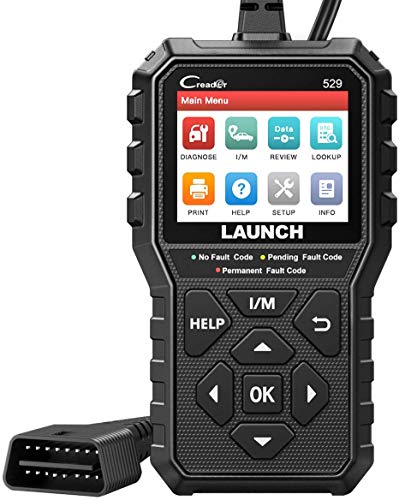
- Reads/clears codes, live data, freeze frame
- One-click smog check plus Mode 6 and Mode 8
- VIN lookup, report playback, and free lifetime updates
Best For: DIYers who want an easy OBD2 scanner for 1996+ cars
Upgraded OBD2 + CAN

- All 10 OBDII modes with Mode 6 and Mode 8
- Battery voltage monitoring plus I/M readiness
- 40,000+ DTC library and lifetime updates
Best For: Drivers who want deeper diagnostics for 1996+ cars
DIY Starter Pick
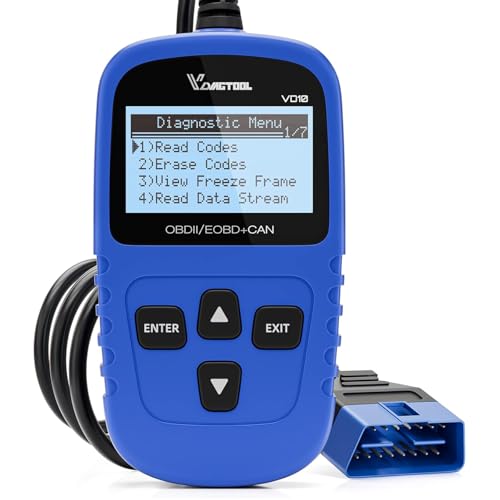
- Reads/clears codes with built-in DTC definitions
- Live data, freeze frame, and I/M readiness
- Simple plug-and-play scanner for OBDII cars
Best For: First-time DIYers needing a basic OBDII code reader
Budget-Friendly Basics
ANCEL AD410 OBD2 Scanner for 1996+ Cars

- Reads and clears engine codes
- Live data and smog readiness checks
- No app or battery required
Best For: Simple check-engine troubleshooting on older OBD2 cars
Simple Code Reader
Autel MS309 Basic OBD2 Scanner

- Reads and clears basic OBD2 codes
- Shows DTC definitions on screen
- Pulls freeze frame and VIN data
Best For: Basic check-engine checks on standard 1996+ cars
Step-Up Everyday Scanner
ANCEL AD530 OBD2 Scanner with Live Data
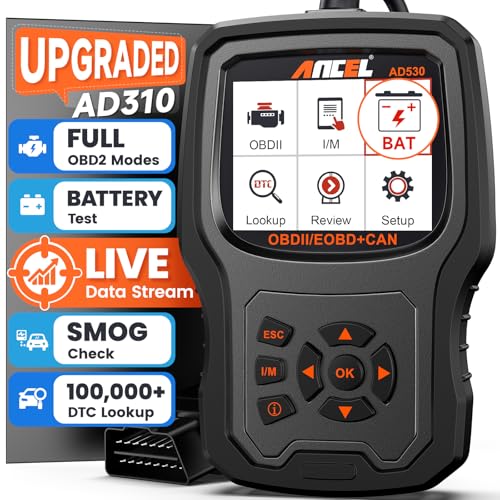
- Plain-text code help and freeze frame
- One-touch readiness and live voltage checks
- Lifetime free updates included
Best For: DIY diagnostics on standard gasoline OBD2 cars
Budget-Friendly Basic OBD2 Reader – MOTOPOWER MP69033
If you want a simple pick among car diagnostic scanners for older cars, the MOTOPOWER MP69033 covers the basics for OBD2-equipped vehicles since 1996. It reads and clears engine codes, shows live data, and includes a built-in DTC lookup, making it a practical starter tool for check-engine troubleshooting.
Best For: Drivers who need an affordable, easy-to-use OBD2 scanner for older 1996-and-newer cars.
Pros:
- Supports 9 protocols for many 1996 US-based, 2000 EU-based, and Asian vehicles
- Reads and clears codes, plus live data, freeze frame, VIN, and I/M readiness
- Powered directly by the vehicle, with no battery or charger needed
- Compact design with a 2.8-inch LCD and multi-language support
Cons:
- Does not support ABS, airbag, or other non-OBDII systems
- Only works on OBDII vehicles, not pre-OBDII setups
This is a good low-cost choice if you mainly want engine-code coverage and straightforward menu navigation. For older cars that still use OBD2, it offers the core functions most DIY owners need without extra complexity.
Ford OBD1 Specialist – INNOVA 3145 Ford Digital Code Reader
For Ford family vehicles, this is one of the most focused car diagnostic scanners for older cars because it is built for OBD1 systems rather than modern OBD2. The INNOVA 3145 reads numeric trouble codes on compatible Ford, Lincoln, and Mercury vehicles from 1982 to 1995, so you do not have to count flashes by hand.
Best For: Owners of compatible Ford, Lincoln, and Mercury vehicles from 1982 to 1995.
Pros:
- Works on most Ford, Lincoln, and Mercury domestic cars and trucks from 1982 to 1995
- Digital display shows numeric trouble codes clearly
- Memory feature stores codes even after unplugging
- Includes instructions for OBD1 operation and Ford self-tests
Cons:
- Vehicle-specific and limited to compatible Ford-family OBD1 systems
- Not meant for generic OBD2 vehicles
If you are maintaining an older Ford product, this scanner is a straightforward way to retrieve self-test codes without guesswork. It is less universal than an OBD2 reader, but that focus is exactly what makes it useful for the right older vehicles.
Compact All-Purpose OBD2 Reader – ANCEL AD310 Classic Scanner
The ANCEL AD310 is a compact option for buyers looking at car diagnostic scanners for older cars that are OBD2-compliant. It reads and clears emission-related trouble codes, shows live data and freeze frame info, and supports the major OBDII protocols used by many 1996-and-newer vehicles.
Best For: Drivers who want a fast, easy code reader for older OBD2 vehicles and basic engine-light checks.
Pros:
- Supports all major OBDII protocols, including CAN, KWP2000, J1850 VPW, and J1850 PWM
- Reads and clears emission-related trouble codes in seconds
- Shows live data, freeze frame, I/M readiness, and vehicle information
- Compact, lightweight design with a large screen and no battery required
Cons:
- Only diagnoses emission-related issues
- Not compatible with OBDI vehicles
This is a practical grab-and-go scanner if you mainly need check-engine diagnosis on older OBD2 cars and trucks. It is easy to use, but its scope stays focused on engine and emissions data rather than deeper system coverage.
Feature-Rich Budget Scanner – LAUNCH Creader 3001
If you want a little more depth from car diagnostic scanners for older cars, the LAUNCH Creader 3001 adds helpful functions without becoming complicated. It reads and clears engine fault codes, checks I/M readiness, shows live data, and includes O2 sensor and Mode 6/Mode 8 testing for compatible OBD2 vehicles.
Best For: DIY owners who want extra diagnostic functions on older OBD2 vehicles.
Pros:
- Reads and clears engine fault codes on most 1996-and-newer OBD2 vehicles
- Includes live data, freeze frame, O2 sensor, Mode 6, and Mode 8 tests
- Checks I/M readiness to help with smog prep
- Compact, plug-and-play design with VIN lookup and multiple language support
Cons:
- Limited to the engine system and OBD2 vehicles
- Not suitable for OBDI cars
This scanner stands out if you want a bit more diagnostic detail than a basic code reader provides. For older cars that are already OBD2-equipped, it offers a useful mix of convenience and extra test functions.
LAUNCH X431 Choice – LAUNCH CR529 OBD2 Scanner for 1996+ Cars
If you’re looking for car diagnostic scanners for older cars that are still OBD2-compliant, the LAUNCH CR529 is a practical pick for 1996 and newer vehicles. It focuses on the core checks most DIYers need, including code reading and clearing, I/M readiness, freeze frame data, live data graphs, and one-click smog checks. It also adds helpful extras like DTC lookup, VIN retrieval, and report playback for easier troubleshooting.
Best For: DIY owners who want a simple, feature-rich scanner for 1996+ vehicles with clear readiness and live-data checks.
Pros:
- Reads and clears codes, plus shows freeze frame and live data in text and graph formats.
- Supports one-click smog check, EVAP test, Mode 6, and O2 sensor checks.
- Includes DTC lookup, VIN/CIN/CVN retrieval, and report recording/playback/print options.
- Plug-and-play design with color LCD and no battery required.
Cons:
- Works only with OBD2-compliant vehicles, so it won’t help on pre-1996 cars.
- Does not support iOS PC.
- Smaller 2.8-inch display may feel basic compared with larger diagnostic tools.
This is a solid choice if you want a straightforward scanner that goes beyond basic code reading without getting overly complex. For older cars that still meet the OBD2 cutoff, it covers the most useful checks for maintenance and emissions troubleshooting.
Upgraded OBD2 + CAN – V519 Scanner with Live Data
For shoppers comparing car diagnostic scanners for older cars, the V519 is aimed at 1996 and newer OBD2 and CAN vehicles that need more than a basic code reader. It supports all 10 OBDII modes, graph-based live data, freeze frame playback, battery voltage monitoring, and a large built-in DTC library. That makes it useful when you want deeper information before deciding whether a repair is urgent or just preventative.
Best For: DIY mechanics and drivers who want a more advanced plug-in scanner with live data, battery checks, and smog-readiness support.
Pros:
- Supports OBD2 and CAN with all 10 OBDII modes, including Mode 6 and Mode 8.
- Shows live data in graphs, freeze frame snapshots, and recorded session playback.
- Includes battery voltage monitoring for pre-crank and charging checks.
- Built-in 40,000+ DTC library, multilingual menus, and lifetime free updates via USB Type-C.
Cons:
- Still limited to 1996+ vehicles, so it is not for pre-OBD2 older cars.
- Uses a smaller 2.8-inch screen, which may be less comfortable for long sessions.
- Windows-based export/print features may add extra setup for some users.
The V519 stands out if you want a compact scanner with more diagnostic depth than a simple code reader. It’s especially appealing for owners who like live-data analysis and want battery and emissions checks in one handheld tool.
DIY Starter Pick – VDIAGTOOL VD10 Code Reader
If you want a budget-friendly option among car diagnostic scanners for older cars that still support OBDII, the VDIAGTOOL VD10 keeps things simple. It focuses on the basics most owners need: reading and clearing codes, checking live data, viewing freeze frame information, and confirming I/M readiness before a smog test. Its built-in DTC lookup and easy plug-in setup make it a practical tool for quick checks.
Best For: First-time DIYers and everyday drivers who want an easy code reader for OBDII-compliant vehicles.
Pros:
- Reads and clears generic and manufacturer-specific codes with built-in definitions.
- Includes live data, freeze frame, I/M readiness, and vehicle information.
- Works with all major OBDII protocols and supports many 1996+ vehicles.
- Plug-and-play design with a simple two-line LCD display and no charger needed.
Cons:
- Built-in code library is smaller than higher-end tools at more than 3,000 codes.
- Best suited to basic engine diagnostics rather than advanced system testing.
- Only covers OBDII-compliant vehicles, so pre-1996 cars are out.
The VD10 is the most straightforward pick here, especially if you just want quick answers without extra complexity. For older OBDII cars, it covers the essential checks needed to understand a check-engine light and verify smog readiness.
Budget-Friendly Basics – ANCEL AD410 OBD2 Scanner for 1996+ Cars
If you want one of the simplest car diagnostic scanners for older cars, the ANCEL AD410 focuses on the essentials. It reads and clears engine-related OBD2 codes, shows code definitions on screen, and gives you live data plus readiness checks without needing an app or phone connection.
Best For: New drivers, DIY owners, and anyone who wants an easy plug-in scanner for check engine light troubleshooting on 1996+ OBD2 vehicles.
Pros:
- Reads and clears engine/emissions codes with 42,000+ DTC lookups
- Shows live data, freeze frame, I/M readiness, O2 sensor, and EVAP tests
- No app, battery, or charger needed; powered directly from the OBD2 port
- Works with most 1996+ U.S. OBD2 vehicles and many 2000+ EU/Asian models
Cons:
- Engine and emission codes only; no ABS, SRS, transmission, or reset functions
- Compatibility still depends on having a standard OBD2 vehicle
Overall, the AD410 is a practical pick if you mainly want a readable, easy-to-use scanner for older OBD2 cars and basic maintenance checks. It is not a full-system tool, but it covers the core jobs most home users need.
Simple Code Reader – Autel MS309 Basic OBD2 Scanner
The Autel MS309 is a straightforward choice for car diagnostic scanners for older cars when you only need the basics. It can read and clear generic and some manufacturer-specific codes, show freeze frame and vehicle info, and display DTC meanings on screen so you do not have to search online for every code.
Best For: Budget-minded DIY owners who want a no-frills OBD2 reader for standard 1996+ vehicles and simple check engine light checks.
Pros:
- Reads and clears generic, pending, and some manufacturer-specific codes
- Built-in database shows DTC definitions on the screen
- Retrieves freeze frame data and vehicle information like VIN and calibration IDs
- Plug-and-play design with no registration required
Cons:
- Basic OBDII-only scanner with no TPMS or service functions
- Does not support FCA vehicles after 2017 with SGW security
- Not suited for advanced engine data or full-system diagnostics
If you only need a simple reader to confirm why the check engine light is on, the MS309 keeps things uncomplicated. It is best viewed as an entry-level code reader rather than a more advanced diagnostic tool.
Step-Up Everyday Scanner – ANCEL AD530 OBD2 Scanner with Live Data
The ANCEL AD530 is a solid middle-ground option in car diagnostic scanners for older cars because it goes beyond a basic code reader without becoming complicated. It offers plug-and-play operation, live data, battery voltage monitoring, and a one-touch I/M readiness check, making it useful for both routine maintenance and pre-inspection checks.
Best For: DIY owners who want a clearer picture of engine faults, readiness status, and battery voltage on standard gasoline OBD2 vehicles.
Pros:
- Dedicated hotkey turns fault codes into plain-text explanations
- One-touch I/M readiness plus live data and freeze frame support
- Tracks 12V cranking and charging voltage with graphical display
- Supports 100,000+ DTCs and lifetime free updates
Cons:
- Engine-system only; no ABS, SRS, transmission, diesel, or motorcycle support
- Compatibility is limited to standard OBD2 gasoline vehicles
- Updates are Windows-only, not macOS
For older OBD2 vehicles where you want more than a bare-bones code reader, the AD530 adds useful at-home diagnostics. It is a practical pick if you care about quick code clarity, readiness checks, and basic voltage monitoring.
How We Picked These Car Diagnostic Scanners for Older Cars
We prioritized compatibility, ease of use, and everyday usefulness over flashy extras. For older vehicles, that means solid OBD2 support for 1996-and-newer cars, clear fault-code reading and clearing, readable screens, and practical features like readiness monitors or freeze-frame data. We also considered whether a scanner is a good fit for DIY owners who want fast answers without a steep learning curve.
Quick Comparison: What Kind of Scanner Do You Need?
Not every driver needs the same level of tool. Basic readers are best for checking a check-engine light and clearing simple codes. Midrange scanners add live data, battery tests, and better fault interpretation. If you work on different vehicles or want more diagnostic depth, choose a model with stronger data access and a larger code library. For very old vehicles that predate OBD2, a dedicated OBD1 reader may be required for specific makes such as Ford.
Key Buying Factors for Car Diagnostic Scanners for Older Cars
Vehicle Compatibility
Most modern Car Diagnostic Scanners for Older Cars are designed for OBD2 vehicles from 1996 onward, but not all support every protocol equally. Check that the scanner covers your make, model, and model year before buying.
Code Reading and Reset Function
At minimum, you want the ability to read and clear engine codes. That alone can help you verify whether a problem returns after a repair.
Live Data and Readiness Monitors
Live data can help you spot sensor issues, while I/M readiness checks are useful before an emissions test. These features are especially helpful if you plan to keep an older car on the road for a while.
Ease of Use
Simple menus, a bright display, and a straightforward button layout matter more than people expect. Older-car owners often want a scanner that works quickly without app setup or complicated navigation.
Who Should Buy Which Car Diagnostic Scanners for Older Cars?
Choose a basic code reader if you just want to diagnose a check-engine light occasionally. Pick a scanner with live data and battery testing if you do your own maintenance and want more insight into recurring issues. If your vehicle is pre-1996 and requires OBD1 coverage, get a make-specific reader instead of a generic OBD2 tool. For most DIY drivers, the best choice is the simplest scanner that still covers the features you will actually use.