Choosing effective dust collection does not always require a four-figure investment. The best dust extractors under $300 can help capture fine particles, contain chips, and keep compact workshops cleaner without taking up excessive space.
This roundup includes portable extractors, shop-vac-style HEPA systems, cyclone separators, wall-mounted collectors, and specialized CNC or benchtop units. The right choice depends on your tools, workspace, filtration needs, and whether portability matters more than maximum airflow.
Best 10 Dust Extractors Under 300 Picks for 2026
Powerful Workshop Capture
DYNAVEX 12-Gallon Dust Extractor

- 142 CFM airflow from a 1.5 HP motor
- 12-gallon tank with 0.5-micron HEPA filtration
- Auto-start switch and multiple included adapters
Best For: Woodworking cleanup across saws, sanders, and routers
Filter-Saving Separator

- Separates dust before it reaches the shop-vac filter
- Low-profile design mounts to a 5-gallon bucket
- Includes two high-flow sweep elbows
Best For: Existing shop-vac owners seeking less filter maintenance
Portable Jobsite Protection

- Lightweight 3.7-pound cordless design
- HEPA filter and OSHA Table 1 Compliant positioning
- Strap points, belt hook, and wireless tool control
Best For: Mobile SDS-plus drilling and chipping applications
High-Airflow Value Pick
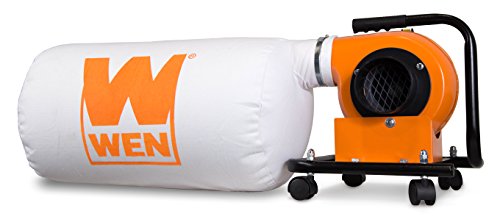
- Up to 660 CFM from a 5.7-amp motor
- 12-gallon zippered collection bag
- Rolling base with optional wall mounting
Best For: Small woodworking shops needing mobile, high-airflow collection
Versatile Workshop Pick

- Dual-mode vacuum and dust-extractor operation
- Automatic power-tool activation
- HEPA filter with semi-automatic cleaning
Best For: Woodworkers needing versatile everyday and tool-connected cleanup
High-Capacity Woodshop Choice

- 560 CFM airflow for woodworking dust
- 21-gallon collection bag
- 2.5-micron fine filtration
Best For: Small and medium workshops handling substantial sawdust
Automatic-Cleaning Pick
8-Gallon 150 CFM Dust Extractor
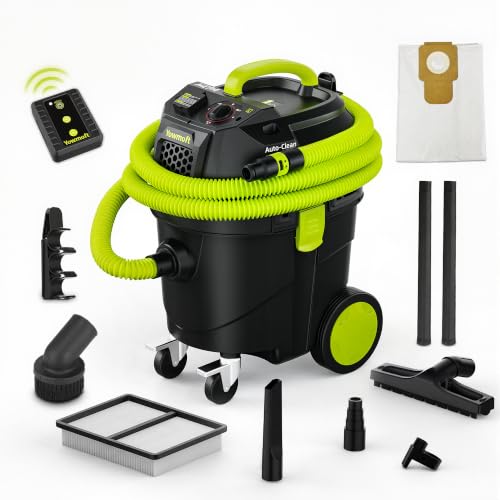
- Automatic HEPA cleaning every 20 seconds
- 150 CFM airflow with 96-inch water lift
- Remote control and tool auto-start
Best For: Woodworkers prioritizing automated maintenance and control
Best CNC Dust Extractor
High-Capacity CNC Vacuum Collector

- 800W motor with 16kPa suction
- Two 10-liter collection bins
- Cyclone, HEPA, and carbon filtration
Best For: CNC routing and woodworking workshops
Best Compact Dust Extractor
Adjustable Desktop Woodworking Collector

- 13,000 RPM suction performance
- Stepless airflow adjustment
- Compact, portable 4.4-pound design
Best For: Desktop woodworking and craft projects
Best Fine-Dust Extractor
Industrial Benchtop Lab Vacuum

- 500W motor for fine dry particles
- Below-60dB operating design
- Three workstation connection configurations
Best For: Jewelry, electronics, and laboratory workbenches
Powerful Workshop Capture – DYNAVEX 12-Gallon Dust Extractor
For shoppers comparing dust extractors under 300, the DYNAVEX offers a substantial 12-gallon steel tank, strong 142 CFM airflow, and a 0.5-micron HEPA filter for woodworking cleanup. Its wheels and included adapters make it practical for moving between tools and work areas.
Best For: Woodworkers who need a portable extractor for sawing, sanding, and routing.
Pros:
- 1.5 HP, 10-amp motor provides 142 CFM airflow.
- Large 12-gallon tank reduces emptying frequency.
- Includes a 0.5-micron HEPA filter, hose, clamps, adapters, and replacement paper filters.
- Auto-start switch synchronizes with a connected power tool within the stated 550-watt limit.
Cons:
- Connected tools cannot exceed 550 watts.
- Continuous auto-start use is limited to one hour.
- Wheel installation is optional rather than fully preinstalled.
The DYNAVEX is a well-equipped choice when capacity and fine-particle filtration matter more than minimum size. Verify your tool’s wattage before relying on the linked auto-start feature.
Filter-Saving Separator – Dustopper PRO Cyclone Kit
Among dust extractors under 300, the Dustopper PRO stands out as a separator rather than a powered vacuum. It mounts to a standard 5-gallon bucket and captures dust before it reaches a shop vacuum, helping preserve airflow and reduce filter maintenance.
Best For: Workshop users who already own a shop vacuum and want a compact pre-separator.
Pros:
- Designed to capture dust and debris before the vacuum filter.
- Low-profile design fits compact workshop setups.
- Includes two high-flow sweep elbows for more flexible hose routing.
- Made in the USA from anti-static resin.
Cons:
- It is a separator kit, not a standalone powered dust extractor.
- A standard 5-gallon bucket and shop vacuum are needed to create the system.
- Its 99.9% efficiency claim is supplied for the separator design, not a complete vacuum setup.
The Dustopper PRO is a sensible add-on for reducing the load on an existing shop vacuum. It is best viewed as a compact filtration and maintenance upgrade, not an all-in-one extractor.
Portable Jobsite Protection – DEWALT 20V MAX Dust Extractor
For dust extractors under 300 aimed at drilling and chipping, the DEWALT DWH161B prioritizes mobility. This compact, 3.7-pound, battery-powered unit includes a HEPA filter, strap connection points, a belt hook, and wireless tool-control capability.
Best For: Portable SDS-plus rotary-hammer work where a lightweight extractor is useful.
Pros:
- Compact 3.7-pound design is easy to carry.
- Includes a HEPA filter and is described as an OSHA Table 1 Compliant solution.
- Multiple strap points and a belt hook support flexible positioning.
- 20V MAX brushless motor and Wireless Tool Control support remote activation.
Cons:
- Sold as a tool-only unit, so a compatible battery is not included in the supplied components.
- Optimized primarily for SDS-plus rotary-hammer drilling and chipping.
- The key fob for Wireless Tool Control is sold separately.
The DEWALT is a strong fit when portability and drilling-focused dust control matter more than large-capacity collection. Check battery and control-accessory requirements before purchase.
High-Airflow Value Pick – WEN 12-Gallon Dust Collector
For shoppers seeking dust extractors under 300, the WEN DC3401 combines a 5.7-amp motor with up to 660 CFM airflow and a mobile base. Its 12-gallon collection bag, 4-inch dust port, and optional wall mount give it flexibility in a small woodworking shop.
Best For: Woodworkers who want high stated airflow with rolling or wall-mounted storage options.
Pros:
- Moves up to 660 CFM through a 6-inch impeller.
- 12-gallon, 5-micron zippered collection bag offers useful capacity.
- Lockable swivel casters support movement and positioning.
- Includes an optional wall-mount setup and a two-year warranty.
Cons:
- Uses a 5-micron foam-filter setup rather than the finer HEPA filtration listed for some alternatives.
- Its 4-inch dust port may require suitable hose or tool adapters.
- The 34.25-inch height may be less convenient for compact storage than smaller extractors.
The WEN is a practical shop-focused collector for users who value airflow, capacity, and mobility. Consider it alongside your tools’ hose requirements and your preferred floor or wall setup.
Versatile Workshop Pick – ECOMAX HEPA Dust Extractor
The ECOMAX is a practical choice among dust extractors under 300 for workshops that need both general cleanup and power-tool dust collection. Its 8-gallon tank, HEPA filtration, automatic tool activation, and semi-automatic filter cleaning support cleaner, more convenient woodworking sessions.
Best For: Woodworkers who want one wet/dry-capable shop vacuum for everyday messes and connected power tools.
Pros:
- Dual-mode operation supports standard vacuuming and dust extraction.
- Power Tool Activation starts the vacuum when a connected tool turns on.
- HEPA filtration, a dust-full indicator, and semi-automatic filter cleaning help maintain airflow.
- Includes a 10-foot anti-static hose, bags, nozzles, wands, and adapters.
Cons:
- Its listed 75 dB noise level may be noticeable during extended use.
- The 8-gallon capacity may require more frequent emptying for larger jobs.
With a sturdy polymer tank, built-in drain port, and broad accessory package, the ECOMAX offers useful flexibility for garage and workshop cleanup. It is especially appealing if automatic power-tool operation matters more than a dedicated high-airflow dust collector.
High-Capacity Woodshop Choice – VEVOR 560 CFM Dust Collector
For shoppers comparing dust extractors under 300 for a dedicated woodworking setup, the VEVOR focuses on high airflow and collection capacity. Its 560 CFM motor, 21-gallon bag, and 2.5-micron filtration are suited to managing sawdust and sanding debris in a workshop.
Best For: Small and medium woodworking shops that want a wall-mounted dust collection system with a large collection bag.
Pros:
- 560 CFM airflow provides strong suction for coarse sawdust and fine sanding dust.
- The 21-gallon collection bag reduces the need for frequent emptying.
- 2.5-micron filtration helps capture fine wood dust particles and shavings.
- Bottom-zipper bag design simplifies debris removal.
Cons:
- It is designed as a dedicated woodworking dust collector rather than a general-purpose floor vacuum.
- Its listed operating noise is up to 90 dB.
- The supplied details list only the dust collector, without a broader accessory kit.
The VEVOR is a focused choice for users who prioritize airflow and fewer collection-bag changes. Its wall-mount format can suit a workshop layout, though buyers should plan around its dedicated dust-collection role and stated noise level.
Automatic-Cleaning Pick – 8-Gallon 150 CFM Dust Extractor
This 8-gallon model stands out among dust extractors under 300 for its automatic HEPA cleaning and tool-synchronization features. The 1200-watt motor delivers 150 CFM airflow, while remote operation and overload prevention add convenience for demanding garage and woodworking tasks.
Best For: Users who want automated filter maintenance and remote-controlled operation when working with compatible power tools.
Pros:
- Automatic HEPA cleaning runs every 20 seconds to help limit filter buildup.
- Provides 150 CFM airflow and a listed 96-inch water-lift maximum suction.
- Auto-start synchronizes the extractor with connected tools up to 5A.
- Includes remote control and overload-prevention features.
Cons:
- The 8-gallon capacity is smaller than the VEVOR collector’s 21-gallon bag.
- Tool activation is limited to connected tools drawing no more than 5A.
- At 35.2 pounds, it may be less convenient to move than a lighter shop vacuum.
With wet/dry capability, HEPA filtration, and automatic filter cleaning, this extractor is built for users who value reduced maintenance. Its remote control and synchronized startup are useful additions for cluttered workspaces, provided connected tools stay within the stated power limit.
Best CNC Dust Extractor – High-Capacity CNC Vacuum Collector
For shoppers comparing dust extractors under 300 for CNC routing and woodworking, this combo unit emphasizes strong suction, extended operation, and multi-stage filtration. Its 800W motor produces 16kPa of suction, while the dual 10-liter bins provide useful capacity for workshop debris.
Best For: CNC engraving, routing, and woodworking users who need high-capacity collection with two-stage filtration.
Pros:
- 800W motor delivers 16kPa of suction for CNC debris and sawdust.
- Two 10-liter storage bins offer substantial collection capacity.
- Cyclone separation, HEPA filtration, and activated carbon filtration help manage fine dust and odors.
- Built-in LED light illuminates the engraving surface during operation.
Cons:
- Its CNC-focused design may be more equipment than needed for small, occasional cleanup.
- The unit weighs 11.38 pounds and has a relatively large package footprint.
This is one of the more capable dust extractors under 300 for users working with CNC equipment or larger woodworking tasks. The long stated operating time and filtration system add versatility, while the included hose, bins, and lighting make it a specialized workshop solution.
Best Compact Dust Extractor – Adjustable Desktop Woodworking Collector
Among dust extractors under 300, this portable desktop model is aimed at hobbyists who value a small footprint and adjustable airflow. Its 60W motor reaches 13,000 RPM, and the stepless control lets you match suction to tasks such as sanding, carving, drilling, or resin work.
Best For: Desktop woodworking, craft, nail art, and resin projects where portability and adjustable suction matter.
Pros:
- Compact design weighs about 4.4 pounds overall for easy movement and storage.
- Stepless speed control allows adjustable suction intensity.
- Transparent housing makes dust buildup and filter condition easy to monitor.
- Included suction and silencing tubes support flexible positioning and quieter operation.
Cons:
- The 60W design is intended for desktop tasks rather than demanding industrial collection.
- It is not recommended for metalworking applications.
- Noise is approximately 67dB with the silencing tube at maximum speed.
This collector suits users who need localized dust control without dedicating much bench or storage space. Washable filtration and adjustable airflow are practical advantages, but the stated applications make it best for light-duty craft and woodworking rather than large chips or heavy shop use.
Best Fine-Dust Extractor – Industrial Benchtop Lab Vacuum
For buyers seeking dust extractors under 300 for precision work, this 500W benchtop unit is designed around fine dry particles rather than large woodworking chips. Its turbine system is rated below 60 decibels, and three connection configurations support manual cleaning, workstation ports, or localized intake.
Best For: Jewelry polishing, electronics benches, laboratories, and technical work involving dry gypsum, resin, or metallic dust.
Pros:
- 500W motor provides suction for fine debris and particles.
- Operating noise is designed to remain below 60 decibels.
- Supports hose attachment, universal port connection, and direct intake.
- Reinforced metal housing and split-chamber construction are intended for frequent use.
Cons:
- It is not compatible with liquids or large-scale woodworking chips.
- The 18-pound benchtop form is less portable than compact hobby collectors.
- Regular dust-drawer maintenance is needed to help preserve airflow.
This model is a focused choice for clean, technical workspaces where fine-particle capture and lower noise are priorities. Its industrial construction and adjustable suction add useful flexibility, but users handling liquids or bulky sawdust should choose a collector designed for those materials.
How We Picked the Best Dust Extractors Under 300
We focused on the factors that matter most in real workshop use: motor power, airflow, filtration, container or bag capacity, portability, tool compatibility, and setup flexibility. The selection covers several dust-control approaches rather than treating every product as interchangeable. A cyclone separator, for example, can reduce the load on a shop vacuum, while a wall-mounted collector may suit a fixed woodworking station better than a compact portable extractor.
We also considered practical details such as hose connections, mobile bases, wall-mount options, battery operation, included accessories, and suitability for power tools or CNC equipment. Product specifications can vary by configuration, so confirm the current listing details before purchasing.
Quick Comparison
| Best For | Look For | Typical Format |
|---|---|---|
| Portable power tools | Compact design, compatible hose, easy carrying | Battery or small canister extractor |
| General shop cleanup | Strong suction, HEPA filtration, larger tank | Shop-vac-style unit |
| Woodworking machines | Higher airflow, larger collection capacity | Bag or wall-mounted collector |
| CNC routing | Dust boot compatibility and fine-particle separation | Specialized CNC vacuum system |
| Benchtop work | Small footprint and adjustable airflow | Desktop or laboratory-style collector |
Key Buying Factors for Dust Extractors Under $300
Airflow and Suction
Airflow, usually expressed in CFM, helps move chips and dust through the hose, while suction strength matters when working through restrictive fittings or tool ports. Match the extractor to the tool: a small sander may need less capacity than a planer or router table.
Filtration and Dust Type
Fine wood dust requires more than basic chip collection. Look for HEPA filtration or a fine-micron filter when possible, and use a cyclone pre-separator to capture larger debris before it reaches the filter. No extractor eliminates the need for ventilation and appropriate respiratory protection.
Capacity, Noise, and Portability
A larger bag or tank means fewer interruptions, but it can increase the unit’s size and weight. Check whether the base has casters, whether the hose stores conveniently, and whether the noise level is acceptable for your workspace.
Compatibility and Maintenance
Confirm hose diameter, adapters, tool-port fit, power requirements, and replacement-filter availability. Empty containers before they become overloaded, inspect seals for leaks, and clean or replace filters according to the manufacturer’s instructions.
Who Should Buy Which Dust Extractors Under 300?
Choose a compact battery or desktop extractor if you move between workstations or primarily use handheld tools. A HEPA shop-vac-style model is the most versatile option for mixed cleanup and power-tool connections. Woodworkers with a dedicated machine area should prioritize a higher-airflow bag or wall-mounted collector. CNC users should select a system designed around dust boots and secondary separation rather than relying only on a general-purpose vacuum. If your main goal is improving an existing vacuum’s performance, a cyclone separator can be the most economical upgrade.