Small workshops need effective dust control without sacrificing valuable floor space. The best dust extractors for small workshops capture debris at the tool, filter fine particles, and remain practical to move, empty, and maintain.
This roundup compares 10 options ranging from compact HEPA extractors to high-volume woodworking collectors and ceiling-mounted air filtration systems, helping you match capacity and filtration to your tools and workspace.
Best 10 Dust Extractors for Small Workshops Picks for 2026
High-Performance HEPA Pick
Bosch VAC090AH 9-Gallon Dust Extractor

- Automatic filter cleaning every 15 seconds
- HEPA filtration and 150 CFM airflow
- Power tool activation with adjustable suction
Best For: Power-tool dust collection and sustained workshop use
Ceiling-Mounted Air-Cleaning Pick
Abestorm DecDust 780 Air Filtration System

- 780 CFM airflow for workshop air circulation
- 270-degree intake and 1-micron particle retention
- Remote control with ceiling-mounted design
Best For: Ambient air filtration in garages and woodworking shops
Jobsite-Ready HEPA Pick
DEWALT DWV010 8-Gallon Dust Extractor
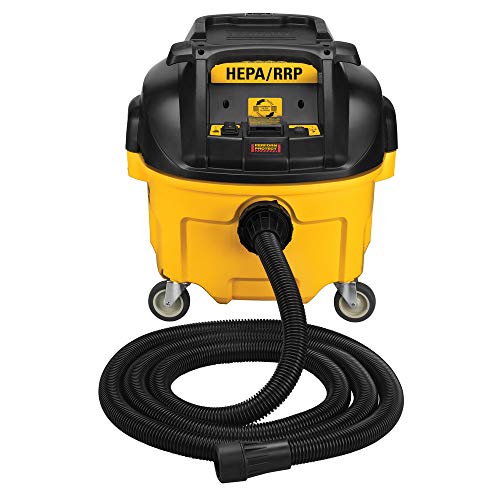
- 150 CFM airflow from a 15-amp motor
- Automatic filter cleaning every 30 seconds
- 15-foot antistatic hose and power tool actuation
Best For: Portable tool-connected extraction in shops and on jobsites
Compact Two-Speed Pick
ALORAIR PureCare 780S Air Filtration System

- 580/780 CFM two-speed airflow
- MERV-13 filtration for 3–10 micron particles
- Compact design with timer and extra socket
Best For: Quiet supplemental air cleaning in compact workshops
Versatile HEPA Pick
ECOMAX 8-Gallon Power Tool Dust Extractor

- Power Tool Activation for connected equipment
- HEPA filter with semi-automatic cleaning
- 10-foot anti-static hose and accessory kit
Best For: Small workshops needing tool extraction and general cleanup
High-Volume Woodworking Pick

- 1,300 CFM airflow for wood dust collection
- Dual 4-inch inlets for up to two tools
- 50-gallon bag and mobile swivel-caster base
Best For: Woodworking shops with high dust volume and stationary tools
Remote-Controlled Cleanup Pick
8-Gallon 3-in-1 Dust Extractor

- Remote control for convenient operation
- Dry, wet, and blowing functions
- HEPA and paper-bag filtration options
Best For: Garages and small workshops needing versatile cleanup
Compact Workshop Value
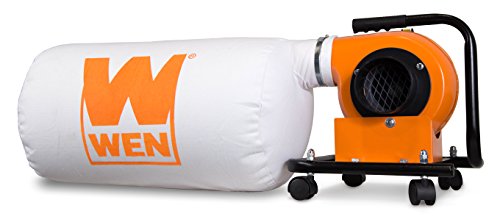
- 660 CFM airflow with a 5.7-amp motor
- 12-gallon, 5-micron zippered bag
- Mobile base plus optional wall mount
Best For: Small shops needing flexible, space-conscious dust collection
Automatic Extraction Pick
DYNAVEX 12-Gallon Dust Extractor

- 1.5 HP motor with 12-gallon steel tank
- 0.5-micron HEPA filtration
- Tool-linked auto-start and included hose kit
Best For: Small workshops prioritizing filtration and convenience
Feature-Rich Heavy-Duty Option
8-Gallon 150 CFM Dust Extractor
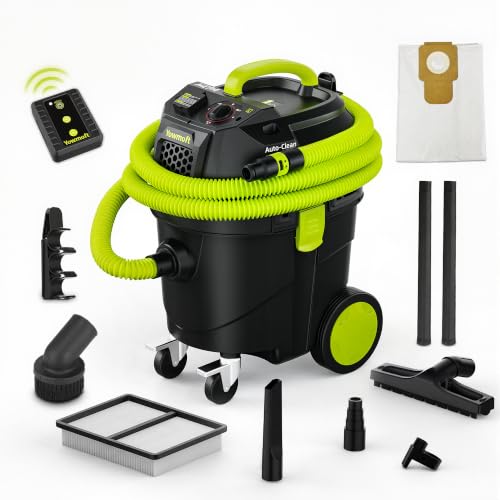
- 150 CFM airflow with 96-inch water lift
- Automatic HEPA cleaning every 20 seconds
- Remote control and tool-activated start
Best For: Small workshops needing automated, wet/dry extraction
High-Performance HEPA Pick – Bosch VAC090AH 9-Gallon Dust Extractor
For small workshops that need dependable point-of-use collection, the Bosch VAC090AH is one of the more capable dust extractors for small workshops. It combines automatic filter cleaning, tool activation, and adjustable suction in a wheeled 9-gallon canister.
Best For: Small workshops using grinders and other power tools where sustained suction and HEPA filtration are priorities.
Pros:
- Automatic filter cleaning every 15 seconds helps maintain suction during operation.
- HEPA filtration captures 99.97% of particles at 0.3 microns or larger.
- Power tool activation and a Power Broker suction dial support convenient, application-specific use.
Cons:
- The corded design limits mobility compared with cordless equipment.
- Its 28-pound weight and canister form may be more than needed for light cleanup.
With 150 CFM airflow, up to 97 inches of static water lift, and Bosch’s PRO+GUARD system, this is a strong choice for demanding dust-extraction tasks in a compact shop.
Ceiling-Mounted Air-Cleaning Pick – Abestorm DecDust 780 Air Filtration System
The Abestorm DecDust 780 takes a different approach to dust extractors for small workshops by filtering airborne particles throughout the room rather than connecting directly to a tool. Its ceiling-mountable design and remote control help keep floor space available.
Best For: Woodworking garages and workshops needing supplemental ambient air filtration across spaces up to 800 square feet.
Pros:
- 780 CFM airflow supports broad room circulation.
- A 270-degree air intake helps draw in airborne workshop dust.
- Remote control and ceiling-mounted design offer convenient operation while saving floor space.
Cons:
- It is an ambient air-filtration system, not a direct tool-connection extractor.
- The supplied notes do not specify automatic filter cleaning or tool activation.
At 50 dB and 20 pounds, the DecDust 780 is a practical supplement for managing airborne dust in a small shop, especially when floor-mounted equipment would be inconvenient.
Jobsite-Ready HEPA Pick – DEWALT DWV010 8-Gallon Dust Extractor
The DEWALT DWV010 is a portable option for small workshops that want direct tool extraction without giving up jobsite durability. Its 15-amp motor, automatic filter pulsing, and power tool actuation make it suited to repeated use with corded tools.
Best For: Workshop and jobsite users who need a wheeled HEPA extractor with a long hose and tool-controlled operation.
Pros:
- Automatic filter cleaning pulses every 30 seconds for continuous operation.
- Provides 150 CFM airflow from a 15-amp motor.
- Includes a 15-foot antistatic hose, universal swivel connector, and heavy-duty wheels.
Cons:
- At 80 dB, it is notably louder than some workshop air-filtration units.
- The 8-gallon capacity is smaller than the Bosch VAC090AH’s listed 9-gallon capacity.
- EPA RRP compliance depends on using DWV9330 filters.
With four wheels, power tool actuation, and a compact 22-pound body, the DWV010 balances portability and extraction performance for active small-shop projects.
Compact Two-Speed Pick – ALORAIR PureCare 780S Air Filtration System
The ALORAIR PureCare 780S is a compact ambient filtration unit for small workshops where space and noise matter. Rather than collecting chips at the tool, it circulates shop air with two fan speeds and a MERV-13 filter.
Best For: Compact woodworking, carving, sanding, and garage spaces needing quieter supplemental air filtration.
Pros:
- Two-stage airflow lets users select between 580 and 780 CFM operation.
- MERV-13 filtration is designed to stop 90% of 3–10 micron particles.
- Compact 17.4-pound design, timer function, and an extra socket support flexible placement and use.
Cons:
- It is an ambient air cleaner rather than a direct-connect dust extractor.
- The supplied notes describe filter replacement but not automatic filter cleaning.
- Its stated filtration performance targets 3–10 micron particles, so it should complement—not replace—source capture.
The PureCare 780S makes sense when a small shop needs portable, relatively quiet air circulation, especially for sanding and other airborne-dust-producing tasks.
Versatile HEPA Pick – ECOMAX 8-Gallon Power Tool Dust Extractor
For small workshops that need dust extractors for small workshops and general cleanup, the ECOMAX combines an 8-gallon shop-vac tank with power-tool activation and HEPA filtration. Its dual-mode design handles routine floor cleaning as well as dust collection from sanders, saws, and planers.
Best For: Woodworkers who want automatic tool startup, hands-free filter cleaning, and a versatile vacuum for dry debris and liquids.
Pros:
- Power Tool Activation starts the vacuum when a connected tool turns on.
- HEPA filtration, a dust-full indicator, and semi-automatic filter cleaning support consistent operation.
- Includes a 10-foot anti-static hose, universal adapter, extension wands, nozzles, and three disposable filter bags.
- An 8-gallon polymer tank and built-in drain port support workshop cleanup.
Cons:
- Its listed 75 dB noise level may be noticeable in a small workspace.
- The corded design requires access to a 120-volt outlet.
The ECOMAX is a strong all-purpose choice when a small workshop needs both tool-connected extraction and everyday vacuuming. Its included accessories and automatic controls add convenience without requiring a separate general-purpose shop vacuum.
High-Volume Woodworking Pick – WEN 1,300 CFM Dust Collector
The WEN DC1300 is designed for workshops producing substantial wood dust and chips. Among dust extractors for small workshops, it stands out as a dedicated dust collector with 1,300 CFM airflow, dual 4-inch inlets, and a large 50-gallon collection bag.
Best For: Woodworking shops that prioritize high airflow, large-capacity collection, and the ability to connect two tools at once.
Pros:
- Moves up to 1,300 cubic feet of air per minute for woodworking dust collection.
- Dual 4-inch air inlets allow attachment of up to two tools.
- The vertical bag holds up to 50 gallons of dust, reducing emptying frequency.
- A mobile base with four swivel casters makes the unit easier to reposition.
Cons:
- Its dedicated dust-collector format is less suited to wet pickup or general-purpose vacuuming.
- The 50-gallon design may require more floor space than a compact canister vacuum.
- It uses a 5-micron filter rather than the HEPA filtration specified for some shop vacuums.
The DC1300 makes the most sense for a small workshop centered on stationary woodworking tools. Its high airflow and oversized collection bag favor sustained chip and dust handling, while the casters help offset its larger footprint.
Remote-Controlled Cleanup Pick – 8-Gallon 3-in-1 Dust Extractor
This 8-gallon dust extractor adds remote operation to a compact wet/dry shop vacuum format. For small workshops comparing dust extractors for small workshops, its HEPA and paper-bag options, blowing function, and included wheels make it a flexible choice for woodworking and garage cleanup.
Best For: Garage and workshop users who value remote operation and need dry pickup, wet pickup, and blowing in one machine.
Pros:
- Remote control allows operation from a distance during garage or woodworking tasks.
- Three-in-one dry, wet, and blowing functions cover multiple cleanup jobs.
- HEPA and paper-bag filtration options help keep the motor clean while supporting dust collection.
- The 8-gallon tank and 11.5-foot hose provide useful capacity and reach.
Cons:
- The supplied notes list a 1,000W motor but do not specify power-tool activation.
- Its 8-gallon tank is smaller than the WEN collector’s 50-gallon bag.
- The listed eight-wheel configuration may be more complex than a standard four-wheel base.
This model is best viewed as a flexible cleanup vacuum rather than a dedicated high-airflow collector. Remote control and wet/dry/blower operation are practical advantages for a compact workshop, especially when one machine needs to handle varied tasks.
Compact Workshop Value – WEN DC3401 Dust Collector
For small workshops seeking dust extractors for small workshops, the WEN DC3401 offers a compact rolling design and a 660 CFM motor. Its 4-inch dust port, 12-gallon collection bag, and optional wall-mount setup make it adaptable for common woodworking tools.
Best For: Small woodworking shops that need a mobile or wall-mountable collector with a generous bag capacity.
Pros:
- 660 CFM airflow from a 5.7-amp motor and 6-inch impeller
- 12-gallon, 5-micron zippered collection bag
- Lockable swivel casters, carrying handle, and optional wall mount
- Compact 17-pound design with a two-year warranty
Cons:
- Uses a brushed motor with one speed and one power level
- Only a 4-inch dust port is provided
The DC3401 is a practical choice when space, portability, and straightforward dust collection matter more than advanced automation or high-capacity filtration.
Automatic Extraction Pick – DYNAVEX 12-Gallon Dust Extractor
The DYNAVEX is one of the more feature-focused dust extractors for small workshops, combining a 1.5 HP motor with a 12-gallon steel tank. Its HEPA filtration, included hose and adapters, and tool-activated start help simplify routine cleanup around saws, sanders, and routers.
Best For: Woodworkers who want a portable extractor with HEPA filtration and automatic tool-linked operation.
Pros:
- 10-amp, 1.5 HP motor with strong suction for woodworking debris
- 0.5-micron HEPA filter for capturing fine particles
- 12-gallon steel collection tank reduces emptying frequency
- Includes a 4-inch by 6.5-foot hose, fittings, clamps, and replacement filters
Cons:
- Auto-start socket is limited to tools up to 550 watts
- Continuous auto-start use is limited to one hour
- Wheels require optional installation
With its included accessories and fine-particle filtration, the DYNAVEX is well suited to compact workshops, provided connected tools stay within the auto-start limits.
Feature-Rich Heavy-Duty Option – 8-Gallon 150 CFM Dust Extractor
This 8-gallon extractor is a strong option among dust extractors for small workshops that need automated operation and consistent suction. It combines a 1200-watt motor, 150 CFM airflow, automatic HEPA filter cleaning, wet/dry capability, and remote control in a 35.2-pound canister.
Best For: Small workshops handling demanding dust, debris, or liquid cleanup and wanting hands-off filter maintenance.
Pros:
- 150 CFM airflow and 96 inches of water lift from a 1200-watt motor
- Automatic HEPA cleaning cycles every 20 seconds
- Tool-activated start supports connected tools up to 5 amps
- Includes remote control and an 11.5-foot hose
Cons:
- 8-gallon capacity is smaller than the 12-gallon alternatives
- At 35.2 pounds, it is the heaviest option in this group
- Its 14.7-by-25.6-by-18.3-inch footprint may require more storage space
The CVLA30 stands out for automation and filtration maintenance, making it appealing for heavier-duty workshop use when its smaller tank and larger footprint are acceptable.
How We Picked the Best Dust Extractors for Small Workshops
We focused on the features that matter most in compact woodworking and DIY spaces: airflow, filtration, collection capacity, portability, filter-cleaning systems, tool compatibility, and noise-conscious design. The selection includes source-capture extractors for saws, sanders, and grinders, along with larger dust collectors and overhead filtration units that address airborne particles.
Because no single machine suits every workshop, we considered both performance and practicality. A high-CFM collector may be useful for stationary tools, while a HEPA extractor with automatic filter cleaning is often better for portable power tools and fine dust.
Quick Comparison
| Type | Best For | What to Check |
|---|---|---|
| HEPA dust extractor | Fine dust and portable power tools | Sealed hoses, filter rating, auto-cleaning |
| Shop-vac-style extractor | General cleanup and tool connection | Suction, hose adapters, tank capacity |
| Dust collector | Table saws, planers, and jointers | CFM, duct size, collection bag |
| Air filtration system | Residual airborne dust | Airflow, room coverage, timer, filter access |
Key Buying Factors for Dust Extractors for Small Workshops
Airflow and Suction
CFM indicates how much air a machine moves, while suction helps maintain capture through a hose and tool port. Portable sanders and grinders benefit from strong suction and a sealed system; larger stationary tools generally need higher airflow and wider ducting.
Filtration and Filter Cleaning
For fine wood, drywall, or masonry dust, choose a HEPA-rated model or a system with clearly specified fine-particle filtration. Automatic or pulse filter cleaning helps maintain performance when the filter loads, reducing interruptions during longer jobs.
Capacity and Portability
A larger tank or collection bag means fewer emptying stops, but it also increases storage and maneuvering demands. Check wheel quality, handles, footprint, and whether the extractor fits beneath a workbench or can be wall mounted.
Tool Compatibility and Controls
Verify hose diameter, included adapters, outlet compatibility, and whether the extractor has a tool-triggered power outlet. Remote controls and timers are especially useful for ceiling-mounted air cleaners, but they do not replace source capture at the tool.
Who Should Buy Which Dust Extractors for Small Workshops?
Choose a HEPA extractor if you primarily use portable sanders, grinders, routers, or other tools that produce fine dust. Select a high-CFM dust collector for stationary woodworking machines with larger ports and heavier chip production. An overhead air filtration system is best as a secondary layer for dust that escapes at the source, particularly in an enclosed shop.
If your workshop handles mixed tasks, a portable extractor paired with a compact air cleaner offers the most flexible coverage. Whichever model you choose, use the correct hose and adapter, keep filters maintained, and wear suitable respiratory protection when dust exposure remains possible.