Cold garages and workshops need more than a basic space heater. The best propane garage heaters deliver high heat output for large, drafty areas while giving you practical control over portability, installation, ventilation, and operating cost.
This roundup includes forced-air, radiant, convection, vent-free, and direct-vent models ranging from compact portable heaters to high-output units for larger workspaces. Use the guide below to match BTUs and heater type to your garage, climate, and work habits.
Best 10 Propane Garage Heaters Picks for 2026
Best High-Capacity Pick
80,000 BTU Forced-Air Unit Heater
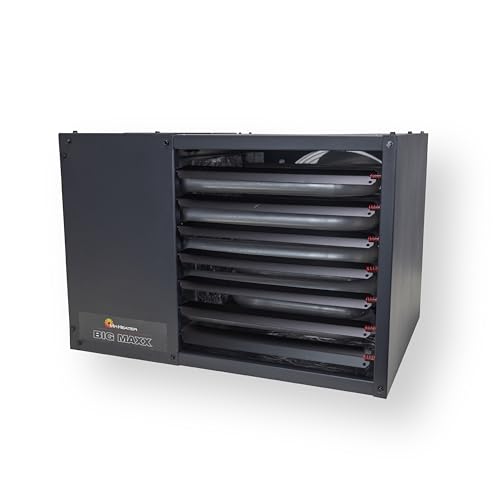
- Heats up to 2,667 square feet
- Ceiling-mounted low-profile design
- Includes NG-to-LP conversion kit
Best For: Large garages and workshops with high ceilings
Best Direct-Vent Option
Modine Hot Dawg LP Garage Heater

- Liquid propane fuel source
- Direct-vent ceiling-mounted design
- Covers up to 1,500 square feet
Best For: Permanent propane heating in indoor garages
Best for Mid-Size Garages

- Heats up to 1,667 square feet
- Designed for roughly three-car garages
- Includes NG-to-LP conversion kit
Best For: Mid-size garages, barns, and workshops
Best Portable Pick
80,000 BTU Convection Propane Heater
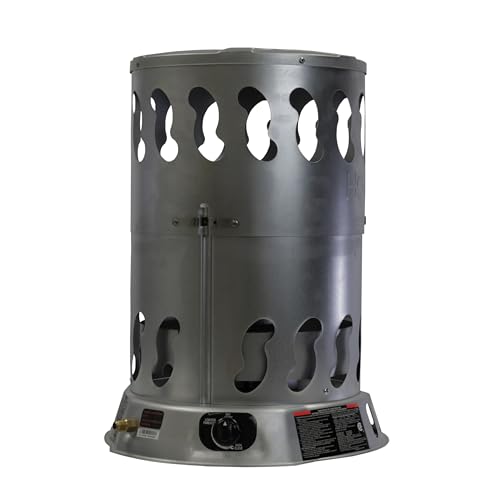
- Portable 13.4-pound floor design
- 30,000- and 80,000-BTU settings
- Includes hose, regulator, and piezo lighter
Best For: Well-ventilated temporary work areas
Portable 60,000 BTU Pick
VEVOR 60,000 BTU Forced-Air Propane Heater

- Heats up to 1,400 sq. ft.
- Overheat and flameout protection
- Portable 13.7-pound design
Best For: Large garages, shops, and job sites needing movable heat
Vent-Free Indoor Pick
Mr. Heater 30,000 BTU Radiant Propane Heater

- 30,000 BTU output
- No electricity or outdoor venting required
- Adjustable thermostat with low-oxygen shut-off
Best For: Fixed indoor heating with simple thermostat control
Large-Space Power Pick
VEVOR 125,000 BTU Forced-Air Propane Heater
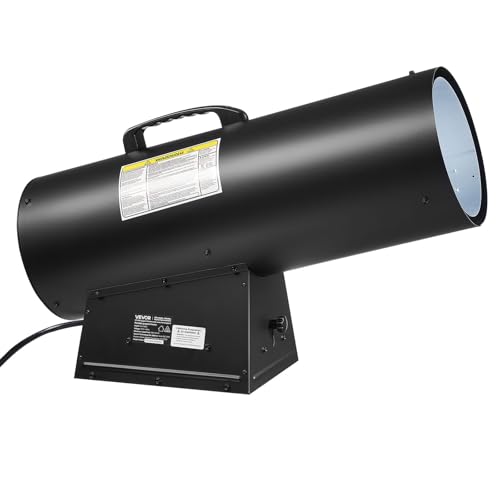
- Heats up to 3,100 sq. ft.
- 125,000 BTU maximum output
- Portable with safety protection systems
Best For: Large garages, shops, and high-demand work areas
Portable Radiant Pick

- Three adjustable heat settings
- Attaches to a 20-pound propane tank
- Outdoor use with tip-over protection
Best For: Portable outdoor garage and workshop heating
High-Output Garage Heater
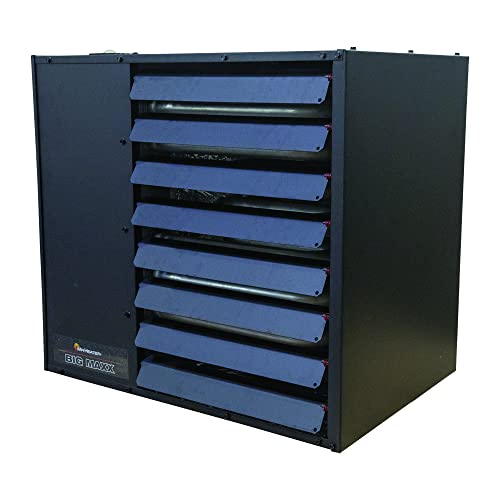
- Heats up to 2,000 square feet
- 125,000 BTU forced-air output
- Includes LP conversion and ceiling brackets
Best For: Large garages and permanent ceiling-mounted heating
Compact Indoor-Use Pick
9,000 BTU Portable Buddy Heater
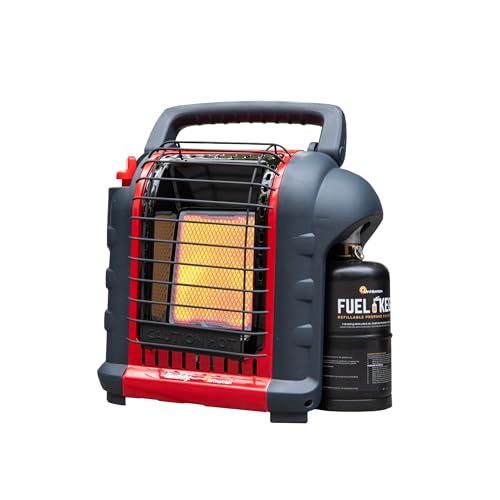
- Provides 4,000 or 9,000 BTUs
- Heats spaces up to about 225 square feet
- Indoor/outdoor design with low-oxygen safety
Best For: Small garages and portable spot heating
Best High-Capacity Pick – 80,000 BTU Forced-Air Unit Heater
For large garages, barns, and workshops, this 80,000 BTU forced-air unit heater is a powerful option among propane garage heaters. Its ceiling-mounted design helps preserve floor space, while the included NG-to-LP conversion kit supports propane installation.
Best For: Large, well-equipped garages or workshops with at least a 10-foot ceiling.
Pros:
- Heats up to 2,667 square feet with 80,000 BTUs.
- Ceiling-mounted, low-profile design keeps the floor clear.
- Works with standard 24-volt and Wi-Fi-enabled thermostats, sold separately.
- Includes high-temperature and gas safety shut-off features.
Cons:
- Requires a minimum 10-foot ceiling and 8 feet of clearance below the heater.
- Thermostat is not included.
- Professional gas and ceiling installation may be needed.
This is the strongest choice for buyers who need broad coverage and a permanent overhead installation. Verify ceiling clearance, fuel connections, and ventilation requirements before purchasing.
Best Direct-Vent Option – Modine Hot Dawg LP Garage Heater
The Modine Hot Dawg is a ceiling-mounted direct-vent heater designed specifically for garages. Fueled by liquid propane and rated for up to 1,500 square feet, it suits buyers seeking a quieter, more permanent heating solution among propane garage heaters.
Best For: Garages needing a compact, ceiling-mounted propane heater with a direct-vent format.
Pros:
- Uses liquid propane as its fuel source.
- Direct-vent design is intended for indoor garage use.
- Ceiling mounting saves floor space.
- Listed as noiseless and covers up to 1,500 square feet.
Cons:
- Coverage is lower than the 80,000 BTU models in this roundup.
- Permanent ceiling installation may require additional planning.
- The supplied notes do not list included installation accessories.
Choose this model when a dedicated propane garage heater with a direct-vent configuration and quieter operation matters more than maximum coverage. Confirm venting and installation requirements for your space.
Best for Mid-Size Garages – 50,000 BTU Forced-Air Heater
This 50,000 BTU ceiling-mounted unit is a practical middle ground for garages, barns, and workshops. It heats up to 1,667 square feet and includes an NG-to-LP conversion kit, making it a flexible option among propane garage heaters.
Best For: Approximately three-car garages and other mid-size workspaces with suitable ceiling clearance.
Pros:
- Provides 50,000 BTUs for coverage up to 1,667 square feet.
- Ceiling-mounted design keeps usable floor space open.
- Compatible with standard 24-volt and Wi-Fi-enabled thermostats, sold separately.
- Includes high-temperature and gas safety shut-off features.
Cons:
- Requires a minimum 10-foot ceiling and 8 feet of clearance beneath the heater.
- Thermostat is sold separately.
- May need professional installation for gas, venting, and ceiling mounting.
Compared with the larger model, this unit is better matched to a mid-size garage and may avoid oversizing the heater. Measure the space and confirm the required clearances before installation.
Best Portable Pick – 80,000 BTU Convection Propane Heater
For flexible spot heating, this portable convection model delivers adjustable 30,000- or 80,000-BTU output and heats up to 2,000 square feet. Its floor-standing design and included hose, regulator, and piezo lighter make it a convenient option among portable propane garage heaters.
Best For: Well-ventilated garages, workshops, barns, warehouses, and temporary work areas where portability is important.
Pros:
- Portable floor-mounted design weighs 13.4 pounds.
- Offers high and low settings of 80,000 and 30,000 BTUs.
- Provides 360-degree convection heating for spaces up to 2,000 square feet.
- Includes a 10-foot hose, regulator, and built-in piezo lighter.
Cons:
- Intended for well-ventilated areas and listed for outdoor use.
- Does not provide a permanent ceiling-mounted installation.
- Requires attention to safe hose, propane, and floor placement.
This is the most flexible choice for users who need heat where and when they need it rather than a permanently installed system. Because it is designed for well-ventilated spaces, follow the product’s usage guidance carefully.
Portable 60,000 BTU Pick – VEVOR 60,000 BTU Forced-Air Propane Heater
For shoppers comparing propane garage heaters, this VEVOR model offers portable forced-air heating with up to 60,000 BTU output. Its adjustable heating angle, electronic ignition, and compact carry-friendly design suit garages, shops, job sites, and outdoor work areas.
Best For: Large garages and portable indoor or outdoor heating where mobility and adjustable heat direction matter.
Pros:
- Heats areas up to 1,400 square feet with up to 60,000 BTU output.
- Includes overheat and flameout protection systems.
- Portable 13.7-pound design with a large ergonomic handle.
- Supports high-altitude use up to 4,921 feet and runs on a 20-pound propane tank.
Cons:
- A 20-pound propane tank is required and is not listed among the included components.
- Its listed runtime is approximately 7–11 hours, depending on use.
This is a practical choice when you need substantial heat without committing to a fixed installation. The portable format and safety features add flexibility, while the 60,000 BTU output is better suited to larger spaces than small rooms.
Vent-Free Indoor Pick – Mr. Heater 30,000 BTU Radiant Propane Heater
Among propane garage heaters, the Mr. Heater 30,000 BTU model stands out as a wall-mounted, vent-free option for indoor spaces. It uses radiant heat, requires no electricity or outdoor venting, and includes an adjustable thermostat for straightforward room heating.
Best For: Indoor areas that need a fixed propane heater with thermostat control and no electrical connection.
Pros:
- Provides 30,000 BTU per hour and is listed to heat up to 1,000 square feet.
- Vent-free design requires no outdoor venting.
- Battery-operated electronic ignition includes a battery.
- Includes an adjustable thermostat and low-oxygen safety shut-off.
Cons:
- Designed for indoor, wall-mounted use rather than portable heating.
- Operation has a listed high-altitude restriction of 4,500 feet.
- The optional blower fan kit is sold separately.
This model is best suited to buyers who prioritize a permanent indoor setup and simple radiant warmth. Its vent-free construction and thermostat are convenient, but the wall-mounted format offers less flexibility than portable forced-air heaters.
Large-Space Power Pick – VEVOR 125,000 BTU Forced-Air Propane Heater
For very large garages, shops, or work areas, this VEVOR is one of the highest-output propane garage heaters in the group. Its 125,000 BTU forced-air design covers up to 3,100 square feet, while the portable frame and adjustable heating angle help direct warmth where it is needed.
Best For: Large spaces and demanding heating jobs that need high output and portable positioning.
Pros:
- Delivers up to 125,000 BTU and covers areas up to 3,100 square feet.
- Features overheat and flameout protection.
- Portable 19.7-pound design includes a large ergonomic handle.
- Built-in pressure regulator supports high-altitude use up to 4,921 feet.
Cons:
- Its listed runtime on a 20-pound propane tank is approximately 3.5–4.5 hours.
- The larger output and 19.7-pound body may be excessive for small garages.
- A propane tank is required and is not listed as included.
This heater makes the most sense when coverage and heat output take priority over long runtime or compact storage. It offers useful portability for large work areas, but smaller spaces may be better matched to a lower-BTU model.
Portable Radiant Pick – 45,000 BTU Tank Top Heater
For outdoor workspaces or garage-adjacent projects, this propane garage heater delivers adjustable radiant warmth directly from a 20-pound propane tank. Its three heat settings and portable tank-top design make it easy to reposition as needed.
Best For: Outdoor garage work, workshops, and portable spot heating.
Pros:
- Three output settings from 30,000 to 45,000 BTUs
- Mounts directly to a 20-pound propane tank for portability
- Includes tip-over safety shut-off and adjustable tilt head
- Runs approximately 9.5 hours on high with a 20-pound tank
Cons:
- Designed for outdoor use only
- Requires a compatible 20-pound propane tank
This is a practical choice when portability and directional radiant heat matter more than permanently heating an enclosed garage. Its outdoor-only rating means it should not be treated as an indoor garage-heating solution.
High-Output Garage Heater – 125,000 BTU Forced-Air Unit
For large enclosed workspaces, this high-output propane garage heater uses forced-air heating and is rated to cover up to 2,000 square feet. It includes electronic ignition, powered exhaust, and a liquid-propane conversion kit.
Best For: Large garages requiring ceiling-mounted, high-capacity heating.
Pros:
- 125,000 BTU output for substantial heating capacity
- Rated for heating coverage up to 2,000 square feet
- Electronic ignition and powered exhaust
- Includes an LP conversion kit and ceiling-mount angle brackets
Cons:
- Heavy unit weighing 109.1 pounds
- Designed for ceiling mounting rather than portable placement
- Installation is more involved than with portable heaters
This unit stands out for large garages where maximum output and permanent installation are priorities. Its size, weight, and mounting requirements make it better suited to a planned heating setup than occasional spot use.
Compact Indoor-Use Pick – 9,000 BTU Portable Buddy Heater
This compact propane garage heater offers 4,000 or 9,000 BTUs of radiant heat in a portable format. It is approved for indoor and outdoor use and can heat spaces up to approximately 225 square feet.
Best For: Small garages, enclosed work areas, patios, and portable personal heating.
Pros:
- Compact, portable design with two heat settings
- Rated to heat approximately 225 square feet
- Approved for indoor and outdoor use
- Includes an emergency low-oxygen safety system
Cons:
- Limited to 9,000 BTUs for smaller spaces
- A 1-pound cylinder lasts about 2.4 hours on high
- Unauthorized accessories or attachments can void the warranty
The Portable Buddy is a sensible option for targeted warmth rather than whole-garage heating. Its modest coverage and short high-setting runtime favor small spaces and intermittent use.
How We Picked the Best Propane Garage Heaters
We compared these Propane Garage Heaters by heat output, coverage potential, heater design, portability, controls, fuel flexibility, installation requirements, and common garage-use scenarios. The selection includes portable forced-air models for fast heating, radiant heaters for spot warmth, convection units for broader circulation, and vented options for more permanent installations.
BTU ratings provide a useful starting point, but they do not tell the whole story. Insulation, ceiling height, air leakage, outdoor temperature, and whether the garage door opens frequently can significantly affect real-world performance. Safety features, approved fuel connections, and ventilation requirements are equally important.
Quick Comparison
| Heater type | Best for | Main advantage | Important trade-off |
|---|---|---|---|
| Forced-air | Large garages and workshops | Fast, powerful heating | Fan noise and fuel combustion require attention to ventilation |
| Radiant | Spot heating and occupied work areas | Quiet, direct warmth | Less uniform room heating |
| Convection | Portable general heating | Gradual, circulating warmth | Usually slower to heat a large space |
| Direct-vent or vent-free | Installed or supplemental heating | Cleaner placement options and steady operation | Installation, clearance, and ventilation rules vary |
Key Buying Factors for Propane Garage Heaters
Choose the Right BTU Output
Smaller enclosed work areas may need a compact heater, while large or poorly insulated garages generally require substantially more output. Avoid choosing solely by floor area; consider ceiling height, insulation, climate, and how quickly you want the space heated. Oversizing can create uncomfortable temperature swings and unnecessary fuel use.
Forced-Air Versus Radiant Heat
Forced-air heaters warm the space quickly and are often the best choice for larger garages, vehicle bays, and workshops. Radiant models warm people and nearby surfaces directly, making them useful when you occupy only one work area or want quieter operation. Convection heaters offer a middle ground but may take longer to distribute heat.
Check Ventilation and Clearances
Propane combustion produces exhaust gases and consumes oxygen. Follow the manufacturer’s instructions for ventilation, minimum clearances, fuel connections, placement, and indoor-use approval. A carbon monoxide detector is an important additional safeguard, but it does not replace proper installation or ventilation.
Consider Portability and Fuel Setup
Portable heaters are convenient for temporary heating and can move between a garage, workshop, or jobsite. Confirm the required propane-cylinder size, hose and regulator compatibility, ignition method, runtime, and whether the unit needs a stable, level surface. For frequent use, compare fuel consumption as well as purchase price.
Who Should Buy Which Propane Garage Heaters?
- For large, drafty garages: Choose a high-output forced-air heater, provided the space has suitable ventilation and the noise level is acceptable.
- For medium-size workshops: A midrange forced-air or convection model offers a practical balance of heating speed and portability.
- For spot heating: A radiant or tank-top heater can warm a nearby person or workbench without heating the entire garage.
- For supplemental heat: A compact portable radiant heater works well for short sessions, small areas, or emergency backup.
- For a permanent installation: Consider a direct-vent model and have fuel and venting work completed according to local codes and manufacturer requirements.
Before buying, verify that the selected heater is approved for your intended location and fuel type. If you are unsure about sizing, ventilation, or propane installation, consult a qualified professional.