Soft roof rack pads are built for drivers who need a straightforward way to move boards without overcomplicating the setup.
This [Soft Roof Rack Pads review] is about fit, protection, and whether the strap-and-pad bundle makes sense for everyday board hauling.
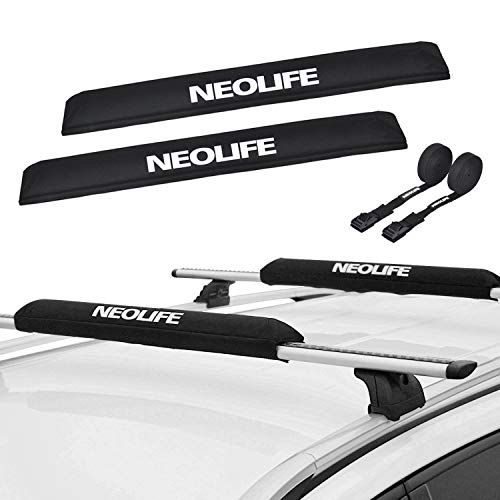
Soft Roof Rack Pads Review Summary
Soft roof rack pads make the most sense for buyers who want a simple, padded interface between boards and cross bars.
The listing points to a practical bundle: 28/34 inch pads, two 15-foot tie-down straps, and a universal design meant to fit nearly every vehicle with cross bars.
That combination gives this product a clear role: it is less about premium engineering and more about making transport accessible, quicker to set up, and gentler on gear.
Best for surfers, SUP owners, and snowboarders who want an affordable-style utility kit with soft padding and long straps.
Less ideal for buyers who need a fully integrated roof rack system, a locked-in premium feel, or highly specialized vehicle fitment details beyond the broad universal claim.
Review Scorecard
| Category | Score | Editorial rationale |
|---|---|---|
| Board Protection | 8/10 | Foam padding, waterproof nylon sleeve, and soft 600D polyester are all aimed at reducing contact damage. |
| Ease of Use | 8/10 | The setup is simple: place the pads on the cross bar and secure the board with the included straps. |
| Compatibility | 7/10 | The universal design is appealing, but the listing stays broad rather than documenting precise fit constraints. |
| Transport Security | 8/10 | Hook-and-loop fastening plus two 15-foot straps suggest a practical hold for common board-hauling needs. |
| Weather Readiness | 7/10 | Waterproof material and UV-resistant strap claims are useful, though they remain listing-level claims. |
| Value for Everyday Buyers | 8/10 | The bundle covers the core need without forcing the buyer to assemble separate pieces. |
| Support and Ownership | 7/10 | The seller promises 24-hour professional service, which is helpful if fit or setup questions come up. |
Key Features and Specifications of Soft Roof Rack Pads
The core appeal of Soft roof rack pads is the mix of soft protection and basic transport utility.
The pads are described as durable 600D polyester, and the listing also emphasizes waterproof construction.
For buyers carrying surfboards, SUP paddleboards, snowboards, or even kayaks, that material choice matters because the main job is not just holding gear, but preventing unnecessary wear between the load and the rack.
The size detail is also important.
The pads are offered in 28/34 inch lengths, which suggests a product meant to cover a practical span of cross bars rather than a one-size-only gimmick.
The included two 15-foot straps make the package more complete, since many buyers do not want to source the tie-downs separately.
In plain terms, this is a board transport kit, not just a pad accessory.
| Spec | What the listing says | Why it matters |
|---|---|---|
| Material | 600D polyester | Suggests a tougher shell than very thin soft goods. |
| Weather protection | Waterproof | Helps when racks and boards are exposed outdoors. |
| Pad length | 28/34 inches | Gives buyers a more specific sizing choice. |
| Strap length | Two 15-foot straps | Helps secure longer boards and wider loads. |
| Mounting | Hook-and-loop fastener | Makes the pads easier to fix onto cross bars. |
| Use cases | Surfboards, SUP boards, snowboards, kayaks | Broadens the value if the buyer switches gear seasonally. |
The listing also mentions foam padding, nylon waterproof sleeve protection, and anti-slip material.
Those details collectively point to a design that is trying to manage three problems at once: board contact, strap stability, and movement on the bar.
That is the right priority order for this category.
If a roof rack accessory fails, it usually fails because the board shifts, rubs, or takes impact during loading and travel.
Another helpful detail is the “easy to use” positioning.
The product is not pretending to be a mechanical system.
It is a pad-based solution that should be quick to place on the crossbar, then tightened down with the included straps.
For many casual buyers, that is exactly what they want: fewer parts, fewer decisions, and less setup time before a trip.
Pros and Cons of Soft Roof Rack Pads
Pros
- Soft padding is designed to protect boards and boats from direct bar contact.
- The waterproof construction is useful for outdoor transport and storage.
- Two 15-foot straps are included, so the buyer gets a more complete kit.
- The universal design makes the product broadly relevant across vehicle types with cross bars.
- The hook-and-loop attachment should help keep the pads fixed in place.
Cons
- The compatibility claim is broad, so buyers still need to verify their specific cross bar shape and spacing.
- The listing gives feature claims, not detailed test data, so load confidence depends on setup quality.
- It is a utility solution, not a premium roof rack system, so buyers expecting integrated hardware may want something more robust.
- The branding in the listing is a little mixed, which can make the product identity less clear at first glance.
The biggest strength here is that the product stays focused on the essentials.
It does not try to be too clever.
For a lot of buyers, that is a plus.
The biggest weakness is also related to simplicity: with a product like this, the real-world experience depends heavily on the cross bar shape, how tightly the pads are seated, and whether the straps are routed correctly.
Who Should Buy Soft Roof Rack Pads?
Buy Soft Roof Rack Pads if you already have cross bars and want a padded carry solution for boards or similar long gear.
The listing’s use cases make it suitable for surfers, SUP owners, snowboarders, and kayak owners who need a practical transport layer rather than a permanent rack conversion.
This is also a sensible option for buyers who prefer an all-in-one bundle.
The included pads and straps reduce the number of separate purchases and keep the setup straightforward.
If you are outfitting a vehicle for occasional weekend use, that simplicity may matter more than chasing a more complicated premium system.
You should probably skip it if you need exact-fit hardware guidance, highly engineered aero-style rack components, or a dedicated locking transport solution.
The universal framing is convenient, but it is not the same thing as a vehicle-specific fit guarantee.
Buyers with unusually shaped cross bars should treat the fit claim carefully and confirm dimensions before relying on it for frequent transport.
It is also not the best match for someone who wants a fully polished premium ecosystem.
This is a functional, gear-first product.
If your priority is an elegant rack setup for repeated long-distance travel, you may want a more established roof-rack line with richer compatibility documentation.
Transport Fit and Protection Details
Padding Interface
The most important design choice is the soft interface between the board and the rack.
The listing explicitly calls out foam padding and a nylon waterproof sleeve, which suggests the product is trying to reduce abrasion at the contact points.
For board carriers, that is the whole game: prevent pressure points, avoid slipping, and keep the load from grinding against hard metal edges.
Strap Length and Hold
The included two 15-foot straps are a strong practical detail.
Longer straps give more room for different board sizes and can make tie-down routing easier when the load sits higher or wider than expected.
The listing also describes the straps as durable in outdoor conditions, with UV, water, and abrasion resistance claims.
Those are the right traits to ask for in a roof transport strap.
Mounting Stability
Hook-and-loop fastening is a sensible choice for a pad product because it simplifies installation and removal.
It should make the pads easier to position on the cross bars, and it helps explain why the product is marketed as easy to use.
The tradeoff is that buyers still need to install it properly.
A simple design is only as stable as the care taken during setup.
Best Use Cases
This product is best when the goal is predictable, occasional hauling of surfboards, SUPs, snowboards, or similar gear.
The universal positioning suggests wide appeal, but it does not remove the need for common-sense checks.
If you haul boards frequently, in variable weather, or over long highway trips, the quality of the initial fit will matter more than the general marketing language.
Alternatives to Soft Roof Rack Pads
If you want a different style of board transport gear, these are credible Amazon search alternatives to compare:
Those alternatives are worth checking if you want a more established rack brand, a different padding profile, or a product line with broader accessory ecosystems.
Comparing the mounting method, strap length, and vehicle fit language is the most useful way to judge whether Soft roof rack pads are enough or whether a better-known brand is the safer buy.
Is Soft Roof Rack Pads Worth It?
Soft Roof Rack Pads are worth it if you want a simple, padded, cross-bar-based transport solution for boards and you value convenience over complexity.
The bundle covers the essential use case well: soft contact protection, a straightforward mounting method, and included tie-down straps.
If your main need is occasional surfboard, SUP, snowboard, or kayak transport and your vehicle already has cross bars, this is a sensible, low-friction choice.
If you need precise fit documentation, heavier-duty rack engineering, or a more premium long-term roof system, look at the alternatives first.