When it comes to maintaining your vehicle’s performance, having the right engine fault detection device can make all the difference. These tools not only help you identify issues early but can also save you from costly repairs down the line. With options like the MOTOPOWER MP69033 and ANCEL AD310, you have various features to evaluate. But which one truly fits your needs? Let’s explore the top choices and what they can do for you.
MOTOPOWER MP69033 Pro OBD2 Scanner Code Reader

If you’re a DIY mechanic or a car enthusiast looking for an efficient tool to diagnose engine issues, the MOTOPOWER MP69033 Pro OBD2 Scanner Code Reader is a top choice. It reads and erases OBD2 codes, tests battery health, and offers diagnostic capabilities for most vehicles from 1996 onwards. With built-in DTC lookup, you can quickly identify engine problems. The user-friendly design, featuring a 2.8-inch TFT color screen and extended cable, makes it easy to operate in tight spaces. Plus, it supports multiple languages, making it accessible for everyone. Just plug it in, and you’re ready to go!
Best For: DIY mechanics and car enthusiasts seeking an efficient tool for diagnosing engine issues in vehicles from 1996 onwards.
Pros:
- Easy to use with a plug & play design and intuitive menu.
- 2.8-inch TFT color screen enhances visibility and user experience.
- Provides comprehensive diagnostic functions, including battery testing and DTC lookup.
Cons:
- Limited to reading/clearing OBDII codes; cannot access ABS, Airbag, or Oil Service Light codes.
- Test results for battery and alternator may vary based on temperature and vehicle age.
- Lacks WiFi connectivity and app support, making it less versatile than some advanced scanners.
ANCEL AD310 OBD II Scanner Car Engine Fault Code Reader

The ANCEL AD310 OBD II Scanner is an excellent choice for DIY car enthusiasts and everyday drivers who want a reliable tool for diagnosing engine issues. This best-selling scanner, recommended by auto mechanic Scotty Kilmer, reads and clears diagnostic trouble codes for 1996 and newer vehicles. With its sturdy design and 2.5-foot cable, it’s easy to use and transport. It provides quick, accurate results and powers directly from your car’s OBDII Data Link Connector—no batteries needed. Just remember, it’s limited to diagnosing emission-related issues, so make sure your vehicle is OBDII compliant before purchasing.
Best For: DIY car enthusiasts and everyday drivers seeking a reliable tool for diagnosing engine issues in OBDII compliant vehicles.
Pros:
- Quick and accurate results: Reads and clears engine trouble codes in seconds.
- User-friendly design: Easy to operate, suitable for individuals with minimal car knowledge.
- No batteries required: Powers directly from the vehicle’s OBDII Data Link Connector.
Cons:
- Limited diagnostic capability: Only diagnoses emission-related issues, not engine fault codes unrelated to emissions.
- OBDI compatibility: Cannot be used for vehicles with OBDI interfaces, even with an adapter.
- Compatibility check needed: Users must confirm OBDII compliance before purchasing to ensure it works with their vehicle.
FOXWELL NT201 OBD2 Scanner Code Reader for Cars and Trucks

For car and truck owners seeking an affordable and user-friendly solution to engine fault detection, the FOXWELL NT201 OBD2 Scanner Code Reader stands out as a top choice. It enables you to read and clear fault codes, reset check engine lights, and perform live data diagnostics, all without expensive mechanic visits. With its one-click emissions test and compatibility with all vehicles since 1996, you’ll have everything you need for effective troubleshooting. Plus, there are no subscription fees, and it comes with free lifetime updates. The color screen enhances usability, making it even easier to identify engine issues quickly.
Best For: Car and truck owners looking for an affordable and user-friendly solution for engine fault detection and diagnostics.
Pros:
- Easy to use with a plug-and-play design and no battery required.
- Provides live data diagnostics and a built-in trouble code library for quick issue identification.
- One-time purchase with free lifetime updates and no subscription fees.
Cons:
- Limited to reading and clearing only OBD emission-related fault codes; does not support ABS or SRS systems.
- Not compatible with electric vehicles or 24V heavy-duty trucks.
- Requires resolution of underlying issues before clearing codes, which may necessitate further repairs.
ANCEL AD410 Enhanced OBD2 Scanner for All OBDII Cars

Engine enthusiasts and everyday drivers alike will appreciate the ANCEL AD410 Enhanced OBD2 Scanner, designed specifically for all OBDII-compliant vehicles. This handy tool reads and clears emissions-related fault codes swiftly, helping you identify issues with over 42,000 built-in DTC lookups. Its user-friendly interface and 2.4 TFT true-color LCD display make diagnostics easy, whether you’re a beginner or a pro. Plus, it’s compatible with all 16-pin OBDII vehicles, from 1996 US models to newer Asian cars. With multilingual support and no need for batteries, the AD410 is a reliable companion for keeping your vehicle running smoothly.
Best For: The ANCEL AD410 Enhanced OBD2 Scanner is best for vehicle owners and mechanics looking for an efficient tool to diagnose and troubleshoot engine issues in OBDII-compliant cars.
Pros:
- Quick reading and clearing of emissions-related fault codes with over 42,000 built-in DTC lookups.
- User-friendly interface and clear display make it accessible for both beginners and experienced users.
- No batteries required; powered directly from the vehicle’s OBDII connector, adding convenience.
Cons:
- Limited to engine diagnostics and does not support ABS, SRS, or transmission systems.
- USB cable is only for updates and not needed during vehicle connection, which may be confusing for some users.
- Diagnostic capabilities may not extend to newer vehicle models or complex systems beyond basic engine issues.
Autel Professional OBD2 Scanner AL319 Code Reader
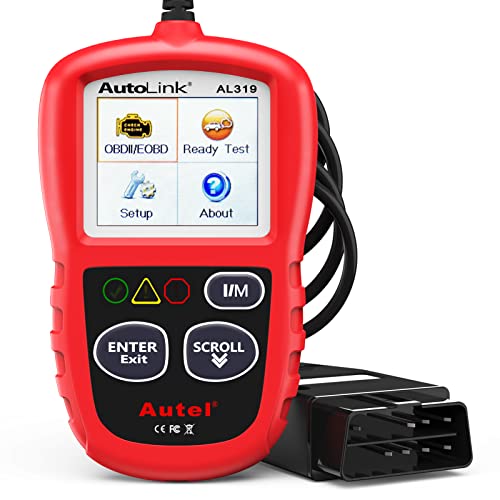
Equipped with a user-friendly “plug and play” interface, the Autel Professional OBD2 Scanner AL319 Code Reader is perfect for DIY enthusiasts and everyday drivers alike. This handy tool lets you read DTCs, display live data, and access freeze frame information, helping you diagnose Check Engine Light (CEL) issues efficiently. Compatible with various post-1996 OBD II vehicles, it supports multiple languages for global users. The patented One-Click I/M Readiness feature and TFT color display enhance usability. Plus, you’ll enjoy a 12-month warranty and lifetime free updates, ensuring you stay informed and ready for any vehicle concerns.
Best For: The Autel Professional OBD2 Scanner AL319 Code Reader is best for DIY enthusiasts and everyday drivers looking for an easy-to-use diagnostic tool for their vehicles.
Pros:
- User-friendly interface: The “plug and play” design makes it accessible for users of all skill levels.
- Wide compatibility: Works with various post-1996 OBD II vehicles, accommodating a diverse range of car owners.
- Lifetime updates and warranty: Offers peace of mind with a 12-month warranty and lifetime free updates for ongoing support.
Cons:
- Limited advanced features: May not provide in-depth diagnostics for more complex vehicle issues compared to higher-end models.
- Requires OBD II protocol: Only compatible with vehicles that adhere to OBD II standards, limiting its use with older models.
- Dependent on vehicle power: Does not have a built-in battery, so it requires the vehicle to be on for operation.
MOTOPOWER Car OBD2 Scanner Code Reader (MP69033)

If you’re a car owner looking for an easy-to-use diagnostic tool, the MOTOPOWER Car OBD2 Scanner Code Reader (MP69033) fits the bill perfectly. This compact scanner, designed for all OBD II protocol cars since 1996, offers multiple functions like reading and erasing codes, viewing freeze frame data, and providing real-time vehicle information. Its 2.8-inch LCD display with white backlight guarantees easy readability, and it connects directly to your vehicle for power, eliminating the hassle of batteries. While it doesn’t support ABS or Airbag codes, it’s an excellent choice for basic engine diagnostics across various languages and protocols.
Best For: Car owners seeking a straightforward and affordable diagnostic tool for basic engine diagnostics on OBD II protocol vehicles.
Pros:
- Compact design with a user-friendly interface for easy operation.
- Multiple functions including code reading, erasing, and real-time data display.
- Supports a wide range of vehicles and languages, making it versatile.
Cons:
- Does not support ABS, Airbag, or Oil Service Light codes.
- Limited to basic engine diagnostics, lacking advanced features found in higher-end models.
- May require direct contact with customer support for connection issues.
FOXWELL NT301 Plus OBD2 Scanner and Battery Tester

For car owners seeking a reliable way to troubleshoot engine issues and monitor battery health, the FOXWELL NT301 Plus OBD2 Scanner and Battery Tester stands out as an ideal choice. This upgraded 2-in-1 device is compatible with a wide range of vehicles and features a 2.8-inch color display that’s 36% larger than its predecessor. It quickly reads DTCs, resets the Check Engine Light, and provides live data monitoring. The battery testing functionality guarantees accurate health analysis in cold conditions. Plus, with DIY capabilities, you can save on shop visits while enjoying free lifetime software updates for continued support.
Best For: Car owners looking for an efficient tool to diagnose engine problems and monitor battery health without relying on professional mechanics.
Pros:
- 2-in-1 functionality: Combines OBD2 scanning and battery testing in one device for versatile use.
- User-friendly: Features a large color display and straightforward operation, making it accessible for DIY enthusiasts.
- Cost-saving: Allows users to perform diagnostics and battery tests at home, reducing the need for expensive shop visits.
Cons:
- Limited compatibility: Does not support non-OBDII protocols or certain vehicle models, restricting its use.
- No support for advanced features: Lacks capabilities for ABS, SRS, transmission diagnostics, and key programming.
- Windows-only updates: Requires a Windows computer for software updates, which may be inconvenient for some users.
BlueDriver Bluetooth Pro OBDII Scan Tool for iPhone & Android

The BlueDriver Bluetooth Pro OBDII Scan Tool is an ideal choice for DIY car enthusiasts and everyday drivers alike who want to take control of their vehicle’s health. This powerful tool connects wirelessly to your iPhone or Android device, diagnosing over 7,000 issues, including check engine light, ABS, and airbag problems. You’ll appreciate its user-friendly app, providing unlimited repair reports and access to a vast database of instructional videos. Plus, there are no subscription fees or hidden costs. With 24/7 professional support, you can tackle vehicle diagnostics confidently and keep your car running smoothly.
Best For: DIY car enthusiasts and everyday drivers looking to diagnose and monitor their vehicle’s health without relying on a mechanic.
Pros:
- User-friendly app with unlimited repair reports and access to instructional videos.
- Wireless and Bluetooth-enabled, making it easy to connect to your smartphone or tablet.
- No subscription fees or hidden costs, ensuring straightforward usage.
Cons:
- Limited to vehicles made in 1996 or newer; may not work with older models.
- Primarily designed for gas-powered vehicles, excluding diesel or electric vehicles.
- The reliance on a smartphone may be inconvenient for users who prefer standalone devices.
ZMOON ZM201 Professional OBD2 Scanner Diagnostic Tool

Equipped with enhanced diagnostic capabilities, the ZMOON ZM201 Professional OBD2 Scanner Diagnostic Tool is perfect for car enthusiasts and DIY mechanics looking to take control of vehicle maintenance. This tool supports vehicles manufactured after 1996, providing full OBDII modes, including reading and clearing codes, and turning off engine lights. With live data streaming, a robust database of 35,901 DTCs, and user-friendly features like a 2.8-inch color screen, you’ll navigate diagnostics with ease. Plus, enjoy free lifetime software updates and the option to connect to a computer for printing fault data, saving you time and repair costs.
Best For: The ZMOON ZM201 Professional OBD2 Scanner Diagnostic Tool is best for car enthusiasts and DIY mechanics seeking an affordable and comprehensive solution for vehicle diagnostics.
Pros:
- Full OBDII mode support, including reading, clearing codes, and turning off engine lights.
- Extensive database of 35,901 DTCs for thorough fault diagnosis.
- User-friendly design with a color screen, shortcut functions, and free lifetime software updates.
Cons:
- Not compatible with new energy vehicles or hybrids.
- Limited to vehicles with an OBD2 port manufactured post-1996 in the USA, 2002 in the EU, and 2008 in Asia.
- Some users may find the 2.8-inch screen size limiting for detailed data viewing.
VDIAGTOOL VD10 OBD2 Scanner Code Reader for Car Diagnostics
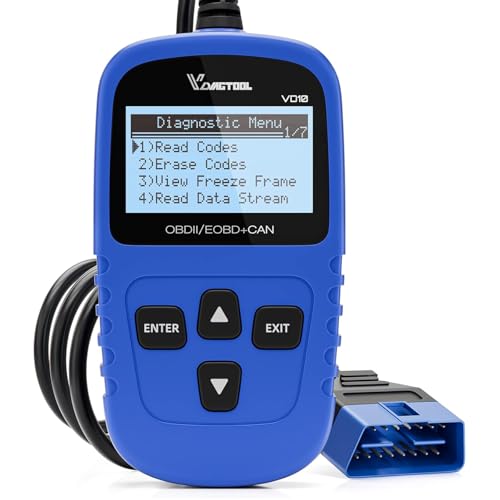
Whether you’re a DIY enthusiast or a casual car owner, the VDIAGTOOL VD10 OBD2 Scanner Code Reader is an essential tool for diagnosing vehicle issues. This versatile scanner connects to your OBDII port, allowing you to read and clear fault codes quickly. With access to over 3000 definitions, you can troubleshoot problems effectively. It also provides live data from various sensors and retrieves freeze frame data, making it easier to address intermittent issues. Compatible with 99% of OBDII-compliant vehicles, the VD10 features an I/M readiness function, ensuring your car passes inspections seamlessly. Plus, it’s user-friendly, plug-and-play, and comes with a 3-year warranty.
Best For: The VDIAGTOOL VD10 OBD2 Scanner Code Reader is best for DIY enthusiasts and casual car owners looking for an efficient tool to diagnose vehicle issues.
Pros:
- Easy to use with plug-and-play functionality and no batteries required.
- Provides access to over 3000 fault code definitions for effective troubleshooting.
- Compatible with 99% of OBDII-compliant vehicles, making it versatile for various car models.
Cons:
- Limited advanced features compared to professional-grade scanners.
- Live data monitoring may not be as comprehensive as higher-end models.
- Some users may find the display size a bit small for detailed readings.
Factors to Consider When Choosing an Engine Fault Detection Device
When you’re choosing an engine fault detection device, there are several important factors to keep in mind. You’ll want to evaluate compatibility with your vehicle, the diagnostic functions it offers, and how user-friendly it is. Don’t forget to assess any additional features and the overall price to guarantee you get the best value for your needs.
Compatibility With Vehicle Models
Choosing the right engine fault detection device requires you to evaluate its compatibility with your vehicle model. First, verify the device supports OBDII protocols, as most vehicles manufactured since 1996 in the US, 2000 in the EU, and 2005 in Asia comply with this standard. Compatibility can vary, so confirm that the device can interface with your specific make and model to avoid functionality issues. Some devices provide extensive coverage for a broader range of vehicles, while others may only work with certain brands or types, like light trucks or hybrids. If you prefer using the device in a language other than English, check for multilingual support. Finally, look for scanners that can access enhanced diagnostics, such as ABS or SRS systems, if needed.
Diagnostic Functions Offered
After confirming compatibility with your vehicle model, the next step is to evaluate the diagnostic functions each engine fault detection device offers. Look for tools that can read and erase diagnostic trouble codes (DTCs), as this helps you identify issues triggering the check engine light. Many devices also provide live data diagnostics, letting you monitor real-time outputs like RPM and coolant temperature. Advanced scanners may include built-in trouble code libraries, giving you instant definitions for thousands of codes, which speeds up fault identification. Additionally, some offer freeze frame data retrieval, capturing conditions when a fault code was triggered. Finally, consider I/M readiness checks to verify your emissions systems are ready for regulatory inspections.
User Interface and Usability
How easily can you navigate an engine fault detection device? A user-friendly interface is essential for quick access to diagnostic functions, helping you efficiently handle tasks like code reading and I/M readiness checks. Look for devices with clear, readable displays, preferably color screens, to make interpreting data easier during diagnostics. Intuitive button layouts and labeled controls reduce the learning curve, making operation straightforward even for those with minimal automotive knowledge. If you’re a non-native speaker, multilingual support can enhance usability by simplifying the understanding of diagnostic information. Finally, choose plug-and-play designs requiring no additional power source or software installation; this streamlines your experience and guarantees immediate use when you need it most.
Additional Features and Tools
When evaluating engine fault detection devices, several key features can greatly enhance your diagnostic experience. Look for devices that provide real-time data streaming and graphing capabilities; these tools help you visualize sensor data, making it easier to diagnose issues. A built-in DTC lookup library is invaluable, offering instant definitions and potential fixes for trouble codes. Enhanced functions like O2 sensor testing and EVAP system monitoring give you deeper insights into performance and emissions. Confirm compatibility with multiple OBDII protocols for broader vehicle use. Finally, user-friendly features such as I/M readiness checks, freeze frame retrieval, and multilingual support can markedly improve the overall accessibility and effectiveness of the device.
Price and Value Assessment
Selecting an engine fault detection device involves more than just considering its features; price and value play an important role too. Prices can range from around $20 for basic models to over $200 for advanced scanners. When evaluating value, think about potential cost savings from early issue detection, which can prevent expensive repairs later. Some devices come with lifetime free updates, enhancing their long-term value by keeping them relevant as vehicle technology evolves. Also, assess the functionalities offered; versatile devices may justify a higher price due to their ability to handle multiple diagnostic needs. Finally, while we won’t explore warranties right now, robust customer support can greatly influence your overall satisfaction with the product.
Support and Warranty Options
Many engine fault detection devices come with varying levels of support and warranty options that can greatly impact your purchase decision. Look for devices that offer a warranty period, ideally ranging from 12 months to lifetime coverage, ensuring you’re protected against defects and malfunctions. It’s also smart to weigh options for scanners that provide free lifetime software updates, keeping your device compatible with newer vehicles and diagnostic protocols. Check if the manufacturer offers technical support via phone, email, or online chat for troubleshooting assistance. Additionally, evaluate the availability of an electronic manual or user guides to enhance your understanding and usability. Finally, review user feedback on customer support responsiveness to gauge the reliability of assistance you’ll receive post-purchase.