When it comes to keeping your vehicle in top shape, having the right diagnostics tool is essential. You might not realize how much insight these devices can provide into your car’s health. From monitoring performance to identifying issues before they escalate, the right tool can make a significant difference. With so many options available, it’s important to know which ones stand out regarding functionality and ease of use. Let’s explore the top contenders.
ANCEL AD310 OBD II Scanner Car Engine Fault Code Reader

The ANCEL AD310 OBD II Scanner is an ideal choice for everyday car owners who want to take charge of their vehicle’s health without needing extensive mechanical knowledge. This best-selling scanner reads and clears diagnostic trouble codes for 1996 and newer cars, helping you determine why that pesky check engine light is on. Its sturdy design features a clear display and user-friendly buttons, making it easy to navigate. You’ll appreciate its quick, accurate results, requiring no batteries since it powers directly from your vehicle. Just remember, it’s limited to diagnosing emission-related issues, so check compatibility before buying.
Best For: Everyday car owners looking to monitor their vehicle’s health without extensive mechanical knowledge.
Pros:
- User-friendly interface with clearly labeled buttons and a large display for easy navigation.
- Quick and accurate results for reading and clearing diagnostic trouble codes in seconds.
- No need for batteries as it powers directly from the vehicle’s OBDII Data Link Connector.
Cons:
- Limited to emission-related diagnostics, unable to read engine fault codes unrelated to emissions.
- Not compatible with OBDI vehicles, even with an OBDII adapter.
- Users must confirm compatibility with their vehicle model before purchasing.
BlueDriver Bluetooth Pro OBDII Scan Tool for iPhone & Android

For car enthusiasts and everyday drivers alike, the BlueDriver Bluetooth Pro OBDII Scan Tool stands out as an essential diagnostic tool. This device connects wirelessly to your iPhone or Android, allowing you to diagnose check engine lights and over 7000 potential issues on vehicles from 1996 onward. You can read and clear trouble codes, access advanced diagnostics for ABS and airbags, and enjoy real-time health monitoring while driving. The user-friendly app doesn’t require any subscriptions or personal data sales, plus you get unlimited repair reports and 24/7 support from trained technicians. It’s a must-have for any vehicle owner!
Best For: Car enthusiasts and everyday drivers looking for an affordable and effective way to diagnose vehicle issues without the need for a professional mechanic.
Pros:
- User-friendly app available for both iOS and Android devices.
- Unlimited repair reports with potential causes and fixes included.
- No subscription fees or personal data sales, ensuring privacy and affordability.
Cons:
- Limited to gas-powered vehicles made in 1996 or newer.
- May not cover all vehicle-specific issues or advanced diagnostics found in professional tools.
- Wireless connection may be less reliable in certain environments compared to wired scanners.
FOXWELL NT301 OBD2 Scanner Diagnostic Code Reader Tool

Looking for a reliable diagnostic tool that’s easy to use? The FOXWELL NT301 OBD2 Scanner is just what you need. This professional diagnostic tool reads DTCs, clears the check engine light, and accesses emissions readiness status effortlessly. With live data graphing, you can monitor vehicle sensors to spot potential issues. It’s compatible with most vehicles from 1996 onwards and doesn’t require pre-use updates. Plus, its compact design guarantees portability for home mechanics or professionals. With a 2.8-inch color screen and lifetime updates, you’ll have the support you need to keep your vehicle running smoothly.
Best For: The FOXWELL NT301 OBD2 Scanner is best for home mechanics and automotive professionals looking for an easy-to-use diagnostic tool to troubleshoot vehicle issues.
Pros:
- User-friendly interface with read/erase and I/M readiness hotkeys for quick diagnostics.
- Compact design for easy portability, making it ideal for use at home or in an auto shop.
- Free lifetime updates and dedicated tech support for ongoing assistance.
Cons:
- Does not support scanning for ABS, SRS, TPMS, or other special functions.
- Requires connection to the vehicle’s OBD2 port or USB cable, as it lacks a built-in battery.
- Users must verify vehicle compatibility prior to purchase to ensure functionality.
FIXD Bluetooth OBD2 Scanner for Car

Equipped with the FIXD Bluetooth OBD2 Scanner, car enthusiasts and everyday drivers alike can effortlessly diagnose their vehicles with confidence. This handy device works with gas-powered cars (1996+) and diesel cars (2006+) and pairs seamlessly with the free FIXD mobile app on iOS and Android. You can diagnose over 7,000 issues, clear the check engine light, and receive real-time maintenance alerts. Plus, it helps you save thousands by providing accurate repair cost estimates and tracking routine maintenance. Whether evaluating a used car or fixing DIY problems, FIXD empowers you to keep your vehicle running smoothly.
Best For: The FIXD Bluetooth OBD2 Scanner is best for car owners looking to diagnose issues easily, save on repairs, and maintain their vehicles effectively.
Pros:
- Diagnoses over 7,000 car issues and provides real-time updates, enhancing user confidence in vehicle maintenance.
- Saves money on repairs by offering data-driven repair cost estimates and helps avoid unnecessary expenses.
- User-friendly app integration allows for easy tracking of maintenance schedules and alerts, making it accessible for both DIYers and everyday drivers.
Cons:
- Limited to specific vehicle models as it only works with gas-powered cars from 1996 and diesel cars from 2006 and later.
- Requires smartphone compatibility and the use of the app, which may not appeal to those who prefer traditional diagnostic methods.
- Some users may find the learning curve steep when first using the app and interpreting diagnostic reports.
OBD2 Scanner Car Code Reader for All OBDII Protocol Vehicles
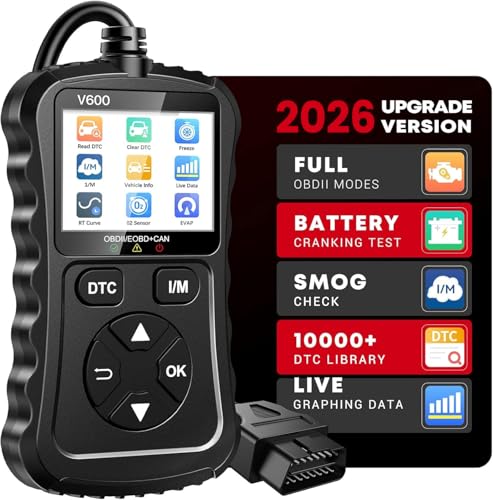
The OBD2 Scanner Car Code Reader is the perfect tool for car enthusiasts and professionals seeking thorough vehicle diagnostics. With an extensive database of over 30,000 fault codes, you can accurately read and clear engine faults. It offers real-time data streaming, graphical analysis, and I/M readiness monitoring for enhanced troubleshooting. Designed for most 1996+ US cars and various EU and Asian models, it supports multiple languages for user convenience. Its durable, user-friendly design features a bright screen and intuitive buttons, making diagnostics easy. Plus, with 24/7 customer support and a 90-day warranty, you’ll enjoy peace of mind while keeping your vehicle healthy.
Best For: Car enthusiasts, professionals, and beginners looking for a reliable tool for comprehensive vehicle diagnostics.
Pros:
- Extensive fault code database with over 30,000 codes for accurate diagnostics.
- User-friendly design with a bright screen and intuitive buttons for easy navigation.
- 24/7 customer support and a 90-day warranty for added peace of mind.
Cons:
- Limited compatibility with heavy-duty pickup trucks and motorcycles.
- Only supports Japanese models post-2005 for OBD capabilities.
- Real-time data features may not detect all vehicle faults effectively.
2025 Bluetooth OBD2 Scanner for iPhone & Android
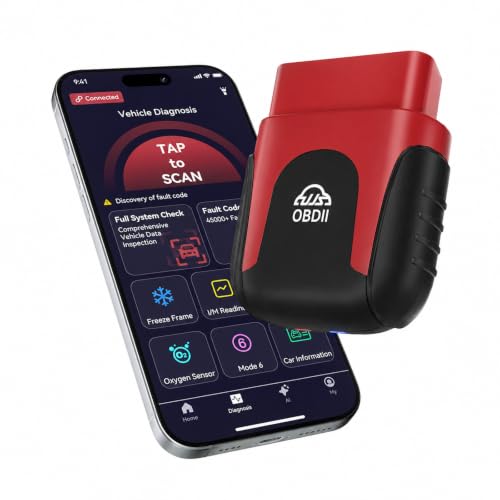
For anyone seeking a hassle-free way to monitor their vehicle’s health, the 2025 Bluetooth OBD2 Scanner is an excellent choice. This AI-powered diagnostic tool connects wirelessly to your iPhone or Android, providing real-time data without any subscription fees. It generates easy-to-understand health reports and actionable repair advice, making it user-friendly for everyone. With Bluetooth 5.4, it offers continuous monitoring and visualizes engine performance through graphs and charts. Plus, it’s compatible with all OBD2 vehicles from 1996 and newer. You’ll appreciate the lifetime app updates and warranty, ensuring your investment is well protected.
Best For: Individuals looking for an easy-to-use, wireless car diagnostic tool to monitor the health of their vehicles without needing mechanical knowledge.
Pros:
- AI-powered features provide clear health reports and actionable advice.
- Ultra-compact design with Bluetooth connectivity allows for 24/7 monitoring without cables.
- Universal compatibility with all OBD2 vehicles from 1996 and newer, with lifetime app updates.
Cons:
- May not provide advanced diagnostics for complex automotive issues.
- Reliance on Bluetooth connectivity could pose issues in areas with interference.
- Some users may prefer a hands-on diagnostic tool over a wireless solution.
OBD2 Scanner Diagnostic Tool for All OBDII Cars After 1996

If you own an OBDII-compliant vehicle manufactured after 1996, the VEHLIVE V880 OBD2 Scanner is an excellent choice for efficient diagnostics. It offers complete OBDII/EOBD capabilities, including engine code reading and fault code clearing. With an impressive library of 98,963 Diagnostic Trouble Codes, you can quickly identify vehicle issues without online searches. The scanner supports various protocols and is compatible with most sedans, light trucks, and SUVs. Its user-friendly design features a 2.8-inch LCD screen for clear results. Plus, it’s plug-and-play, eliminating the need for batteries or chargers. Enjoy hassle-free vehicle maintenance with this reliable tool.
Best For: The VEHLIVE V880 OBD2 Scanner is best for car owners seeking an efficient and comprehensive diagnostic tool for OBDII-compliant vehicles manufactured after 1996.
Pros:
- Extensive library of 98,963 Diagnostic Trouble Codes for quick issue identification.
- User-friendly design with a clear 2.8-inch LCD screen and plug-and-play functionality.
- Compatible with a wide range of vehicles, including sedans, light trucks, and SUVs.
Cons:
- Packaging may vary from images shown, which could lead to confusion.
- Limited advanced features compared to high-end professional scanners.
- Customer support may require contacting them for startup issues rather than returning the product.
VDIAGTOOL VD10 OBD2 Scanner Code Reader for All OBDII Protocol Cars
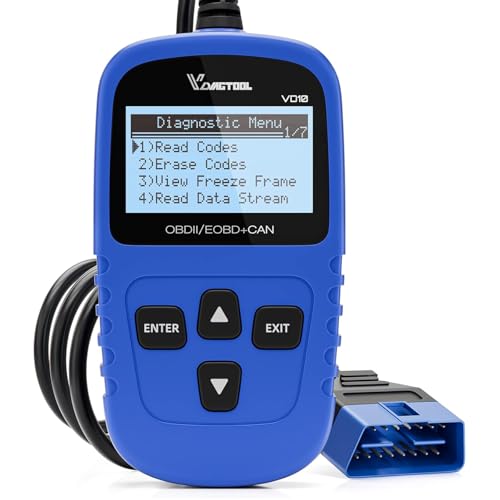
Designed with DIYers and hobbyists in mind, the VDIAGTOOL VD10 OBD2 Scanner offers a user-friendly interface that simplifies car diagnostics. You can quickly connect it to your vehicle’s OBDII port to read and clear fault codes, monitor live data, and retrieve freeze frame information. With a built-in database of over 3,000 codes, it provides definitions for both generic and manufacturer-specific DTCs. Its I/M readiness function guarantees your vehicle’s emission systems are operational, helping you pass inspections. Plus, it supports all OBDII protocols and is compatible with 99% of vehicles from 1996 onward, making it a versatile diagnostic tool.
Best For: The VDIAGTOOL VD10 OBD2 Scanner is best for DIYers and hobbyists looking for an easy-to-use tool for car diagnostics.
Pros:
- User-friendly design with a clear LCD display and plug-and-play functionality.
- Compatible with 99% of OBDII-compliant vehicles manufactured post-1996.
- Includes a built-in database of over 3,000 DTC definitions for effective troubleshooting.
Cons:
- Limited advanced features compared to professional-grade scanners.
- May not support some unique vehicle-specific diagnostics.
- Requires a vehicle with an OBDII port, limiting use to modern cars only.
AMTIFO OBD2 Scanner with Battery Tester
The AMTIFO OBD2 Scanner with Battery Tester is perfect for DIY mechanics and professionals alike, offering a thorough solution for vehicle diagnostics. It supports nine OBDII protocols, enabling you to read and clear check engine light codes while monitoring real-time data like RPM and fuel efficiency. The exclusive battery tester assesses your vehicle’s battery life and voltage, preventing unexpected breakdowns. With a user-friendly plug-and-play setup, a responsive color screen, and support for 13 languages, it’s accessible for everyone. Compatible with most vehicles from 1996 onward, this tool helps you identify potential problems early, saving you from costly repairs.
Best For: The AMTIFO OBD2 Scanner with Battery Tester is best for DIY mechanics and automotive professionals seeking an all-in-one diagnostic tool for vehicle maintenance.
Pros:
- Supports nine OBDII protocols for comprehensive vehicle diagnostics.
- User-friendly design with a responsive color screen and plug-and-play setup.
- Includes a battery tester to monitor battery health and prevent breakdowns.
Cons:
- May not be compatible with some older vehicle models prior to 1996.
- Limited advanced features compared to higher-end professional scanners.
- Requires basic knowledge of vehicle diagnostics for optimal use.
ANCEL AD410 Enhanced OBD2 Scanner for All OBDII Cars

For anyone seeking a reliable and user-friendly diagnostic tool, the ANCEL AD410 Enhanced OBD2 Scanner stands out as an excellent choice. Compatible with all OBDII vehicles, it reads and clears emissions-related fault codes efficiently. You’ll appreciate the 2.4 TFT display, which makes maneuvering through diagnostics intuitive. With over 42,000 built-in DTC lookups, identifying issues is a breeze. Plus, it supports multilingual use, catering to various users. Simply plug it into your vehicle’s OBD-II port, and you’re good to go. While it focuses on engine diagnostics, its advanced features, like O2 sensor testing, can help optimize your vehicle’s performance.
Best For: Individuals and mechanics looking for an affordable, user-friendly OBD2 scanner for engine diagnostics and fault code clearing.
Pros:
- Supports all OBDII vehicles and protocols, making it versatile for various car makes and models.
- Features an easy-to-read 2.4 TFT display and intuitive user interface, ideal for beginners and experienced users alike.
- Offers advanced diagnostics such as O2 sensor and EVAP system testing to enhance vehicle performance.
Cons:
- Limited to engine diagnostics; does not support ABS, SRS, or transmission systems.
- Fault codes can only be cleared after the underlying issues are resolved, which may be inconvenient for some users.
- USB cable is solely for updates and not needed during vehicle connection, potentially leading to confusion for some users.
Factors to Consider When Choosing Real Time Car Diagnostics
When choosing real-time car diagnostics, you need to take into account several key factors. Compatibility with your vehicle type, the diagnostic capabilities offered, and the user-friendly interface will all impact your experience. Additionally, look for features like real-time data monitoring and available connectivity options to guarantee you get the most out of your tool.
Compatibility With Vehicle Types
Choosing the right real-time car diagnostics tool can feel overwhelming, especially with the variety of vehicle types on the road today. First, check that the tool is compatible with your vehicle’s OBDII protocol, which includes standards like KWP2000, ISO9141, J1850 VPW, J1850 PWM, and CAN. Make certain the scanner supports your specific make and model, particularly if you own an older or non-standard vehicle. It’s also important to confirm that the tool can interface with your vehicle’s year; most OBDII scanners work with cars made from 1996 onward in the US and 2000 onward in Europe. Finally, if you drive a diesel vehicle, verify the scanner can handle diesel diagnostics, as many tools focus primarily on gasoline engines.
Diagnostic Capabilities Offered
Understanding the diagnostic capabilities offered by a real-time car diagnostics tool is essential for effectively troubleshooting vehicle issues. Start by ensuring the tool can read and clear various diagnostic trouble codes (DTCs), including those related to the check engine light, ABS, and SRS systems. Look for scanners that provide live data monitoring, so you can visualize real-time performance metrics like RPM, coolant temperature, and fuel efficiency. It’s also vital that the tool generates thorough diagnostic reports, outlining possible causes and suggested fixes for problems. Advanced features, such as O2 sensor and EVAP system testing, enhance diagnostic accuracy. Finally, opt for devices with a large built-in database of fault codes to quickly identify issues without searching online.
User-Friendly Interface Design
A user-friendly interface design is essential for effective car diagnostics, as it guarantees you can quickly and easily navigate through the tool’s features. Look for intuitive navigation that doesn’t require extensive training or technical knowledge. Clear displays, preferably color screens, make it easier to read diagnostic results in various lighting conditions. Dedicated hotkeys for functions like reading or erasing codes streamline your workflow, enhancing efficiency during inspections. Multilingual support can also be a game-changer, ensuring you won’t face language barriers while diagnosing vehicle issues. Finally, an ergonomic design with easy-to-handle grips and lightweight materials improves portability, making it convenient for both professionals and DIY enthusiasts to perform diagnostics effectively.
Real-Time Data Monitoring
When it comes to car diagnostics, real-time data monitoring plays an essential role in enhancing your understanding of vehicle performance. You can track critical parameters like RPM, coolant temperature, and fuel efficiency, giving you immediate insights into how your engine is running. Advanced OBD2 scanners even graph live data, helping you visualize trends and spot intermittent issues that might not trigger a fault code. This capability aids in preventive maintenance, letting you tackle potential problems before they turn into expensive repairs. Plus, many tools send real-time alerts, so you can respond quickly to any changes in vehicle health. Don’t forget to check for I/M readiness features, ensuring your vehicle meets emissions standards for inspections.
Connectivity Options Available
Real-time diagnostics aren’t just about the data you gather; it’s also about how you connect to your vehicle’s systems. You have several connectivity options to reflect on. Bluetooth offers wireless communication, making it easy to connect your diagnostic tool to your mobile device without clutter. If you prefer reliability, a wired connection via the OBDII port guarantees stable data transfer without worrying about battery life or interference. Advanced models may even feature Wi-Fi connectivity for quicker data transmission and direct software updates. Verify compatibility with both iOS and Android devices so you can access information on your preferred platform. Finally, choose a tool that doesn’t require subscription fees for full functionality to avoid unexpected costs down the line.
Cost and Value Considerations
Choosing the right real-time car diagnostics tool involves weighing cost against value. Start by considering the initial price versus potential savings on repairs; effective tools can help you catch issues early, preventing costly fixes. Look for added features like live data monitoring, which can provide valuable insights into your vehicle’s performance and enhance troubleshooting.
Also, some tools come with extensive databases of fault codes, justifying a higher price through improved accuracy. Don’t forget to factor in any subscription fees for advanced apps, as these can increase your total investment. Finally, prioritize ease of use and customer support, as a user-friendly interface and reliable assistance can greatly enhance your overall experience and the tool’s effectiveness.
Support and Warranty Services
Support and warranty services play an essential role in your decision-making process for car diagnostics tools. Make sure the tool comes with a thorough warranty, ideally covering at least a year for defects or operational issues. Look for products that offer dedicated customer support through phone, email, or live chat to help with troubleshooting and inquiries. It’s also crucial to verify if the manufacturer provides free lifetime software updates, enhancing compatibility with newer vehicle models. Check for a return policy that allows exchanges or refunds in case you face dissatisfaction or compatibility issues. Finally, assess the availability of user manuals or online resources, like FAQs and forums, to support your ongoing use of the diagnostics tool effectively.