When it comes to tackling car issues on your own, having the right auto diagnostic tool is essential. You’ll find that these tools not only help with troubleshooting check engine lights but also make maintenance tracking a breeze. In this guide, we’ll explore ten top choices that cater to different needs and budgets. Let’s uncover which tools stand out and why they might just be what you need for your next DIY project.
ANCEL AD310 OBD II Scanner Car Engine Fault Code Reader
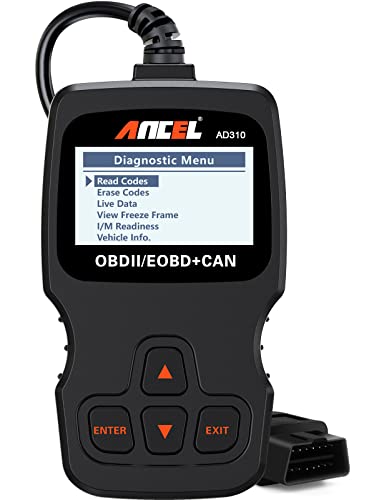
If you’re a DIY mechanic looking for a reliable and easy-to-use diagnostic tool, the ANCEL AD310 OBD II Scanner is an excellent choice. This compact scanner weighs just 12 ounces and measures 8.9 x 6.9 x 1.4 inches, making it portable. With a sturdy 2.5-foot cable and a clear display, you’ll easily read and clear error codes in seconds. It supports all OBDII protocols, working with vehicles from 1996 and newer. While it excels at diagnosing emission-related issues, it can’t read non-emission fault codes. With a 4.6-star rating, it’s a favorite among DIY enthusiasts.
Best For: DIY mechanics seeking a reliable and user-friendly diagnostic tool for vehicles from 1996 or newer.
Pros:
- Compact and lightweight design makes it easy to transport and store.
- Supports all OBDII protocols, ensuring compatibility with a wide range of vehicles.
- Fast and accurate results, allowing users to read and clear error codes in seconds.
Cons:
- Limited to diagnosing emission-related issues only; cannot read non-emission fault codes.
- Exclusively compatible with OBDII interfaces; OBDI vehicles cannot be diagnosed.
- Lacks advanced features found in more expensive diagnostic tools.
FOXWELL NT301 OBD2 Scanner for Check Engine Light

The FOXWELL NT301 OBD2 Scanner is an essential tool for DIY mechanics who want to take control of their vehicle’s health without the complexity of advanced diagnostics. This device reads and erases Diagnostic Trouble Codes (DTCs), turns off the check engine light, and monitors live data trends. It supports various OBDII protocols, making it compatible with most vehicles since 1996. You’ll appreciate the user-friendly design, featuring hotkeys for quick access and a color screen for clarity. With free lifetime updates and reliable customer support, the NT301 guarantees you get the most out of your vehicle maintenance efforts.
Best For: DIY mechanics looking for an easy-to-use and effective tool for diagnosing and monitoring their vehicle’s check engine light issues.
Pros:
- User-friendly design with hotkeys and a clear color screen for easy navigation.
- Supports a wide range of OBDII protocols, making it compatible with most vehicles from 1996 onwards.
- Includes free lifetime updates and reliable customer support for ongoing maintenance needs.
Cons:
- Limited functionality, as it does not support advanced diagnostics like ABS or SRS systems.
- Cannot perform resets for functions such as oil or battery registration.
- Does not offer programming capabilities for vehicle components.
ANCEL AD410 Enhanced OBD2 Scanner for All OBDII Cars

For DIY mechanics seeking a reliable and user-friendly diagnostic tool, the ANCEL AD410 Enhanced OBD2 Scanner stands out with its compatibility across all OBDII vehicles. This versatile scanner supports all 16PIN OBDII vehicles, covering various protocols and models from 1996 onwards. With its 2.4 TFT color display, you can easily read and clear fault codes, check monitor readiness, and assess vehicle health. The AD410 also offers advanced diagnostics like O2 sensor and EVAP system testing, helping you optimize performance and reduce emissions. Plus, its multilingual support makes it accessible for users worldwide. Just plug it in and start diagnosing!
Best For: DIY mechanics and car enthusiasts looking for a reliable, user-friendly OBD2 diagnostic tool for all OBDII vehicles.
Pros:
- Supports a wide range of OBDII vehicles and protocols for versatile compatibility.
- User-friendly interface with a clear 2.4 TFT color display for easy diagnostics.
- Offers advanced features like O2 sensor and EVAP system testing to optimize vehicle performance.
Cons:
- Only reads engine codes; does not support other systems like ABS or SRS.
- Fault codes can only be cleared after resolving the underlying issue, limiting functionality.
- USB cable is solely for updates, which may be inconvenient for users needing immediate diagnostics.
FIXD Bluetooth OBD2 Scanner for Car

Looking for a reliable way to diagnose your vehicle without breaking the bank? The FIXD Bluetooth OBD2 Scanner is your go-to tool for quick and efficient diagnostics. Compatible with all gas-powered vehicles from 1996 and diesel ones from 2006, it can help you identify over 7,000 issues, potentially saving you thousands on repairs. With real-time reports and maintenance alerts, you can stay on top of your vehicle’s health. Plus, it tracks routine maintenance and even allows you to clear check engine lights directly from the app. Enjoy a free two-week trial of FIXD Premium for added support from expert mechanics.
Best For: The FIXD Bluetooth OBD2 Scanner is best for DIY car enthusiasts and casual car owners looking to easily diagnose vehicle issues and track maintenance.
Pros:
- Provides real-time diagnostic reports and alerts for over 7,000 issues.
- Helps save money by diagnosing problems before visiting a mechanic.
- User-friendly interface suitable for all skill levels, along with a free trial of FIXD Premium for expert support.
Cons:
- Requires a smartphone for operation, which may not be ideal for all users.
- Limited to gas-powered vehicles from 1996 and diesel vehicles from 2006 onward.
- Some advanced diagnostic features may require the premium subscription after the trial period.
OBD2 Scanner Diagnostic Tool for All OBDII Cars

Equipped with a built-in library of 35,901 DTCs, the OBD2 Scanner Diagnostic Tool is perfect for DIY mechanics who want to diagnose their vehicles with confidence. This versatile tool reads and clears codes, resets engine lights, and supports Mode 6 and Mode 8 functions. Compatible with 98% of vehicles post-1996, it also offers live data streaming, freeze frame data, and battery voltage testing. Plus, it connects to your computer for easy data printing, helping you avoid unexpected repair costs. With a compact design and lifetime free upgrades, this scanner’s portability and advanced features make it a must-have for every DIY enthusiast.
Best For: DIY mechanics and car enthusiasts looking for a reliable and comprehensive diagnostic tool for OBDII vehicles.
Pros:
- Built-in library of 35,901 DTCs provides extensive diagnostic capabilities.
- Compatible with 98% of vehicles manufactured after 1996, ensuring broad usability.
- Compact design and lifetime free upgrades enhance portability and functionality.
Cons:
- May not support some specific vehicle models or manufacturers fully.
- Advanced features may require some technical knowledge to utilize effectively.
- Limited to OBDII vehicles; older vehicles without OBDII ports cannot be diagnosed.
BlueDriver Bluetooth Pro OBDII Scan Tool for iPhone & Android

The BlueDriver Bluetooth Pro OBDII Scan Tool stands out as an ideal choice for DIY mechanics seeking an all-encompassing diagnostic solution without the hassle of subscriptions. This tool works seamlessly with gas-powered vehicles from 1996 onward, diagnosing over 7,000 issues, including check engine, ABS, and airbag warnings. You’ll enjoy enhanced diagnostics and real-time health monitoring while driving. The wireless design and user-friendly app make it easy to access repair videos and step-by-step instructions. With a one-time purchase and no hidden fees, you get 24/7 professional support, ensuring you have everything you need to tackle vehicle repairs confidently.
Best For: DIY mechanics looking for an affordable, comprehensive diagnostic tool without ongoing subscription fees.
Pros:
- No subscription fees: One-time purchase with all features included, eliminating hidden costs.
- Wide compatibility: Works with all gas-powered vehicles made from 1996 onwards, covering major brands.
- User-friendly app: Provides access to repair videos and step-by-step instructions, enhancing the repair experience.
Cons:
- Limited to gas-powered vehicles: Not compatible with diesel or electric vehicles.
- Dependency on smartphone: Requires a smartphone for functionality, which may not be ideal for everyone.
- Real-time data limitations: While it offers live data, some users may find it lacks depth compared to professional-grade tools.
FOXWELL Car Scanner NT604 Elite OBD2 Diagnostic Tool

For DIY mechanics seeking a reliable and user-friendly diagnostic tool, the FOXWELL Car Scanner NT604 Elite stands out with its 5 in 1 functionality. It offers OBDII diagnostics, ABS/SRS scanning, transmission checks, and check engine code reading all in one device. You’ll appreciate its easy setup—ready to use right out of the box, with no software downloads needed. The live data stream provides real-time vehicle information, while the AUTOVIN feature quickly retrieves your vehicle’s VIN. Plus, it supports over 60 car makes globally. With a durable protective case and lifetime updates, it’s a worthy investment for any mechanic.
Best For: DIY mechanics looking for an affordable, user-friendly diagnostic tool that covers multiple functions in one device.
Pros:
- 5 in 1 functionality allows for comprehensive diagnostics including OBDII, ABS/SRS, transmission, and check engine codes.
- Easy setup with no software downloads required, making it ready to use right out of the box.
- Durable protective case ensures longevity and ease of transport, along with lifetime updates to keep the tool current.
Cons:
- Limited maintenance functions as it does not support oil reset, battery registration, ABS bleeding, throttle body relearn, or ABS relearn.
- No advanced features compared to higher-end diagnostic tools which may be necessary for some professional mechanics.
- Potential compatibility issues with certain vehicle makes or models that are not covered under the 60+ supported car brands.
OBD2 Bluetooth Wireless Auto Diagnostic Scan Tool for iOS & Android
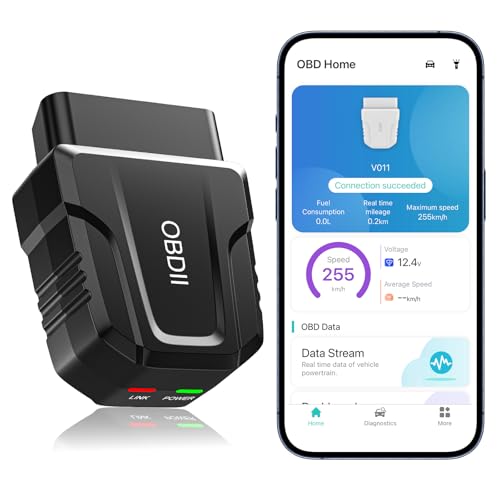
Looking for a reliable and user-friendly diagnostic tool? The V011 OBD2 Bluetooth Wireless Auto Diagnostic Scan Tool is perfect for both novices and pros. Compatible with iOS and Android, it supports over 96% of car makes since 1996. You’ll enjoy fast reading of DTCs, fault clearing, and real-time data monitoring. Its intuitive app interprets check engine light signals, offering suggestions for fixes and saving you on repairs. Plus, it features clear data visualization in charts, making diagnostics easy. With Bluetooth 5.4 connectivity and 24-hour support, you’ll have hassle-free diagnostics right at your fingertips.
Best For: The V011 OBD2 Bluetooth Wireless Auto Diagnostic Scan Tool is best for both novice car owners and experienced mechanics seeking an efficient and user-friendly diagnostic solution.
Pros:
- Intuitive app that interprets check engine light signals and offers potential fixes.
- Supports over 96% of car makes and models since 1996, ensuring broad compatibility.
- Clear data visualization in charts makes diagnostics accessible for beginners.
Cons:
- Fault codes can only be cleared after repairs; otherwise, a computer at a repair shop is needed.
- Requires Bluetooth connectivity, which may not be ideal for all users.
- Users must unplug the device after use to conserve the car’s battery.
Autel Scanner MaxiCOM MK808S Bidirectional Tool
Engineers and DIY mechanics seeking a reliable diagnostic tool will find the Autel Scanner MaxiCOM MK808S to be an invaluable asset. This upgraded bidirectional tool supports over 150 car brands, allowing you to perform active tests on subsystems like windows and mirrors. With thorough diagnostics, it reads and clears codes while displaying 5-in-1 live data. The MK808S also features 28+ popular reset services, offering dealer-level functionality without the hefty price tag. Enjoy one year of free software updates, lifetime technical support, and a solid warranty, ensuring you get the most out of your investment.
Best For: Engineers and DIY mechanics looking for a cost-effective, professional-grade diagnostic tool for a wide range of vehicles.
Pros:
- Supports over 150 car brands and offers bi-directional control for active subsystem tests.
- Features 28+ reset services, providing dealer-level diagnostics without the high cost.
- Comes with a 1-year warranty and lifetime technical support, ensuring customer satisfaction.
Cons:
- May require an internet connection for certain features and software updates.
- Some advanced features may not be available for all car brands.
- Initial setup and navigation may be challenging for less tech-savvy users.
MOTOPOWER MP69033 OBD2 Scanner Code Reader

The MOTOPOWER MP69033 OBD2 Scanner Code Reader is an excellent choice for DIY mechanics who want reliable diagnostics without the complexity of advanced tools. This compact scanner connects easily to OBD II vehicles from 1996 and onward and features a clear 2.8-inch LCD display. With functions like reading and erasing codes, viewing freeze frame data, and real-time curve analysis, you’ll get valuable insights into your vehicle’s performance. It supports multiple languages and is compatible with many US, EU, and Asian cars. Just plug it in, turn on the ignition, and you’re ready to troubleshoot your vehicle efficiently.
Best For: DIY mechanics seeking a user-friendly and efficient OBDII scanner for reliable vehicle diagnostics.
Pros:
- Compact and portable design with a 2.5 feet long cable for easy handling.
- Multiple diagnostic functions including code reading, erasing, and real-time data analysis.
- Supports multiple languages and is compatible with a wide range of vehicles from different regions.
Cons:
- Limited to OBDII systems, unable to read ABS or airbag codes.
- No oil service light functions available for maintenance reminders.
- Connection issues may arise, requiring user assistance from customer support.
Factors to Consider When Choosing an Auto Diagnostic Tool for DIY
When you’re choosing an auto diagnostic tool, it’s essential to take into account compatibility with your vehicle model. Look closely at the diagnostic functions it offers and how user-friendly the interface is. You’ll also want to contemplate portability and the connectivity options available to guarantee it fits your needs.
Compatibility With Vehicle Models
Choosing the right auto diagnostic tool hinges on its compatibility with your vehicle models. Make sure the tool supports all OBDII vehicles, particularly those manufactured from 1996 in the US and 2000 in the EU and Asia. It’s essential to verify that the scanner is compatible with various OBDII protocols like KWP2000, J1850 VPW, ISO9141, J1850 PWM, and CAN, ensuring it can handle a wide array of makes and models. If you own vehicles from different regions, a multilingual tool can be beneficial. Additionally, confirm that the scanner can address specific brands, especially if they have unique diagnostic features, rather than just focusing on emissions-related codes. This will enhance your diagnostic experience considerably.
Diagnostic Functions Offered
Compatibility with your vehicle models sets the foundation, but the diagnostic functions offered by a tool can make all the difference in your DIY experience. When choosing an auto diagnostic tool, consider its range of functions. You’ll want to read and clear trouble codes, check emissions readiness, and monitor live data. Advanced tools can provide specialized functions like O2 sensor testing, EVAP system testing, and detailed DTC lookups for accurate fault identification. Some tools focus solely on engine fault codes, while others support ABS, SRS, and transmission diagnostics. Look for user-friendly features like hotkeys, visual indicators, and the ability to save or print reports. Remember, the more functions you have, the more effective your diagnostics will be.
User Interface Design
A user-friendly interface can greatly enhance your experience with an auto diagnostic tool, especially if you’re a DIY mechanic. Look for clearly labeled buttons and an intuitive layout to make navigation easy, particularly if you’re a beginner. A high-resolution display, preferably a color screen, improves visibility and presents diagnostic results more clearly. Visual indicators like LED lights or graphs can help you quickly assess vehicle status and emissions readiness. Additionally, consider tools that offer multilingual support, making them accessible to a wider audience. If possible, choose an app-based interface; it often provides real-time updates, troubleshooting guides, and integration with online repair databases, enriching your overall user experience.
Portability and Size
When it comes to auto diagnostic tools, portability and size play a crucial role in your overall experience as a DIY mechanic. Choosing a compact model makes it easier to transport and store, fitting nicely in your backpack or glove compartment. Look for tools with flexible cables, around 2.5 feet long, to enhance accessibility when connecting to your vehicle’s OBDII port. A lightweight design—ideally under 1 pound—improves portability, especially in tight spaces. Make sure the scanner’s screen size is adequate for clear readings; a larger display is advantageous in dimly lit areas. Ultimately, select tools that balance user-friendliness and durability, ensuring they withstand regular use while remaining easy to handle.
Connectivity Options Available
Choosing the right connectivity option is essential for maximizing the functionality of your auto diagnostic tool. You can opt for wired or wireless methods. Wired connections plug directly into your vehicle’s OBDII port, guaranteeing stable communication without battery drain concerns. On the other hand, Bluetooth-enabled scanners offer convenience, allowing real-time data transmission and remote access to diagnostic reports through mobile apps. This enhances your experience as a DIY enthusiast. Consider tools that support multiple connectivity protocols to guarantee compatibility across various vehicle makes and models, providing versatility for your projects. Keep in mind that while wireless tools might require app downloads and setup, wired devices typically offer straightforward plug-and-play functionality for immediate use.
Update and Support Services
To guarantee your auto diagnostic tool remains effective and up-to-date, it’s essential to take into account the update and support services offered by the manufacturer. Look for tools that provide lifetime free updates, ensuring you access the latest features without additional costs. Dedicated technical support is vital, as it helps with troubleshooting and compatibility inquiries. A user-friendly app or software for updates can simplify the process of keeping your device current. Additionally, check the manufacturer’s history for timely software updates based on user feedback, which can enhance functionality over time. Finally, consider tools that come with a warranty or return policy, giving you added assurance about the quality and reliability of your investment.
Price and Value
While the cost of auto diagnostic tools can range dramatically, understanding their value is essential for DIY mechanics. Basic OBD2 scanners can be as low as $20, while advanced models may exceed $1,000. When choosing a tool, evaluate its functionalities—look for features like reading and clearing codes, live data streaming, and compatibility with various vehicles. Professional-grade scanners often justify their price with advanced diagnostics and multi-system support. Don’t overlook tools offering free lifetime updates, as they save costs and guarantee compatibility with newer technologies. Finally, check user reviews and ratings to gauge performance and reliability, helping you make an informed decision that aligns with your needs and budget.
Ease of Use
Understanding the price and value of auto diagnostic tools sets the stage for considering their ease of use. Look for tools with a plug-and-play design, so you can connect effortlessly to your vehicle’s OBDII port without complicated setups. User-friendly interfaces with intuitive displays and clear buttons will help you navigate diagnostic functions quickly. Scanners that provide real-time data visualization enable you to easily interpret vehicle performance metrics. Additionally, choose tools with built-in DTC lookup libraries to quickly identify fault codes and their meanings without extra resources. Finally, opt for diagnostic tools that come with thorough user manuals or online support, ensuring you have assistance for troubleshooting and maximizing usability.