The right rolling shop stool can reduce fatigue, keep essential tools within reach, and make long repair jobs more comfortable. For professional mechanics, stability, adjustability, weight capacity, and shop-ready durability matter more than appearance alone.
We compared 10 rolling mechanic stools with features such as pneumatic height adjustment, padded seats, backrests, casters, footrests, and integrated tool storage to help you choose the best fit for your workspace.
Best 10 Rolling Shop Stools for Professional Mechanics Picks for 2026
Simple Pneumatic Pick
WEN 73012T Rolling Mechanic Stool

- 15–20-inch pneumatic height adjustment
- 300-pound steel-frame capacity
- Built-in tool storage and five casters
Best For: Compact garage and workshop repair tasks
Comfort-Focused Workshop Seat
Rolling Stool with Backrest and Storage
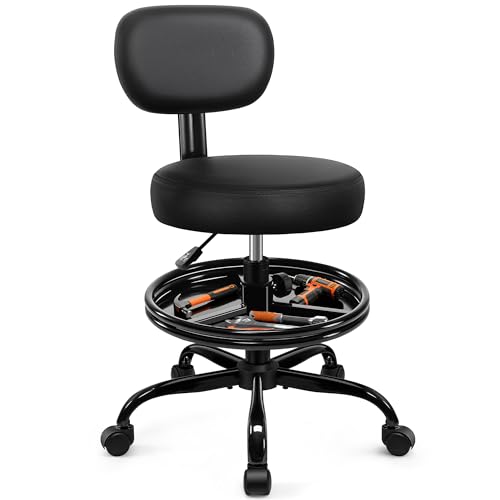
- 17.32–23.5-inch pneumatic height range
- Backrest, footrest, and high-density cushion
- Three trays plus 340-pound steel-frame rating
Best For: Longer repair sessions and organized workshops
Value Roller Seat
MaxWorks 80771 Pneumatic Roller Seat

- 15–20-inch adjustable working height
- 300-pound maximum capacity
- 15.25-inch built-in tool tray
Best For: Mobile, lower-height garage and workshop tasks
Tall Heavy-Duty Option
BILITOOLS 330 LBS Rolling Shop Stool

- 21.5–29.5-inch pneumatic height range
- 330-pound alloy-steel frame capacity
- Backrest, footrest, swivel seat, and storage shelf
Best For: Higher work surfaces and detailing tasks
Heavy-Duty Pick
VEVOR 300-LB Rolling Mechanic Stool

- 300-pound capacity with a steel base
- Three trays plus a pull-out drawer
- Low 15.4-inch profile with locking casters
Best For: Low-profile automotive repairs with organized tool storage
Adjustable Comfort Pick
Height-Adjustable Shop Stool with Backrest

- 18.7–25.59-inch pneumatic height range
- 330-pound capacity and wide steel base
- Backrest, footrest, and three removable trays
Best For: Long seated work sessions at varied bench heights
Storage-Focused Pick
FreekyFit Adjustable Rolling Shop Stool

- 330-pound capacity with angle-steel frame
- 20.87–26.38-inch pneumatic adjustment
- Two trays plus a utility tool rack
Best For: Workshop tasks needing adjustable support and accessible storage
Comfort-Focused Pick
Adjustable Mechanic Stool with Backrest

- Padded seat and lumbar-supporting backrest
- 20–26.1-inch height adjustment
- Three removable tool-storage trays
Best For: Comfort-focused garage and workshop tasks
High-Capacity Pick
400-Pound Rolling Garage Stool

- Supports up to 400 pounds
- 15.7–20.47-inch pneumatic adjustment
- Tray and two side tool holders
Best For: Low-height automotive and equipment repairs
Stability Pick
Five-Wheel Heavy-Duty Shop Stool

- Steel frame supports up to 330 pounds
- Five-wheel anti-tip base with two locks
- 22–26-inch adjustment and tool tray
Best For: Stable, higher-position workshop repairs
Simple Pneumatic Pick – WEN 73012T Rolling Mechanic Stool
For shoppers comparing rolling shop stools for professional mechanics, the WEN 73012T is a straightforward option with pneumatic height adjustment, a padded vinyl seat, and built-in tool storage. Its steel frame supports up to 300 pounds, while five swiveling casters help it move around a garage or workshop.
Best For: Mechanics who want a compact, height-adjustable rolling seat with basic tool storage.
Pros:
- Adjusts from 15 to 20 inches with a lever.
- Five 2.5-inch swiveling casters provide omnidirectional movement.
- Built-in storage keeps commonly used tools close by.
- Steel construction supports up to 300 pounds of evenly distributed weight.
Cons:
- No backrest for additional lumbar support.
- Assembly instructions are not included.
- The height range may not suit higher work surfaces.
The WEN 73012T focuses on the essentials: mobility, adjustable seating, padding, and accessible storage. It is a practical fit for lower repair and maintenance tasks where a backrest is not required.
Comfort-Focused Workshop Seat – Rolling Stool with Backrest and Storage
Among rolling shop stools for professional mechanics, this model stands out for its backrest, adjustable footrest, and multiple storage trays. The pneumatic seat adjusts from 17.32 to 23.5 inches, while five casters and 360-degree swivel movement support frequent repositioning around a workspace.
Best For: Professionals who prioritize back support, leg support, and organized access to tools during longer sessions.
Pros:
- Height adjusts from 17.32 to 23.5 inches.
- Contoured backrest and high-density foam cushion add support and comfort.
- Includes an adjustable footrest and three storage trays.
- Heavy-gauge steel frame is rated for 340 pounds.
Cons:
- Its backrest and storage system may take more space than a simple stool.
- Assembly is required.
- The supplied dimensions and seat-height listings vary, so verify fit before buying.
This stool is designed for extended, organized work rather than minimal seating. Its lumbar-oriented backrest, footrest, and storage features make it a versatile choice for garages, workshops, and other task-oriented spaces.
Value Roller Seat – MaxWorks 80771 Pneumatic Roller Seat
MaxWorks 80771 Pneumatic Roller Seat/Creeper with Adjustable Height - 300 lb Capacity
Check Price On AmazonThe MaxWorks 80771 is a practical choice for buyers seeking rolling shop stools for professional mechanics without adding unnecessary features. It combines a 15-to-20-inch pneumatic height range with five non-marring swivel casters, a cushioned seat, and a 15.25-inch built-in tool tray.
Best For: Garage and workshop users who want a mobile mechanic seat with a generous integrated tray.
Pros:
- Simple side-lever adjustment from 15 to 20 inches.
- Five 2.5-inch non-marring swivel casters roll under load.
- Built-in 15.25-inch tool tray adds useful storage.
- Rated for up to 300 pounds.
Cons:
- No backrest or footrest is listed.
- The height range is limited compared with taller shop stools.
- Supplied notes do not specify a warranty.
The MaxWorks keeps the design focused on easy movement and nearby tool access. Its low, adjustable profile works well for seated garage tasks, especially where protecting the floor and keeping tools at hand matter.
Tall Heavy-Duty Option – BILITOOLS 330 LBS Rolling Shop Stool
For professional mechanics who need more working height, the BILITOOLS rolling shop stool adjusts from 21.5 to 29.5 inches. It adds a padded 360-degree swivel seat, a small backrest, a steel ring footrest, caster mobility, and a bottom storage shelf to support varied garage and detailing tasks.
Best For: Taller work surfaces, detailing, bench work, and users who want a higher seat with back support.
Pros:
- Wide 21.5-to-29.5-inch pneumatic height range.
- 330-pound alloy-steel frame capacity.
- Oversized 16-inch padded seat swivels 360 degrees.
- Includes a backrest, footrest, and bottom storage shelf.
Cons:
- Its taller design may be less suitable for low repair work.
- At 21 pounds, it is heavier than the simpler roller-seat options.
- Assembly is required.
The BILITOOLS is the most height-oriented option in this group. Its higher adjustment range and support features make it useful when a standard low mechanic stool would leave the user working too close to the floor.
Heavy-Duty Pick – VEVOR 300-LB Rolling Mechanic Stool
For professional mechanics comparing rolling shop stools for professional mechanics, this VEVOR model emphasizes low-profile access, tool storage, and heavy-duty support. Its 15.4-inch seat height and compact design are suited to work around vehicles where maneuverability matters.
Best For: Automotive repair, tire work, and detailing tasks that require organized tools and a low rolling seat.
Pros:
- Supports up to 300 pounds with a steel base and plastic seat.
- Includes three storage trays, card-slot partitions, and a pull-out tray.
- Four-inch rubber casters provide 360-degree movement, with two locking casters.
- Padded, curved seat is designed for comfort during maintenance work.
Cons:
- Seat height is fixed at 15.4 inches.
- No manufacturer warranty is listed.
This is a practical choice when easy tool access and a compact profile matter more than height adjustability or back support.
Adjustable Comfort Pick – Height-Adjustable Shop Stool with Backrest
Among rolling shop stools for professional mechanics, this model stands out for its adjustable working height, backrest, and footrest. The pneumatic lift covers 18.7 to 25.59 inches, making it easier to match different benches and work surfaces.
Best For: Mechanics who spend extended periods seated and need adjustable height, lumbar support, and mobile tool storage.
Pros:
- Adjusts from 18.7 to 25.59 inches for varied workstations.
- 330-pound capacity with a wide 22.4-inch steel base.
- Thick memory-foam cushion, backrest, and adjustable footrest support longer sessions.
- Five casters provide 360-degree movement, with two brakes and three removable trays.
Cons:
- The taller base and backrest take up more space than a low-profile mechanic seat.
- Only the blue finish is specified in the supplied product information.
Choose this stool if ergonomic adjustability is a priority and your garage has room for its wider base and taller seating range.
Storage-Focused Pick – FreekyFit Adjustable Rolling Shop Stool
This FreekyFit stool is a useful option for professional mechanics who want adjustable seating and multiple places to keep tools close. Its pneumatic height range, padded back support, two under-seat trays, and tool rack are suited to active garage work.
Best For: Garage and workshop tasks requiring a supportive backrest, mobile storage, and adjustable positioning.
Pros:
- Adjusts from 20.87 to 26.38 inches with a pneumatic mechanism.
- Supports approximately 330 pounds with a thick angle-steel frame.
- Includes a mesh tray, solid plastic tray, and utility tool rack.
- Padded memory-foam seat and high back provide lumbar support during longer jobs.
Cons:
- The supplied dimensions do not specify a separate seat-height range beyond the pneumatic adjustment details.
- At 24 pounds, it may be less convenient to lift and reposition manually.
Its combination of height adjustment, back support, and layered storage makes it a strong fit for mechanics who want a rolling workstation rather than a basic seat.
Comfort-Focused Pick – Adjustable Mechanic Stool with Backrest
For professional mechanics seeking rolling shop stools for professional mechanics, this model combines a padded backrest, adjustable height, smooth casters, and built-in tool storage. Its 20-to-26.1-inch seat range and 330-pound capacity suit a variety of garage tasks.
Best For: Mechanics who want lumbar support, a higher seat range, and organized access to small tools and parts.
Pros:
- Thick, high-density foam seat and padded backrest with easy-clean PU leather.
- Height adjusts from 20 to 26.1 inches and supports up to 330 pounds.
- Three removable storage trays help organize tools and parts.
- Footring and two locking casters add comfort and stability during detailed work.
Cons:
- Its 330-pound capacity is lower than some heavy-duty alternatives.
- The included storage trays may provide less space than a larger dedicated tool cart.
This is a practical choice when seated comfort and compact organization matter as much as mobility. The broad adjustment range and supportive backrest make it especially useful for longer repair sessions.
High-Capacity Pick – 400-Pound Rolling Garage Stool
This rolling shop stool is designed for mechanics who prioritize load capacity and maneuverability. It supports up to 400 pounds, swivels 360 degrees, and includes a tray plus side holders for keeping frequently used supplies close by.
Best For: Professional mechanics handling medium- to low-height repairs who need a strong, mobile seat with convenient storage.
Pros:
- 400-pound maximum weight recommendation with a robust angle-steel frame.
- Pneumatic height adjustment from 15.7 to 20.47 inches.
- Four 360-degree swivel casters support quiet, flexible movement.
- Storage tray, two cup/tool holders, and small-parts placement areas keep supplies accessible.
Cons:
- The lower height range may be less suitable for taller work surfaces.
- Assembly is required.
- Its faux-leather and carbon-fiber-patterned finish may require regular wiping in dirty shop conditions.
With its unusually high stated capacity and low-profile adjustment range, this stool is well matched to tire, motorcycle, bicycle, and other lower-position maintenance work. The integrated storage also reduces trips back to a toolbox.
Stability Pick – Five-Wheel Heavy-Duty Shop Stool
For mechanics comparing rolling shop stools for professional mechanics, this stool emphasizes a stable five-wheel base, steel construction, and a taller 22-to-26-inch height range. Its padded seat, backrest, tool tray, and locking wheels support both mobility and controlled positioning.
Best For: Workshop users who want a stable, higher rolling seat for extended repair sessions and frequent repositioning.
Pros:
- Heavy-duty steel frame and reinforced base support up to 330 pounds.
- Five inserted-style casters provide a wide, anti-tip base and roll over cracks and debris.
- Two lockable wheels help secure the stool during precise tasks.
- Contoured backrest, padded PU-leather seat, and built-in steel mesh tray improve usability.
Cons:
- The 22-to-26-inch range may be too tall for low-position work.
- It has a 330-pound capacity, below the 400-pound rating of one competing option.
- The supplied notes do not specify the warranty duration beyond listing a manufacturer warranty.
This model stands out when stability is a priority. The five-wheel base and locking casters provide reassuring control, while the taller adjustment range works well for tasks performed around higher vehicle or shop surfaces.
How We Picked the Best Rolling Shop Stools for Professional Mechanics
We focused on the features that affect daily shop use: seat comfort, height range, frame strength, stated weight capacity, caster design, swivel movement, and storage. We also considered whether each stool suits quick service work, extended repairs, detailing, or general garage tasks. Because product names and configurations can vary, verify the current specifications, dimensions, and included accessories before ordering.
Our selection includes pneumatic roller seats, backrest models, heavy-duty mechanic chairs, and stools with trays or slide-out storage. That variety makes it easier to match a stool to your workspace rather than choosing solely by price.
Quick Comparison
- Best for adjustable seating: Pneumatic stools let you change height quickly as you move between vehicles, benches, and lifts.
- Best for tool access: Models with trays or slide-out compartments keep frequently used tools close without requiring a separate cart.
- Best for back support: A backrest can improve comfort during longer jobs, though it may slightly limit how closely you can approach a vehicle.
- Best for heavier users: Choose a model whose published capacity comfortably exceeds the user’s weight and typical carried gear.
Key Buying Factors for Rolling Shop Stools for Professional Mechanics
Height Adjustment and Posture
Check the minimum and maximum seat height, not just whether the stool is adjustable. A suitable range lets you work comfortably at wheels, doors, engine bays, and low assemblies. Pneumatic controls are convenient, but inspect the lever placement and cylinder quality.
Stability, Casters, and Floor Protection
Five-wheel bases generally provide a stable platform, while larger casters can roll more easily over seams and shop debris. Locking casters may help during stationary tasks, but freely rolling wheels are useful when repositioning frequently. Consider whether the wheels are appropriate for concrete, epoxy, or uneven floors.
Capacity and Construction
Look for a sturdy steel frame, reinforced base, and a rated capacity with a comfortable safety margin. A higher rating does not automatically guarantee better durability, so also review assembly quality, hardware, warranty coverage, and user feedback.
Comfort and Storage
Thick padding helps during extended work, while a backrest adds support but increases the stool’s footprint. Tool trays are convenient for sockets, fasteners, and hand tools; check their depth and clearance so they do not interfere with wheels or vehicle panels.
Who Should Buy Which Rolling Shop Stools for Professional Mechanics?
Professional technicians should prioritize a stable five-wheel base, durable casters, a broad height range, and a capacity well above their working load. Mobile or detail-focused mechanics may prefer a compact roller seat that is easy to move around a vehicle. Technicians handling longer repairs should consider a padded backrest and ergonomic seat. Organized garage users will benefit from integrated trays, while buyers with a dedicated tool cart may prefer a simpler stool with fewer parts and a smaller footprint.
Before buying, measure the available workspace and compare the assembled dimensions with nearby lifts, cabinets, and vehicles. The best stool is the one that remains stable, rolls smoothly, supports your working height, and keeps essential tools accessible without obstructing the job.