The best car head-up displays for SUVs put essential driving information in your line of sight, helping you check speed, trip data, or alerts without looking down at the dashboard. The models in this roundup include compact OBD2 units, GPS-based displays, and larger windshield projectors.
Before choosing one, confirm compatibility with your SUV, decide which information you actually need, and consider whether you prefer plug-and-play GPS operation or deeper vehicle data through an OBD2 connection.
Best 10 Car Head Up Displays for Suvs Picks for 2026
Best Dual-Mode Pick
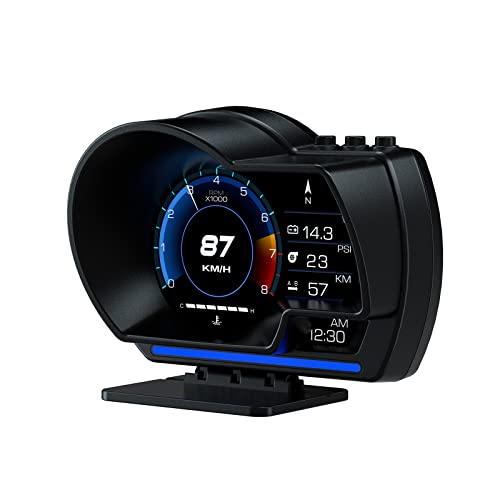
- OBD+GPS dual mode
- Displays speed and vehicle data
- Adjustable dashboard or windshield mounting
Best For: SUV drivers wanting detailed readouts with GPS fallback
Best Compact Option

- Compact ABS design
- Approximately 40 grams
- Listed for all vehicles
Best For: Drivers wanting a lightweight, space-saving HUD
Best Alert-Focused Pick
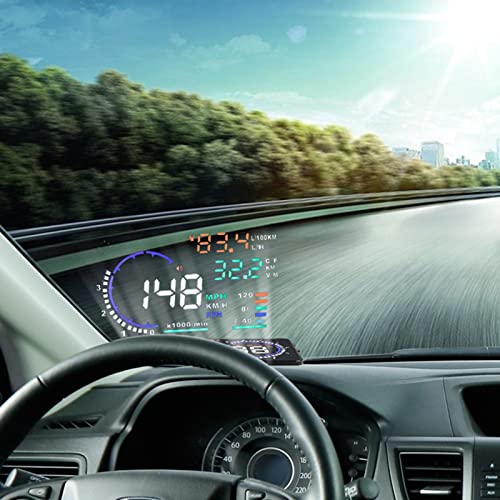
- Displays speed and multiple vehicle metrics
- Includes several warning reminders
- Automatic power and brightness functions
Best For: SUV drivers wanting broad readouts and safety alerts
Best Compatibility-Focused Pick

- Dual OBD and GPS operation
- Speed, voltage, temperature, and distance data
- Automatic brightness and selectable units
Best For: SUV owners needing flexible compatibility options
Connected Driving Upgrade
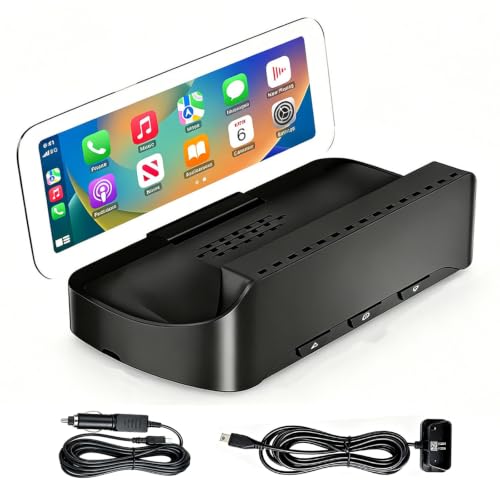
- Wireless Apple CarPlay and Android Auto
- Dual OBD or cigarette-lighter power
- Anti-glare lens with adjustable viewing angle
Best For: SUV drivers wanting navigation and smartphone features in one dashboard unit
Vehicle Data Monitor

- Displays speed and multiple vehicle metrics
- Large anti-reflection color screen
- Automatic brightness and vehicle power control
Best For: Compatible SUV owners wanting speed plus basic engine and trip data
Best Plug-and-Play Pick

- USB-powered; no OBD2 port required
- Large MPH display with auto brightness
- 10Hz GPS+BDS positioning
Best For: SUV drivers seeking a simple USB speed display
Best Data-Rich Option

- Large 5.5-inch HD display
- Shows speed, RPM, temperature, and voltage
- Includes alerts and OBD2 diagnostics
Best For: SUV drivers wanting vehicle data and diagnostics
Best Compact GPS Choice

- Small 1.6-ounce form factor
- USB-powered without OBD2 connection
- 10Hz GPS+BDS speed tracking
Best For: SUV drivers wanting a compact GPS speed HUD
Best Dual-Mode Pick – P6 OBD2/GPS HUD
For drivers comparing car head up displays for SUVs, the P6 stands out for its OBD+GPS setup and broad driving-data readout. It can show speed, RPM, voltage, fuel consumption, and water temperature, while its adjustable brightness and overspeed color alert support quick at-a-glance checking.
Best For: SUV drivers who want detailed vehicle data and a backup GPS display option.
Pros:
- Combines OBD and GPS modes for broader compatibility.
- Displays more than speed, including RPM, voltage, fuel consumption, and water temperature.
- Offers 10 interfaces, adjustable brightness, and dashboard or windshield installation.
Cons:
- OBD data features depend on the vehicle having a compatible OBD2 protocol.
- The unit has a relatively large footprint compared with its listed dimensions.
The P6 is a feature-rich choice for SUV owners who want diagnostic-style information in addition to speed. Its GPS fallback is useful when the vehicle cannot provide compatible OBD2 data.
Best Compact Option – M22 Overspeed HUD
If you want a small, uncomplicated choice among car head up displays for SUVs, the M22 is a compact option listed as suitable for all vehicles. Its lightweight ABS construction may appeal to drivers who prefer a minimal dashboard accessory.
Best For: Drivers seeking a lightweight, compact HUD for basic vehicle display needs.
Pros:
- Compact dimensions make it easy to accommodate in a vehicle cabin.
- Very light at approximately 40 grams.
- Listed as suitable for all vehicles.
Cons:
- The supplied information provides very little detail about display functions.
- Specific installation, compatibility, and alarm features are not described in the listing notes.
The M22 may suit shoppers prioritizing a small footprint, but its sparse specifications make it harder to compare with more fully documented HUDs. Confirm the included functions and installation method before buying.
Best Alert-Focused Pick – 5.5-Inch OBDII HUD
This 5.5-inch model is a practical candidate for car head up displays for SUVs when visible alerts and broad readouts matter. It displays speed, RPM, temperatures, voltage, fuel consumption, mileage, and fault codes, with brightness adjustment and overspeed, fatigue, temperature, and voltage reminders.
Best For: SUV drivers who want a larger display with multiple driving alerts.
Pros:
- Shows a wide range of vehicle information, including speed, RPM, fuel use, and fault codes.
- Includes overspeed, fatigue-driving, high-temperature, and low-voltage reminders.
- Offers automatic power control and adjustable or automatic brightness.
Cons:
- Compatibility is specified for OBD II or EUOBD vehicles.
- The listing does not clearly provide detailed installation hardware information.
- Its 5.5-inch format may require more dashboard or windshield space.
Choose this HUD if you value a fuller information set and multiple warning functions. Its OBDII/EUOBD requirement makes checking vehicle compatibility especially important before purchase.
Best Compatibility-Focused Pick – M7 OBD/GPS HUD
The M7 is a sensible option for shoppers comparing car head up displays for SUVs because it pairs OBD and GPS modes. OBD mode provides speed, water temperature, voltage, and distance, while GPS mode can provide speed, voltage, and distance when the vehicle is not OBD-compatible.
Best For: SUV owners who need flexible OBD/GPS operation, including vehicles with limited OBD compatibility.
Pros:
- Offers OBD and GPS modes with separate displayed data.
- Supports speed alarms plus water-temperature and voltage alarms in OBD mode.
- Automatically adjusts brightness and supports km/h or MPH.
Cons:
- OBD II is listed as applicable to vehicles manufactured after 2008 and has stated exclusions.
- GPS mode provides fewer data points than OBD mode.
- The notes advise GPS mode for electric, diesel, pickup, RV, and modified vehicles.
The M7 is particularly useful when vehicle compatibility is uncertain, thanks to its GPS fallback. Buyers should still review the stated OBD limitations and choose the mode that matches their SUV.
Connected Driving Upgrade – HUD-V3 CarPlay HUD
For drivers comparing car head up displays for suvs, the HUD-V3 is a feature-rich option that combines wireless smartphone integration with a dashboard-mounted display. It supports wireless Apple CarPlay and Android Auto, offers adjustable viewing angles, and can be powered through either OBD or a cigarette-lighter cable. Note that its image appears on the unit’s anti-glare lens rather than directly on the windshield.
Best For: SUV drivers who want wireless navigation, calls, music, and assistant access in a plug-and-play dashboard unit.
Pros:
- Supports wireless Apple CarPlay and Android Auto for maps, calls, messages, music, Siri, and Google Assistant.
- Includes both OBD and cigarette-lighter power cables for flexible installation.
- High-brightness anti-glare display includes auto-brightness functionality and an adjustable viewing angle.
- Silicone anti-slip base is designed to remain stable during braking, turns, and uneven driving.
Cons:
- The projection is displayed on the included anti-glare lens, not on the vehicle’s windshield.
- The OBD cable supplies power only and cannot read raw vehicle data.
- The display may be invisible when wearing sunglasses.
The HUD-V3 is the strongest choice here for connected driving features, especially if your SUV lacks convenient wireless CarPlay or Android Auto. Its lens-based display and Bluetooth audio setup require a little more attention than a basic speed display.
Simple Speed Monitoring – GPS/BDS Windshield HUD
This compact GPS/BDS unit is a straightforward pick among car head up displays for suvs. It uses USB power, displays vehicle speed in MPH or KM/H, and adds adjustable brightness, speed calibration, and an overspeed alert. Its large-font display is designed for quick reading, though GPS performance can be affected in tunnels, garages, heavy weather, or behind metallic windshield film.
Best For: SUV drivers who primarily want a readable, independent speed display with minimal installation.
Pros:
- Dual-mode GPS and BDS positioning connects with up to 32 satellites and refreshes at 10Hz.
- USB plug-and-play setup avoids complicated installation.
- Large display supports MPH/KM/H switching, brightness adjustment, and manual speed calibration.
- Customizable overspeed alert provides a warning when the preset limit is exceeded.
Cons:
- GPS accuracy or signal availability may be reduced in tunnels, underground garages, heavy rain or fog, and vehicles with metallic windshield film.
- The supplied features focus on speed monitoring rather than navigation or smartphone integration.
Choose this model if you want a small, low-complexity speed readout rather than a multifunction infotainment accessory. Its calibration and brightness controls make it practical for varied driving conditions.
Vehicle Data Monitor – 5.5-Inch OBD II HUD
For SUV owners seeking car head up displays for suvs with broader vehicle information, this 5.5-inch OBD II model displays speed alongside water temperature, battery voltage, fuel consumption, and mileage. It is intended for compatible OBD II or EUOBD vehicles, with stated fitment for U.S. models after 2004 and vehicles from other countries after 2008. Professional installation is recommended.
Best For: Drivers with a compatible OBD II SUV who want speed plus basic vehicle-status information on a larger screen.
Pros:
- Large 5.5-inch color display uses nanometer technology to help reduce reflections.
- Shows speed, water temperature, battery voltage, fuel consumption, and mileage.
- Offers manual or automatic brightness adjustment and kilometer/mile switching.
- Supports automatic power-on and power-off with vehicle startup and shutdown.
Cons:
- Compatibility is limited to OBD II or EUOBD vehicles within the stated model-year guidelines.
- Professional installation is recommended, so setup may be less straightforward than USB plug-and-play alternatives.
- The unit requires a 12-volt direct-current connection.
This is the most useful option for monitoring several vehicle metrics rather than speed alone. Confirm your SUV’s OBD II or EUOBD compatibility before buying, and plan for a more involved installation.
Best Plug-and-Play Pick – USB GPS HUD
For drivers comparing car head up displays for SUVs, this USB-powered GPS HUD offers a simple setup without requiring an OBD2 port. It displays speed in a large font, uses a 10Hz refresh rate, and automatically adjusts brightness for changing light conditions.
Best For: SUV owners who want a straightforward windshield speed display powered through USB.
Pros:
- Dual-mode GPS and BDS positioning connects with up to 32 satellites.
- Large MPH display with anti-reflective metal shading.
- Automatic brightness adjustment supports daytime and nighttime driving.
- Compatible with most USB-equipped cars, trucks, and motorcycles.
Cons:
- GPS speed can vary by approximately 0.6–1.8 MPH.
- Satellite reception may be affected in tunnels, garages, heavy rain, fog, or behind metallic windshield film.
This is a practical choice when you want essential speed information without tapping into the vehicle’s diagnostics. Its USB installation is convenient, while its GPS-based operation means signal conditions should be considered.
Best Data-Rich Option – 5.5-Inch OBD2 HUD
Among car head up displays for SUVs, this 5.5-inch OBD2 model stands out for showing more than speed. It can present RPM, water temperature, voltage, and fuel consumption, while also providing speeding and voltage alerts through a plug-and-play connection.
Best For: SUV owners with a compatible OBD2 or EOBD vehicle who want driving data and basic diagnostic functions in one display.
Pros:
- Large 5.5-inch HD screen with automatic brightness adjustment.
- Displays GPS speed, RPM, water temperature, voltage, and fuel consumption.
- Offers speeding and voltage alerts.
- OBD2 functions include failure detection, alarms, and failure-code clearing.
Cons:
- Requires a vehicle with OBD2 or EOBD compatibility.
- It uses the vehicle’s OBD2 port rather than USB-only power.
This model is better suited to drivers who value vehicle information as much as windshield speed projection. Confirming OBD2 compatibility before purchase is important, although the listing identifies broad compatibility with many vehicles after 2003, including SUVs and trucks.
Best Compact GPS Choice – K1 GPS HUD
This compact GPS unit is a useful contender for car head up displays for SUVs when you want speed projection without connecting to the OBD2 system. It uses USB power, supports GPS and BDS positioning, and automatically changes screen brightness to suit the environment.
Best For: SUV drivers who prefer a small, lightweight HUD with large speed characters and USB installation.
Pros:
- Compact 2.76 x 1.69 x 0.79-inch design weighing 1.6 ounces.
- Dual-mode GPS+BDS positioning with a 10Hz refresh rate.
- Large MPH display designed for easy reading.
- Does not require an OBD2 port; it works through 5V USB power.
Cons:
- GPS accuracy may vary by approximately 0.6–1.8 MPH.
- Signal performance can decline in tunnels, underground garages, poor weather, or vehicles with metallic windshield film.
The K1-White is a sensible option when a less bulky installation matters. It provides the same core GPS-focused functions as a basic speed HUD, but buyers should account for the normal limitations of satellite-based displays.
How We Picked the Best Car Head Up Displays for Suvs
We focused on the features that matter most in an SUV: readable projection, straightforward installation, dependable speed readings, and compatibility with common vehicle systems. The selection includes OBD2 displays for cars with a compatible diagnostic port and GPS models that can work across a broader range of vehicles. We also considered screen size, measurement options such as MPH and KM/H, overspeed alerts, power methods, and added navigation or smartphone support.
Because listings and vehicle compatibility can vary, check the latest specifications before ordering. An OBD2 display may not support every SUV, particularly older, imported, hybrid, or electrically powered vehicles.
Quick Comparison
| Display type | Best for | Main advantage | Check before buying |
|---|---|---|---|
| OBD2 HUD | Compatible modern SUVs | Access to vehicle data | OBD2/EUOBD compatibility and cable reach |
| GPS HUD | Broad vehicle compatibility | Usually simple plug-and-play setup | Satellite signal, startup time, and speed accuracy |
| Large windshield projector | Drivers who want visibility | Easy-to-read figures | Dashboard space, glare, and projection position |
| Smartphone-connected HUD | Navigation-focused drivers | May add CarPlay or Android Auto features | Phone compatibility and app requirements |
Key Buying Factors for Car Head-Up Displays for SUVs
Compatibility and Power
Start with the connection. OBD2 units plug into the SUV’s diagnostic port and may display speed, engine data, or warning codes. GPS models generally use a 12-volt outlet and can be more versatile. Dual-power designs may offer useful flexibility, but confirm what each cable supports.
Readability and Placement
SUV dashboards vary in height and depth, so a display that works in a compact car may sit too far away or reflect poorly in a larger cabin. Look for adjustable brightness, a clear projection surface, and support for both daytime and nighttime viewing. Larger screens are easier to read, but they can occupy more dashboard space.
Information and Alerts
Choose only the data you will use. Basic models may show speed and units, while multifunction displays can add engine readings, overspeed warnings, navigation, or smartphone features. Too many icons can create distraction, so a clean interface is often preferable for everyday driving.
Accuracy and Installation
GPS speed can differ slightly from the SUV’s speedometer, while OBD2 readings depend on vehicle data and configuration. Secure the display, route cables away from controls, and test it before driving. Never position a projector where it blocks the road view.
Who Should Buy Which Car Head Up Displays for Suvs?
Choose an OBD2 model if your SUV is compatible and you want vehicle-linked information with minimal setup. A GPS HUD is a practical choice for drivers who want broad compatibility or are unsure whether their vehicle supports OBD2 data. Pick a larger 5.5-inch-style display if quick readability is your priority, especially on a wide dashboard. Drivers who want navigation or phone integration should look for a model that explicitly supports CarPlay or Android Auto. If you mainly need a simple speed readout, a compact, low-feature unit may provide the clearest and least distracting solution.