The best OBD2 car head-up displays put useful driving data—such as speed, RPM, coolant temperature, and voltage—within your line of sight. They can make it easier to monitor your vehicle without repeatedly checking the dashboard.
Our roundup compares 10 popular HUD options, including compact speed displays, multifunction gauges, and models that combine OBD2 and GPS data. Use the guide below to choose the right fit for your car, driving habits, and preferred information.
Best 10 Obd2 Car Head Up Displays Picks for 2026
Best Compact OBD2 Display

- OBD2 and GPS dual-system operation
- Eight switchable display interfaces
- Dashboard or A-pillar installation
Best For: Drivers wanting a compact, flexible vehicle-data display
Best Universal-Fit Option

- Plug-and-play installation
- OBD and GPS operating modes
- Automatic brightness adjustment
Best For: Drivers needing a simple HUD with a GPS fallback
Best Basic Alarm Package

- Secure plug-and-play connection
- Multiple driving and fault alarms
- Adaptive day/night backlight
Best For: Drivers wanting core OBD2 readings with safety alerts
Best Feature-Rich Display

- 3.6-inch screen with 13 themes
- Gesture control and dual OBD/GPS modes
- Acceleration and braking test functions
Best For: Performance-focused drivers wanting extensive customization and data
Feature-Rich Pick
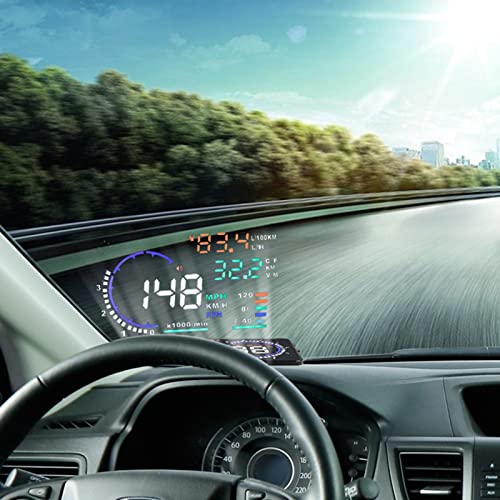
- Shows speed, engine, temperature, voltage, and fuel data
- Includes multiple configurable driving alerts
- Supports OBD II/EUOBD fault-code display
Best For: Drivers wanting extensive vehicle information and reminders
Easy Daily-Driver Pick
Auto-Dimming OBD2 Multi-Gauge HUD
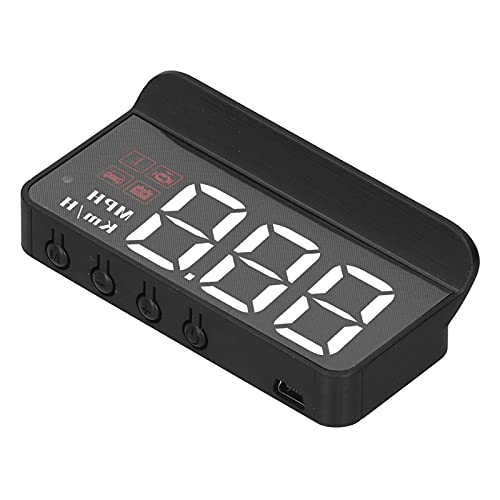
- Displays speed, coolant temperature, voltage, and trip miles
- Auto-adjusts brightness for day and night driving
- Includes clear no-ghosting projection and safety alerts
Best For: Drivers seeking simple, readable daily monitoring
Most Versatile Pick

- Combines OBD2 gauges with GPS operation
- Scans and clears engine fault codes
- Offers extensive data, settings, and configurable alarms
Best For: Compatible vehicles needing diagnostics plus GPS flexibility
Best All-Around OBD2 HUD
MAIMEIMI Windshield Speedometer

- Projects speed and vehicle data onto the windshield
- Offers four alert functions and automatic brightness
- Supports multiple readings beyond speed
Best For: Gasoline-car drivers wanting a feature-rich OBD2 HUD
Best Simple OBD2 HUD

- Displays speed, temperature, voltage, and mileage
- Provides several vehicle and driving alerts
- Uses adaptive lighting and reflective film
Best For: Drivers wanting essential OBD2 readings in a compact HUD
Best Large-Screen OBD2 HUD
A8 5.5-Inch Windshield Display
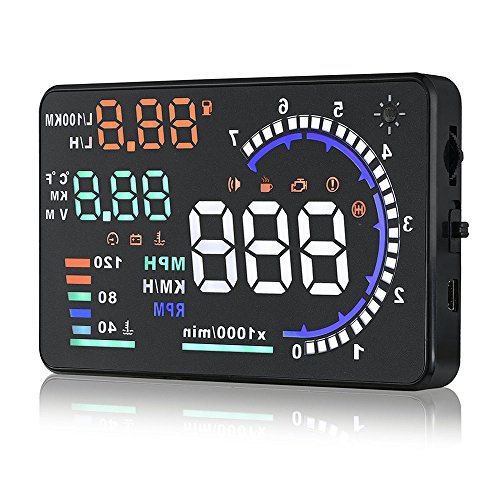
- Features a colorful 5.5-inch projected display
- Shows speed, RPM, temperature, voltage, and mileage
- Adds anti-ghosting film and ignition-linked power
Best For: Gasoline-vehicle drivers who prioritize a larger HUD screen
Best Compact OBD2 Display – P8 Gauge HUD
The P8 is a practical choice for drivers who want an OBD2 car head up display with a compact LED screen and flexible placement. It supports dashboard or A-pillar installation and shows useful information such as speed, RPM, voltage, water temperature, and fuel consumption.
Best For: Drivers seeking a compact, easy-to-install OBD2/GPS display with multiple viewing interfaces.
Pros:
- Supports both OBD2 and GPS modes.
- Displays speed, RPM, voltage, water temperature, and other vehicle data.
- Offers eight display interfaces and dashboard or A-pillar mounting.
- Includes multiple alarms and a one-year manufacturer warranty.
Cons:
- OBD mode is intended for most cars from 2008 onward.
- The GPS system may need about half a mile to lock onto a satellite before displaying speed.
- The 1.8-inch screen is relatively small.
Choose the P8 if compact size and installation flexibility matter more than a large screen. Its dual-system design also provides a GPS alternative when OBD2 data is unavailable.
Best Universal-Fit Option – M7 Digital Car HUD
The M7 is a straightforward option among OBD2 car head up displays, combining plug-and-play installation with OBD and GPS modes. It can show speed, water temperature, voltage, and distance while automatically adjusting brightness for changing light conditions.
Best For: Drivers who want a simple dual-mode HUD and a GPS fallback for vehicles that are not OBD2-compatible.
Pros:
- Plug-and-play installation without modifying the vehicle.
- Displays speed, water temperature, voltage, and driving distance.
- Includes speed, temperature, and voltage alarms.
- Offers adjustable units and automatic brightness adjustment.
Cons:
- OBD II compatibility is specified for vehicles manufactured after 2008.
- The notes exclude electric, diesel, pickup, RV, and computer-modified vehicles from OBD2 compatibility.
- GPS mode provides fewer vehicle-data readings than OBD mode.
The M7 makes sense for buyers prioritizing easy setup and broad GPS-mode usability. Check the compatibility limitations carefully before relying on its OBD functions.
Best Basic Alarm Package – Qiilu OBDII HUD
Obdii Hud, Car Speedometer, Obd2 Hud Projector Multifunction Gauge Alarm Fatigue Driving Reminder
Check Price On AmazonThis Qiilu model is a basic OBD2 car head up display built around straightforward installation and warning functions. Its ABS housing, secure plug connection, adaptive lighting, and reflective film are designed to keep readings clear while displaying speed, water temperature, voltage, and mileage.
Best For: Drivers seeking an uncomplicated OBD2 display with several configurable driving alerts.
Pros:
- Plug-and-play installation with a buckle-style connection.
- Displays speed, water temperature, voltage, and one-way mileage.
- Includes overspeed, temperature, voltage, fault, and fatigue-driving alerts.
- Adaptive lighting supports brighter daytime and softer nighttime viewing.
Cons:
- Designed for vehicles with an OBD2 interface and protocol.
- The supplied notes do not identify GPS operation for use when OBD2 is unavailable.
- Its feature set is focused on core readings rather than advanced performance data.
This is a sensible pick when alerts and simple OBD2 monitoring are the main priorities. Buyers with vehicles lacking compatible OBD2 support should verify fitment before ordering.
Best Feature-Rich Display – P28 Advanced HUD
The P28 is the most feature-rich option in this OBD2 car head up display roundup. Its 3.6-inch screen, OBD/GPS dual system, gesture control, customizable themes, alarm lights, and performance-testing functions make it suited to drivers who want more than basic speed monitoring.
Best For: Performance-minded drivers who want extensive live data, customization, gesture control, and testing features.
Pros:
- Displays extensive data including RPM, fuel consumption, turbo pressure, altitude, compass, and more.
- Provides 13 themes, gesture control, multilingual settings, and adjustable calibration.
- Includes speed, temperature, voltage, and fatigue-driving alerts.
- Adds 0–100 km/h acceleration, 100–0 km/h braking, and dynamic-curve testing.
Cons:
- The OBD system is compatible with some vehicle models, so fitment should be checked.
- Its broad feature set may be more than casual drivers need.
- The supplied dimensions are incomplete, so exact overall size is not specified.
The P28 is the strongest choice for buyers who value data depth and customization. Its GPS mode broadens usability, while the performance tools and gesture interface distinguish it from simpler HUDs.
Feature-Rich Pick – 5.5-Inch Multi-Color OBD2 HUD
This 5.5-inch option is a feature-rich choice among obd2 car head up displays, showing speed and other vehicle data in the driver’s forward view. It connects through an OBD II or EUOBD interface and adds adjustable visibility plus several configurable driving alerts.
Best For: Drivers who want broad vehicle data, fault-code display, and multiple safety reminders from an OBD-compatible HUD.
Pros:
- Displays speed, engine speed, water temperature, battery voltage, fuel-consumption data, and mileage.
- Includes overspeed, high-temperature, low-voltage, shift, and fatigue-driving reminders.
- Offers manual brightness adjustment and automatic brightness optimization.
- Displays vehicle fault codes and powers on or off with the car.
Cons:
- Requires an OBD II or EUOBD-compatible vehicle.
- The supplied details do not specify support for GPS-only operation.
Choose this model if you value the widest selection of engine and trip information in a single display. Its alert settings and fault-code feature make it more useful than a basic speed-only projector, provided your vehicle uses a supported interface.
Easy Daily-Driver Pick – Auto-Dimming OBD2 Multi-Gauge HUD
This compact model is a straightforward option among obd2 car head up displays, combining speed, coolant temperature, voltage, and trip miles on one screen. Its automatic light sensing and no-ghosting projection are designed to keep the readout clear across changing conditions.
Best For: Daily drivers who want a simple multi-gauge display with automatic brightness control and basic safety alerts.
Pros:
- Shows speed, coolant temperature, voltage, and trip miles together.
- Automatically brightens in sunlight and dims at night.
- Projects a crisp image onto the included reflector sticker without double shadows.
- Provides speed, drowsy-driver, and anti-sleep alerts.
Cons:
- Works with vehicles that have a compatible OBD2 interface and protocol.
- Displays fewer vehicle metrics than some more feature-heavy HUDs.
This is a sensible pick when readability and uncomplicated daily monitoring matter most. It focuses on a useful core set of gauges rather than extensive diagnostics, making it a practical add-on for compatible modern vehicles.
Most Versatile Pick – OBD2 Plus GPS Dual-System HUD
This dual-system model stands out among obd2 car head up displays by combining vehicle-data monitoring with GPS mode. It can show extensive driving information, scan and clear fault codes, and provide configurable alerts, though compatibility should be checked carefully before purchase.
Best For: Compatible-vehicle owners who want extensive gauges, diagnostic functions, and GPS fallback in one adjustable display.
Pros:
- Switches between OBD2 vehicle data and GPS-based functions.
- Displays speed, RPM, fuel consumption, temperature, voltage, altitude, compass, clock, and more.
- Can scan and clear engine fault codes and read real-time data streams.
- Offers adjustable brightness, units, interfaces, and multiple alert thresholds.
Cons:
- Compatibility is limited to specified OBDII/EOBD vehicles, generally produced after 2008.
- It does not support OBD I or JOBD systems and lists several incompatible vehicle types and brands.
- On vehicles with an incompatible OBD2 protocol, only GPS functions are available.
This is the strongest choice for shoppers who want more than a projected speed reading. Its diagnostic and GPS capabilities are substantial, but the detailed compatibility exclusions make vehicle verification especially important.
Best All-Around OBD2 HUD – MAIMEIMI Windshield Speedometer
For drivers comparing obd2 car head up displays, the MAIMEIMI offers a broad set of vehicle readings in a windshield-projected format. It displays speed, RPM, water temperature, voltage, trip data, and fuel-use information while adding automatic brightness adjustment and multiple alerts.
Best For: Gasoline-car owners who want a multifunction OBD2 display with configurable driving alerts.
Pros:
- Projects key data onto the windshield in large, real-time characters.
- Displays speed, RPM, water temperature, voltage, trip, and fuel-use readings.
- Includes overspeed, fatigue-driving, speed, and engine-failure alarms.
- Automatic brightness adjustment supports daytime and nighttime viewing.
Cons:
- Compatibility is limited to supported OBDII/EOBD gasoline vehicles, generally 2008 and newer.
- Does not support listed brands and vehicle types, including hybrids, diesels, pickups, and RVs.
- Some speed differences may require manual calibration.
Its feature set is appealing if you want more than a basic speed display, but compatibility should be checked carefully before purchase because the exclusions are extensive.
Best Simple OBD2 HUD – Keenso Windshield Speedometer
This Keenso model is a straightforward choice among obd2 car head up displays, combining windshield projection with a compact set of useful vehicle readings. It monitors speed, water temperature, voltage, and single mileage, while its light sensor adjusts illumination for changing conditions.
Best For: OBD2-equipped car owners seeking a compact display with core readings and safety alerts.
Pros:
- Designed for cars using the OBD2 interface and protocol.
- Shows speed, water temperature, voltage, and single mileage.
- Alerts cover overspeed, high water temperature, voltage abnormalities, fatigue driving, and faults.
- Includes adaptive lighting and a reflective film for clearer viewing.
Cons:
- Vehicle compatibility depends on having a supported OBD2 interface and protocol.
- Its listed functions are more limited than models that include RPM or fuel-consumption data.
- The supplied notes do not specify a vehicle-year range.
This is a sensible pick for buyers who value core driving information and a compact design, provided their vehicle uses the required OBD2 system.
Best Large-Screen OBD2 HUD – A8 5.5-Inch Windshield Display
The A8 5.5-inch model stands out in the obd2 car head up displays category with a larger colorful screen and plug-and-play setup. It projects speed, RPM, water temperature, voltage, and single mileage, and adds automatic power control, brightness adjustment, and an overspeed warning.
Best For: Drivers who prefer a larger projected display and broad compatibility guidance for supported gasoline vehicles.
Pros:
- Uses a colorful 5.5-inch display for viewing projected information.
- Shows speed, RPM, water temperature, voltage, and single mileage.
- Includes anti-ghosting reflective film plus automatic and manual brightness control.
- Automatically powers on and off with the vehicle ignition.
Cons:
- Designed for OBD II/EUOBD gasoline vehicles and excludes several listed makes and models.
- Provides an overspeed warning but fewer alarm categories than some competing options.
- It is not intended for unsupported vehicle systems or listed incompatible brands.
Choose this A8 when screen size and a simple plug-and-play experience matter most. Confirm compatibility first, especially if your vehicle is a Dodge, Jeep, Mazda, Suzuki, French, Italian, or select Hyundai/Kia model.
How We Picked the Best Obd2 Car Head Up Displays
We focused on the features that matter most in everyday use: connection type, screen readability, data coverage, warning functions, installation simplicity, and compatibility. The products selected include OBD2 and OBDII/EUOBD models, as well as dual-system units that use GPS when an OBD connection is unavailable or unsuitable.
We also considered practical details such as automatic brightness adjustment, selectable metric or imperial units, windshield projection design, and alerts for overspeeding or engine conditions. Because vehicle compatibility can vary, buyers should confirm their car’s connector and supported protocol before ordering.
Quick Comparison
| Type | Best For | What to Look For |
|---|---|---|
| Basic OBD2 HUD | Speed and essential driving data | Clear digits, simple setup, reliable compatibility |
| Multifunction OBD2 gauge | Monitoring engine information | RPM, coolant temperature, voltage, fuel data, and alarms |
| OBD2/GPS dual-system HUD | Broader vehicle compatibility | Independent GPS speed mode and accurate positioning |
| Large windshield projector | Quick glance visibility | Screen size, brightness control, and reflection quality |
Key Buying Factors for OBD2 Car Head-Up Displays
Compatibility and Connection
Most OBD2 displays plug into the vehicle’s diagnostic port, commonly located beneath the steering wheel. Check whether the unit supports your vehicle’s OBDII or EUOBD protocol and whether it works with your model year. Some newer, hybrid, diesel, or commercial vehicles may not expose every data point.
Information and Alerts
Decide whether you only need digital speed or want RPM, water temperature, battery voltage, fuel consumption, fault codes, and overspeed warnings. More metrics are useful, but they can also make a small screen harder to read.
Visibility and Installation
Choose a bright, high-contrast display with automatic dimming if you drive at night. A reflection film can improve projection clarity, while a compact unit may be easier to position without blocking your view. Keep the display low enough that it does not obstruct the road.
OBD2 Versus GPS
OBD2 models can show vehicle-derived information, while GPS units generally provide speed and location data independently. A dual-system model may be the most flexible choice if compatibility is uncertain, but GPS speed can take time to acquire a signal and may behave differently in tunnels or covered areas.
Who Should Buy Which Obd2 Car Head Up Displays?
Choose a basic OBD2 HUD if you want an inexpensive speedometer replacement or a simple speed-and-alarm display. Choose a multifunction gauge if you regularly monitor engine temperature, voltage, RPM, or fuel information. Choose a large-screen projector if readability at a glance is your top priority. Choose an OBD2/GPS dual-system model if you want a backup connection method or drive multiple vehicles.
Before installing, verify the product’s supported protocol, mount it where it does not obstruct visibility, and configure units and alarms while parked. A HUD should reduce distraction—not add another demanding screen to your dashboard.